A
B
C
D
Text Solution
Verified by Experts
The correct Answer is:
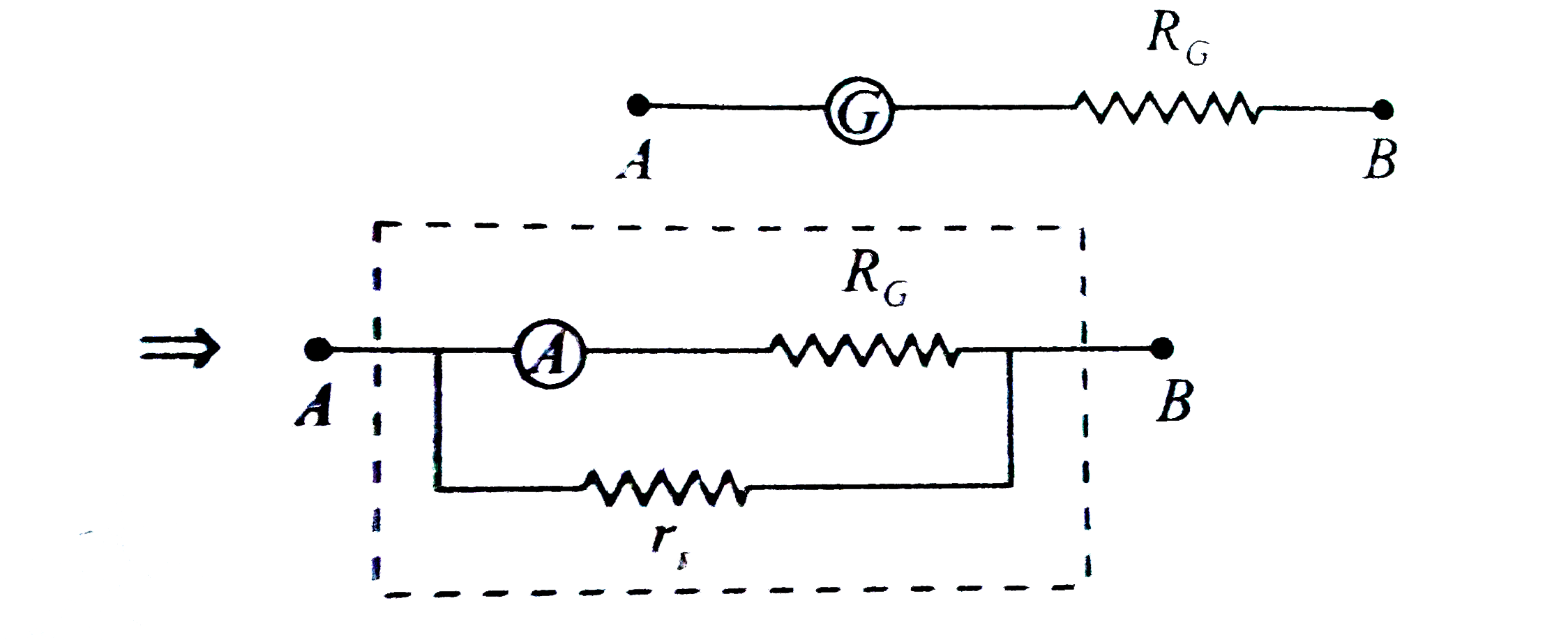



Topper's Solved these Questions
MOVING CHARGES AND MAGNETISM
NCERT FINGERTIPS ENGLISH|Exercise HOTS|5 VideosMOVING CHARGES AND MAGNETISM
NCERT FINGERTIPS ENGLISH|Exercise EXEMPLAR PROBLEMS|6 VideosMAGNETISM AND MATTER
NCERT FINGERTIPS ENGLISH|Exercise NCERT Exemplar|5 VideosNUCLEI
NCERT FINGERTIPS ENGLISH|Exercise Assertion And Reason|15 Videos
Similar Questions
Explore conceptually related problems
NCERT FINGERTIPS ENGLISH-MOVING CHARGES AND MAGNETISM -Assertion And Reason
- A galvanometer can be converted into an ammeter by connecting
Text Solution
|
- Assertion : Electron revolves around a positvely charged nucleus like ...
Text Solution
|
- Statement-1 The net magnetic flux through a spherical surface enclosin...
Text Solution
|
- Assertion : Magnetic field interacts with a moving charge and not with...
Text Solution
|
- Statement-1 The net magnetic flux through a spherical surface enclosin...
Text Solution
|
- Assertion: The energy of charged particle moving in uniform magnetic ...
Text Solution
|
- Assertion: Cyclotron does not accelerate. Reason: Mass of the elect...
Text Solution
|
- Ampere's circuital law is given by
Text Solution
|
- MAGNETIC FIELD DUE TO CURRENT CARRYING SOLENOID
Text Solution
|
- Statement1: The magnetic filed at the ends of very long current carry...
Text Solution
|
- The two linear parallel conductors carrying currents in the opposite d...
Text Solution
|
- Assertion: When a magnetic dipole is placed in a non-uniform magnetic ...
Text Solution
|
- Assertion : The net magnetic force on a current loop in a uniform magn...
Text Solution
|
- Assertion: current sensitivity of a galvanometer is directly proporti...
Text Solution
|
- Write two reasons, why a galvanometer cannot be used as such to measur...
Text Solution
|
- A moving coil galvanometer can be converted into an ammeter by
Text Solution
|