Home
Class 12
CHEMISTRY
Study the given cell carefully and fill ...

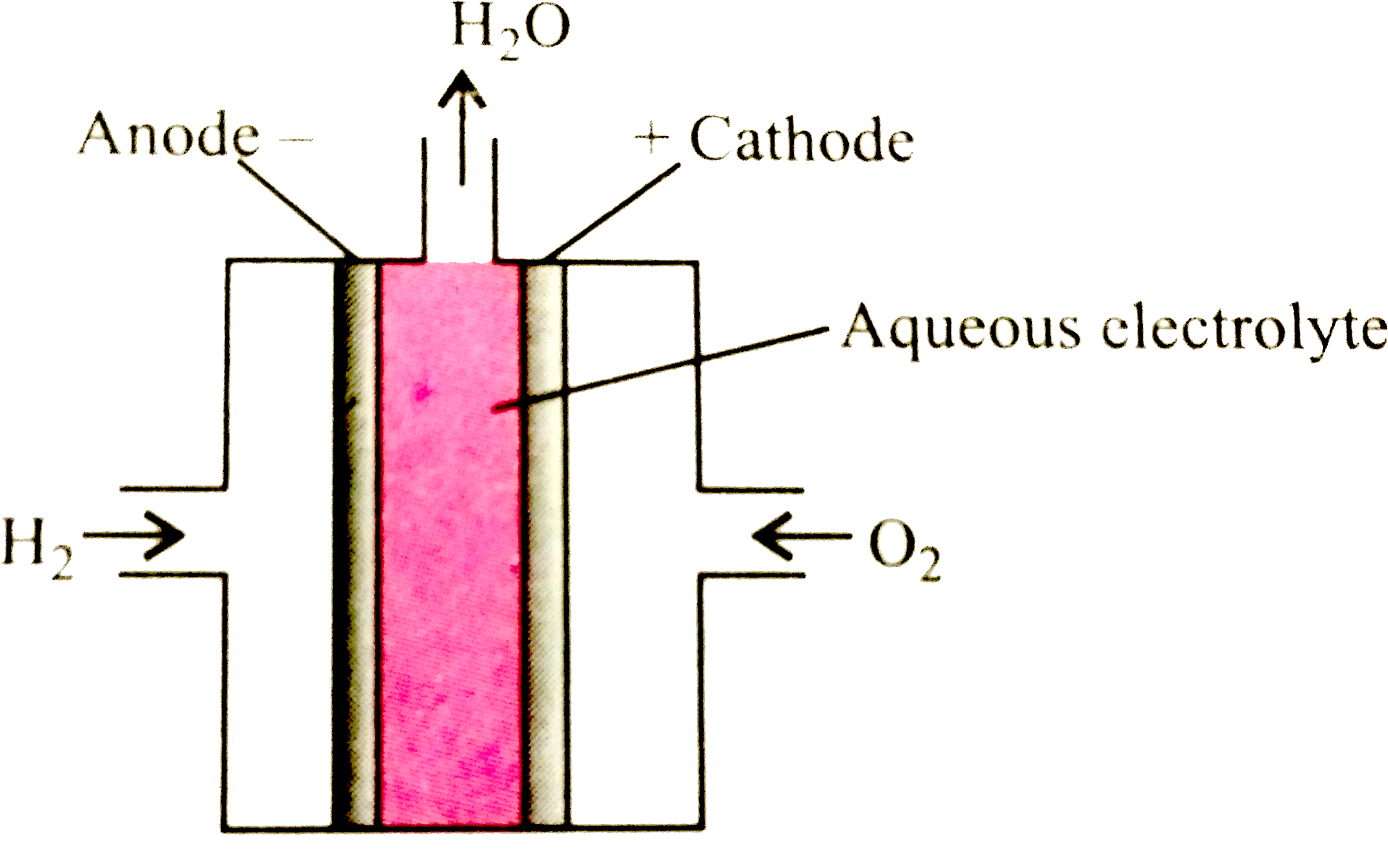
Study the given cell carefully and fill in the blanks by choosing an appropriate option.
In the given cell, hydrogen and oxygen are bubbled through porous ___(i)___ electrodes into concontrated aqueous ____(ii)___ solution. Catalysts like finely dividend __(iii)__ or ___(iv)___ metal are incorporated into the electrodes for increasing the rate of electrode reactions.

A

i-hydrogen , ii-potassium hydroxide , iii-palladium , iv - platinum

B

i-oxygen , ii-hydrogen chloride , iii-manganese , iv-iron

C

i-carbon , ii-sodium hydroxide , iii-platinum , iv-palladium

D

i-graphite , ii-sodium chloride , iii-nickel , iv - platinum

Text Solution

Verified by Experts

The correct Answer is:

C
Promotional Banner

Topper's Solved these Questions

  • ELECTROCHEMISTRY

    NCERT FINGERTIPS ENGLISH|Exercise HOTS|10 Videos
  • ELECTROCHEMISTRY

    NCERT FINGERTIPS ENGLISH|Exercise EXEMPLAR PROBLEMS|17 Videos
  • COORDINATION COMPOUNDS

    NCERT FINGERTIPS ENGLISH|Exercise Assertion And Reason|15 Videos
  • GENERAL PRINCIPLES AND PROCESSES OF ISOLATION OF ELEMENTS

    NCERT FINGERTIPS ENGLISH|Exercise Assertion And Reason|15 Videos

Similar Questions

Explore conceptually related problems

The given figure shows the corrosion of iron in atmosphere. Fill in the blanks by choosing an appropriate option. At a particular spot of an object made of iron, ___(i)___ of iron to ferrous ion takes place and that spot behaves as ___(ii)___. Electrons released at anodic spot move through the metal and go to another spot on the metal and reduce oxygen in presence of H^+ . This spot behaves as ___(iii)___. The ferrous ions are further oxidised by atmospheric oxygen to ferric ions which come out as rust, __(iv)____ and with further production of ____(v)__ ions.

Fill in the blanks by choosing the appropriate word/words from those given in the brackets: (hydrolysis, reduction, oxidation, vacant, osmotic, above, benzoic acid, phenol, aniline, below, can, decreases, increases, cannot, crystal, ionization, rate, rate constant.) A catalyst ______ start a reaction but it can increase the ______ of the reaction.

Fuel cells : Fuel cells are galvanic cells in which the chemical energy of fuel cell is directly converted into electrical energy. A type of fuel cell is a hydrogen - oxygen fuel cell. It consists of two electrodes made up of two porous graphite impregnated with a catalyst ( platinum, silver, or metal oxide ). The electrodes are placed in aqueous solution of NaOH . Oxygen and hydrogen are continuously fed into the cell. Hydrogen gets oxidized to H^(o+) which is neutralized by overset(c-)(O)H, i.e., anodic reaction. At cathode, O_(2) gets reduced to overset(c-)(O)H Hence, the net reaction is The overall reaction has DeltaH=-285.6 kJ mol^(-1) and DeltaG=-237.4 kJ mol^(-1) at 25^(@)C If the cell voltage is 1.23V for the H_(2)-O_(2) fuel cell and for the half cell :

Fuel cells : Fuel cells are galvanic cells in which the chemical energy of fuel cell is directly converted into electrical energy. A type of fuel cell is a hydrogen - oxygen fuel cell. It consists of two electrodes made up of two porous graphite impregnated with a catalyst ( platinum, silver, or metal oxide ). The electrodes are placed in aqueous solution of NaOH . Oxygen and hydrogen are continuously fed into the cell. Hydrogen gets oxidized to H^(o+) which is neutralized by overset(c-)(O)H, i.e., anodic reaction. At cathode, O_(2) gets reduced to overset(c-)(O)H Hence, the net reaction is The overall reaction has DeltaH=-285.6 kJ mol^(-1) and DeltaG=-237.4 kJ mol^(-1) at 25^(@)C If the cell voltage is 1.23V for the H_(2)-O_(2) fuel cell and for the half cell :

Fuel cells : Fuel cells are galvanic cells in which the chemical energy of fuel cell is directly converted into electrical energy. A type of fuel cell is a hydrogen - oxygen fuel cell. It consists of two electrodes made up of two porous graphite impregnated with a catalyst ( platinum, silver, or metal oxide ). The electrodes are placed in aqueous solution of NaOH . Oxygen and hydrogen are continuously fed into the cell. Hydrogen gets oxidized to H^(o+) which is neutralized by overset(c-)(O)H, i.e., anodic reaction. At cathode, O_(2) gets reduced to overset(c-)(O)H Hence, the net reaction is The overall reaction has DeltaH=-285.6 kJ mol^(-1) and DeltaG=-237.4 kJ mol^(-1) at 25^(@)C Suppose the concentration of hydroxide ioin in the cell is doubled, then the cell voltage will be

Fuel cells : Fuel cells are galvanic cells in which the chemical energy of fuel cell is directly converted into electrical energy. A type of fuel cell is a hydrogen - oxygen fuel cell. It consists of two electrodes made up of two porous graphite impregnated with a catalyst ( platinum, silver, or metal oxide ). The electrodes are placed in aqueous solution of NaOH . Oxygen and hydrogen are continuously fed into the cell. Hydrogen gets oxidized to H^(o+) which is neutralized by overset(c-)(O)H, i.e., anodic reaction. At cathode, O_(2) gets reduced to overset(c-)(O)H Hence, the net reaction is The overall reaction has DeltaH=-285.6 kJ mol^(-1) and DeltaG=-237.4 kJ mol^(-1) at 25^(@)C What is the value of DeltaS^(c-) for the fuel cell at 25^(@)C ?

Fuel cells : Fuel cells are galvanic cells in which the chemical energy of fuel cell is directly converted into electrical energy. A type of fuel cell is a hydrogen - oxygen fuel cell. It consists of two electrodes made up of two porous graphite impregnated with a catalyst ( platinum, silver, or metal oxide ). The electrodes are placed in aqueous solution of NaOH . Oxygen and hydrogen are continuously fed into the cell. Hydrogen gets oxidized to H^(o+) which is neutralized by overset(c-)(O)H, i.e., anodic reaction. At cathode, O_(2) gets reduced to overset(c-)(O)H Hence, the net reaction is The overall reaction has DeltaH=-285.6 kJ mol^(-1) and DeltaG=-237.4 kJ mol^(-1) at 25^(@)C What is the value of DeltaS^(c-) for the fuel cell at 25^(@)C ? a. -1600 J K^(-1) b. -160 J K^(-1) c. 160 J K^(-1) d. 1600 J K^(-1)

Fill the blanks in the given statements and select the correct option A. The developmetnal stage of an animal passed in the mother's womb is called (i).____ (ii). The outer layer of blastula is called (ii). _____. It does nt take part in the formation of (iii). ______ C. (iv)._____ is the first germ layer formed from the inner cell mass by differentiation.

Fuel cells : Fuel cells are galvanic cells in which the chemical energy of fuel cell is directly converted into electrical energy. A type of fuel cell is a hydrogen - oxygen fuel cell. It consists of two electrodes made up of two porous graphite impregnated with a catalyst ( platinum, silver, or metal oxide ). The electrodes are placed in aqueous solution of NaOH . Oxygen and hydrogen are continuously fed into the cell. Hydrogen gets oxidized to H^(o+) which is neutralized by overset(c-)(O)H, i.e., anodic reaction. At cathode, O_(2) gets reduced to overset(c-)(O)H Hence, the net reaction is The overall reaction has DeltaH=-285.6 kJ mol^(-1) and DeltaG=-237.4 kJ mol^(-1) at 25^(@)C A fuel cell is I. A voltaic cell in which continuous supply of fuels are sent at anode to perform oxidation. II. A voltaci cell in which fuels such as :CH_(4),H_(2), and CO are used up at anode. III. One which involves the reaction of H_(2)-O_(2) fuel cell such as : Anode :2H_(2)O+4overset(c-)(O)H rarr 4H_(2)O(l)+4e^(c-) Cathode : O_(2)+2H_(2)O(l) =4e^(-) rarr 4overset(c-)(O)H IV. The efficiency of H_(2)-O_(20 fuel cell is 70 to 75%

Draw the diagram a of galvanic cell involving following reactions : Zn+Cu^(+) to Zn^(2+) +Cu and answer the following questions: (i) Label the cathode and anode (ii) How does the e.m.f. of the cell changes with the decrease in the concentration of Cu^(2+) ions ? (iii) What is the function of salt bridge in it? (iv) Name the salt to be used in salt bridge. (v) Write the reactions occurring at each electrode. (vi) In which direction the electrons would flow in the external circuit? (vii) How electrical neutrality is maintained in both the half cells?

NCERT FINGERTIPS ENGLISH-ELECTROCHEMISTRY-Assertion And Reason
  1. Study the given cell carefully and fill in the blanks by choosing an a...

    Text Solution

    |

  2. Assertion:Electrolytic cell uses electrical energy to carry non-sponta...

    Text Solution

    |

  3. Assertion :EMF of the cell is the potential difference between the ele...

    Text Solution

    |

  4. Assertion:A standard hydrogen electrode is also called reversible elec...

    Text Solution

    |

  5. Assertion:Cu^(2+) ions get reduced more easily than H^+ ions. Reaso...

    Text Solution

    |

  6. Assertion:Lithium has the lowest electrode potential. Reason: Lithiu...

    Text Solution

    |

  7. Assertion : Current stops flowing when E(cell)=0. Reason : ...

    Text Solution

    |

  8. Assertion : To obtain maximum work from a galvanic cell charge has to...

    Text Solution

    |

  9. Assertion:The electrical resistance of any object decrease with increa...

    Text Solution

    |

  10. Assertion: The conductivity of electrolytic soutions increase with inc...

    Text Solution

    |

  11. Assertion:Molar conductivity increases with decrease in concentration....

    Text Solution

    |

  12. Assertion:Kohlrausch law helps to find the molar conductivity of weak ...

    Text Solution

    |

  13. Assertion:When a copper wire is dipped in silver nitrate solution, the...

    Text Solution

    |

  14. Assertion : In electrolysis, the quantity of electricity needed for de...

    Text Solution

    |

  15. Assertion:In electrolysis of aqueous NaCl the product obtained is H2 g...

    Text Solution

    |

  16. Assertion:In mercury cell, the cell potential is approximately 1.35 V ...

    Text Solution

    |
