Home
Class 12
CHEMISTRY
The graph of the effect of catalyst on a...

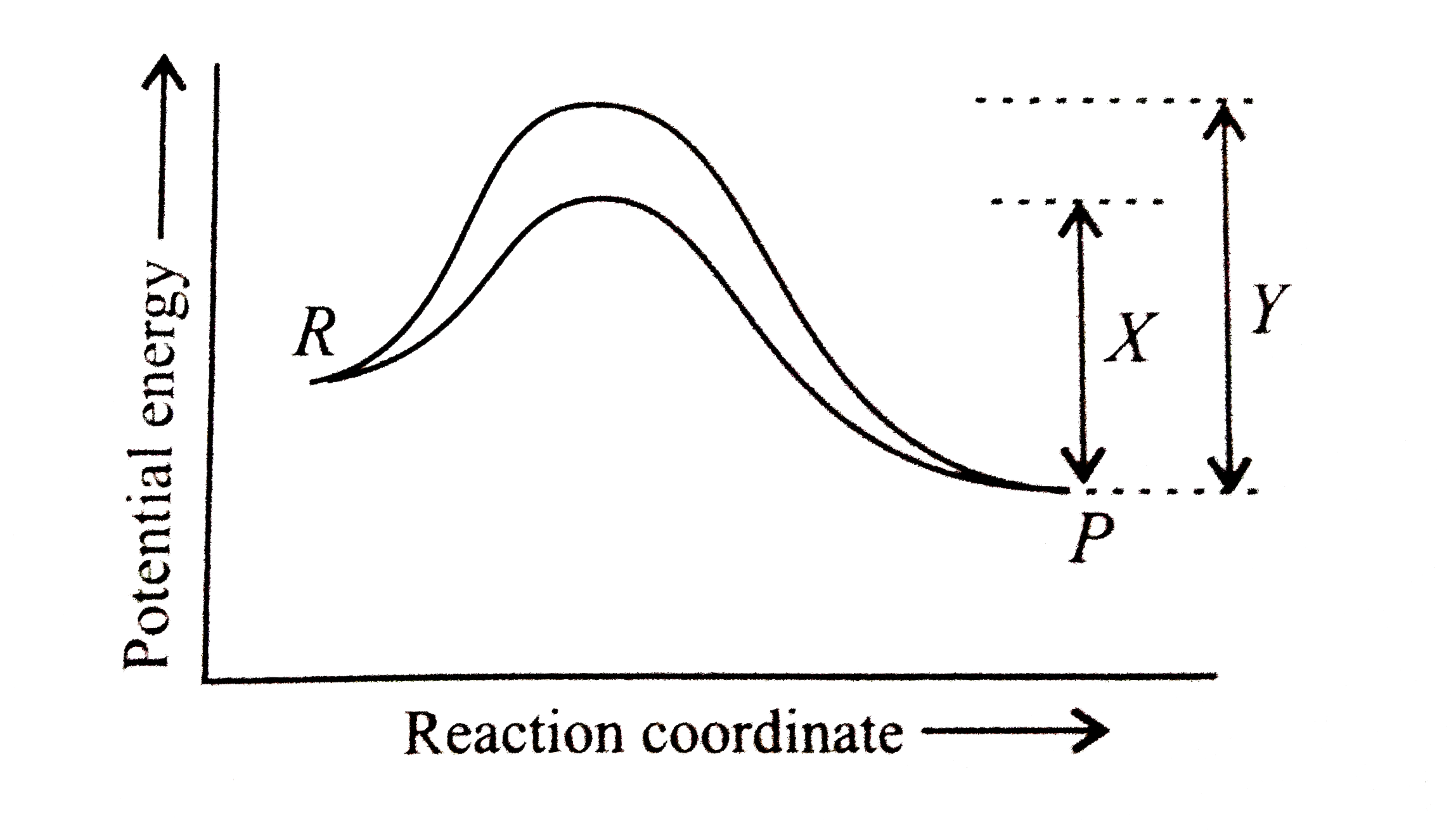
The graph of the effect of catalyst on activation energy is given below. Fill up the blanks X and Y with appropriate statements

A

X = energy of activation without catalyst,
Y = energy of activation with catalyst

B

X = path of reaction with catalyst, Y = path of reaction without catalyst

C

X = energy of activation with catalyst,
Y = energy of activation without catalyst

D

X = energy of endothermic reaction, Y = energy of exothermic reaction

Text Solution

Verified by Experts

The correct Answer is:

C

Energy of activation is lowered when a catalyst is used
Promotional Banner

Topper's Solved these Questions

  • CHEMICAL KINETICS

    NCERT FINGERTIPS ENGLISH|Exercise Collision Theory Of Chemical Reactions|6 Videos
  • CHEMICAL KINETICS

    NCERT FINGERTIPS ENGLISH|Exercise NCERT Exemplar|20 Videos
  • CHEMICAL KINETICS

    NCERT FINGERTIPS ENGLISH|Exercise Integrated Rate Equation|25 Videos
  • BIOMOLECULES

    NCERT FINGERTIPS ENGLISH|Exercise Assertion And Reason|15 Videos
  • CHEMISTRY IN EVERYDAY LIFE

    NCERT FINGERTIPS ENGLISH|Exercise NCERT Exemplar|15 Videos

Similar Questions

Explore conceptually related problems

Discuss the effect of catalyst on the activation energy.

Fill up the blanks appropriately :

Fill in the blanks in the given table with the appropriate choice.

What is the effect of adding a catalyst on (a) Activation energy (Ea), and (b) Gibbs energy ( DeltaG ) of a reaction?

Study the following graph of the concept of activation energy given below. Select the correct option for stages labeled A to D (a) {:(A,B,C,D),("Transition state","Potential energy", "Activation energy without enzyme","Activation energy with enzyme"):} (b) {:(A,B,C,D),("kinetic energy","Potential energy", "Activation energy without enzyme","Activation energy with enzyme"):} (c) {:(A,B,C,D),("kinetic energy","Transition energy", "Activation energy without enzyme","Activation energy with enzyme"):} (d) {:(A,B,C,D),("Potential energy","Transition energy", "Activation energy without enzyme","Activation energy with enzyme"):}

Fill in the blanks in the factor trees given below

Fill in the blanks in the factor trees given below

Study the given diagram of the periodic table and fill the blanks with appropriate choice.

What is the effect of catalyst on: (i) Gibbs energy (DeltaG) and (ii) activation energy of a rection ?

Study the following graph of concept of activation energy given below. Select the correct option for stages labelled A to D.

NCERT FINGERTIPS ENGLISH-CHEMICAL KINETICS-Temperature Dependendence Of The Rate Of A Reaction
  1. The Activation energy for a chemical reaction mainly depends upon

    Text Solution

    |

  2. The temperature dependence of the rate of a chemical reaction can be e...

    Text Solution

    |

  3. The energy diagram of a reaction P + Q to R + S is given. What are A...

    Text Solution

    |

  4. The potential energy diagram for a reaction X to Y is given. A and C i...

    Text Solution

    |

  5. An endothermic reaction with high activation energy for the forward re...

    Text Solution

    |

  6. For an endothermic reaction, where Delta H represents the enthalpy of ...

    Text Solution

    |

  7. If hydrogen and oxygen are mixed and kept in the same vessel at room t...

    Text Solution

    |

  8. The temperature dependence of the rate of a chemical reaction is given...

    Text Solution

    |

  9. The temperature dependence of the rate constant k is expressed as k = ...

    Text Solution

    |

  10. Which of the following statements is not correct?

    Text Solution

    |

  11. The decomposition of hydrocarbon follows the equation k=(4.5xx10^(11)...

    Text Solution

    |

  12. The rate constant for a first order reaction at 300^(@)C for which E(a...

    Text Solution

    |

  13. The graph of the effect of catalyst on activation energy is given belo...

    Text Solution

    |

  14. Match the column I with column II and mark the appropriate choice.

    Text Solution

    |

  15. Which of the following statement about the catalyst is/are true?

    Text Solution

    |

  16. When a catalyst is used an equilibrium process,

    Text Solution

    |

  17. Which of the following factors are responsible for the increase in the...

    Text Solution

    |
