
Home
Class 12
CHEMISTRY
An exothermic chemical reaction proceeds...

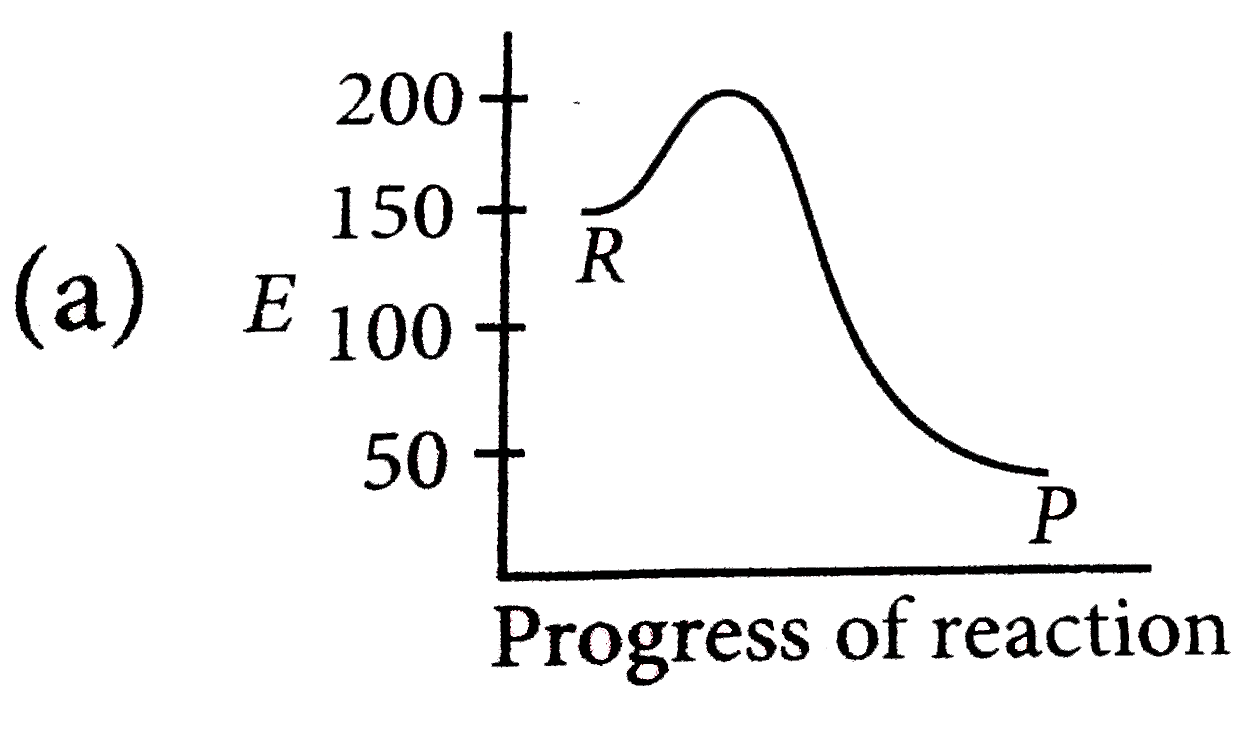
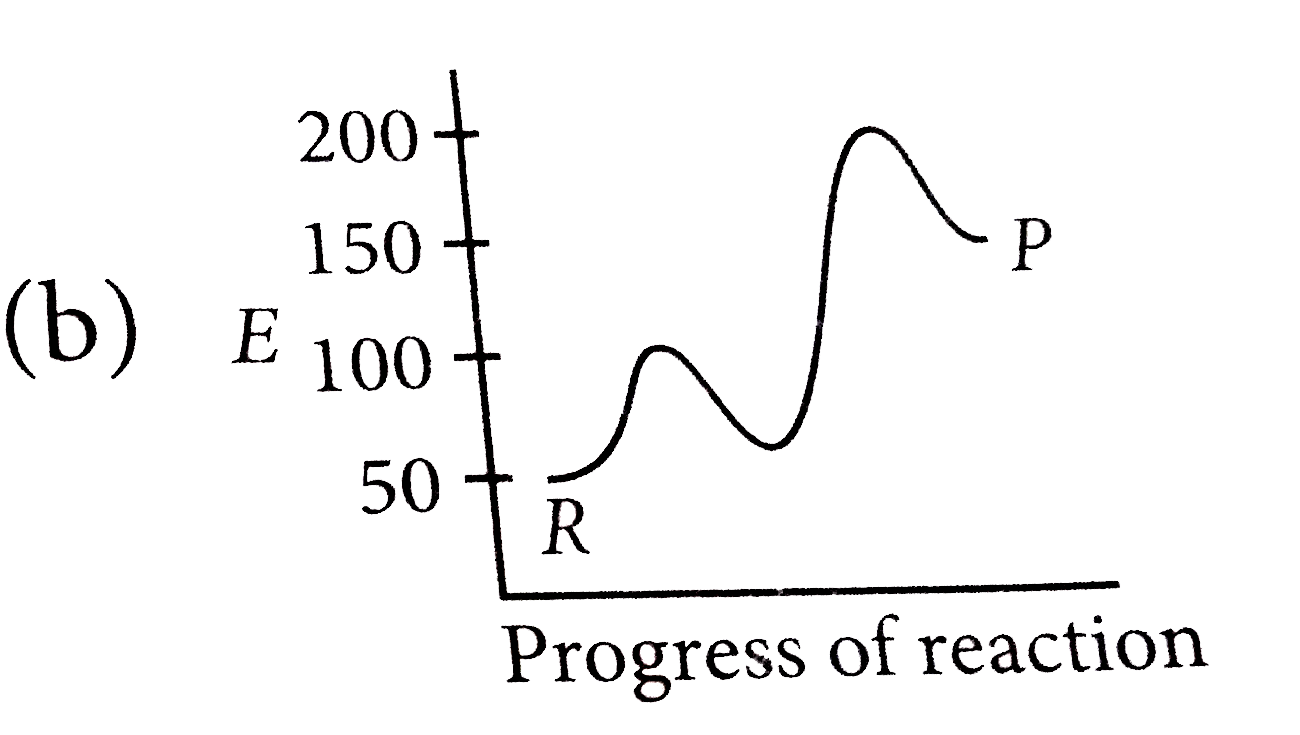
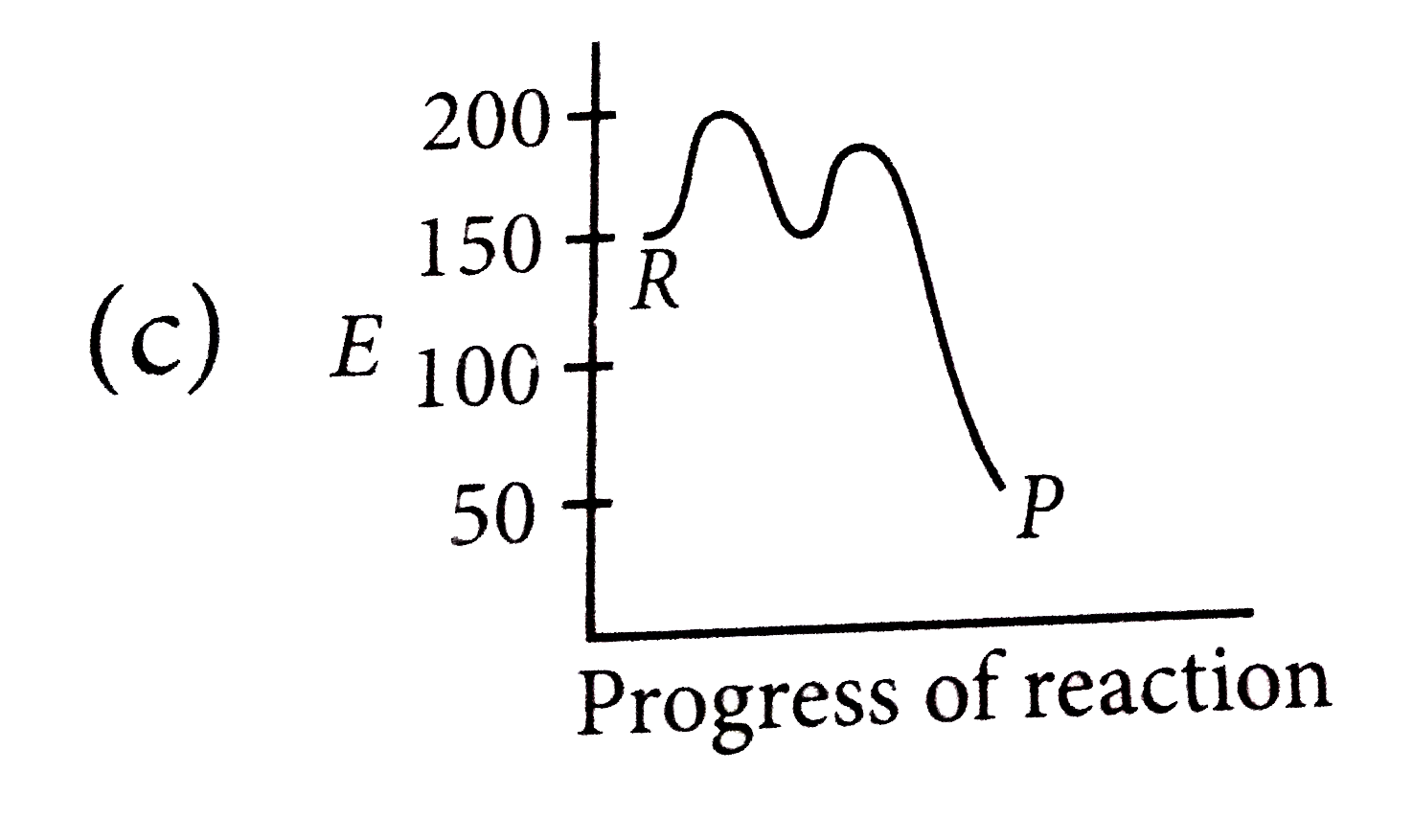
An exothermic chemical reaction proceeds by two stages reactants `overset("Stage I")(rarr) "intermdediate" overset("Stage II")(rarr)` products, The activation energy of stage `I` is `50 kJ mol^(-1)`. The overall enthalpy change of the reaction is `-100 "kJ mol"^(-1)`. Which diagram could represent the energy level diagram for the reaction ?

A

B

C

D

Text Solution

AI Generated Solution

The correct Answer is:

To solve the problem, we need to analyze the information given about the exothermic reaction that occurs in two stages. Let's break it down step by step. ### Step 1: Understand the Reaction Stages The reaction proceeds in two stages: 1. **Stage I**: Reactants convert to intermediates. 2. **Stage II**: Intermediates convert to products. ### Step 2: Identify Given Data - The activation energy (Ea) for Stage I is **50 kJ/mol**. - The overall enthalpy change (ΔH) for the reaction is **-100 kJ/mol** (indicating an exothermic reaction). ### Step 3: Draw the Energy Level Diagram 1. **Initial Energy Level**: Start with the energy level of the reactants. 2. **First Peak**: Draw a peak representing the transition state for Stage I (the energy level will rise due to activation energy). The peak will be at **50 kJ** above the reactants. 3. **Intermediate Level**: After Stage I, the energy level drops to the intermediate state. 4. **Second Peak**: Draw another peak for Stage II, which represents the transition state from intermediate to products. The height of this peak will depend on the activation energy for Stage II. 5. **Final Energy Level**: The energy level of the products will be lower than that of the reactants by **100 kJ** (since ΔH is -100 kJ). ### Step 4: Calculate the Energy Levels - If we assume the energy of the reactants is at **0 kJ**, then: - The energy of the intermediates after Stage I will be at **50 kJ**. - The energy of the products will be at **-100 kJ** (0 - 100 = -100 kJ). ### Step 5: Determine Activation Energy for Stage II - The activation energy for Stage II can be calculated as the difference between the energy of the intermediates and the peak of Stage II. - If we assume the peak for Stage II is at **X kJ**, then: - Activation energy for Stage II = X - 50 kJ. ### Step 6: Identify the Correct Diagram - The correct energy level diagram must show: - Two peaks (one for each stage). - The energy of products lower than the reactants by 100 kJ. - The activation energy for the backward reaction (from products to intermediates) must be greater than that for the forward reaction (from reactants to intermediates). ### Conclusion Based on the analysis, the correct energy level diagram will show: - Two peaks. - The energy of the products lower than the reactants by 100 kJ. - The activation energy for the backward reaction greater than for the forward reaction.

To solve the problem, we need to analyze the information given about the exothermic reaction that occurs in two stages. Let's break it down step by step. ### Step 1: Understand the Reaction Stages The reaction proceeds in two stages: 1. **Stage I**: Reactants convert to intermediates. 2. **Stage II**: Intermediates convert to products. ### Step 2: Identify Given Data ...
Promotional Banner

Topper's Solved these Questions

  • CHEMICAL KINETICS

    NCERT FINGERTIPS ENGLISH|Exercise NCERT EXEMPLAR PROBLEMS|17 Videos
  • CHEMICAL KINETICS

    NCERT FINGERTIPS ENGLISH|Exercise ASSERTION & REASON|15 Videos
  • CHEMICAL KINETICS

    NCERT FINGERTIPS ENGLISH|Exercise Assertion And Reason|15 Videos
  • BIOMOLECULES

    NCERT FINGERTIPS ENGLISH|Exercise Assertion And Reason|15 Videos
  • CHEMISTRY IN EVERYDAY LIFE

    NCERT FINGERTIPS ENGLISH|Exercise NCERT Exemplar|15 Videos

Similar Questions

Explore conceptually related problems

In an exothermic reaction X rarr Y , the activation energy is 100 kJ mol^(-1) of X . The enthalphy of the reaction is -140 kJ mol^(-1) . The activation energy of the reverse reaction Y rarr X is

The activation energy of exothermic reaction ArarrB is 80 kJ "mol"^(-1) . The heat of reaction is 200 kJ "mol"^(-1) . The activation energy for the reaction Brarra ( in kJ/mol) will be :

The standard free energy change for a reaction is -213.3 KJ mol^(-1) "at" 25^(@)C . If the enthalpy change of the reaction is -217.77 KJ "mole"^(-1) . Calculate the magnitude of entropy change for the reaction in Joule "mole"^(-1)

The activation energy for the forward reaction X rarr Y is 60 kJ mol^(-1) and Delta H is -20 kJ mol^(-1) . The activation energy for the reverse reaction is

An exothermic reaction, A rarr B , has an activation energy of "15 kcal mol"^(-1) and the energy of reaction is "5 kcal mol"^(-1) . The activation energy in "kcal mol"^(-1) for the reaction, BrarrA is

The energy change accompanying the equilibrium reaction A hArrB is -33.0kJ mol^(-1) . Calculate Equilibrium constant K_a for the reaction at 300 K

The enthalpy of formation of ammonia is -46.0 KJ mol^(-1) . The enthalpy change for the reaction 2NH_(3)(g)rarr N_(2)(g)+3H_(2)(g) is :

The activation energy for most of the reaction is approximately 50 kJ mol^(-1) . The rate for temperature coefficient for such reaction will be

An exothermic reaction XrarrY has an activation energy of 90kJ mol^(-1) of X and the heat of reaction is 250 kJ . Find the activation energy of the reaction YrarrX .

In a reaction P+Q rarr R+S , there is no change in entropy, Enthalpy change for the reaction (DeltaH) is "12 kJ mol"^(-1) . Under what conditions, reaction will have negative value of free energy change?
