Home
Class 11
CHEMISTRY
A particle (m = 3 kg) slides down a fric...

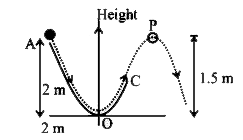
A particle (m = 3 kg) slides down a frictionless track (AOC) starting from rest at a point A (height 2m). After reaching C, the particle continues to move freely in air as a projectile. When it reaching its highest point P (height 1.5 m) the kinetic energy of the prarticle (in J) is : Figure drawn is schematic and not to scale , take g = `10 ms^(-2)`

Text Solution

Verified by Experts

The correct Answer is:
B

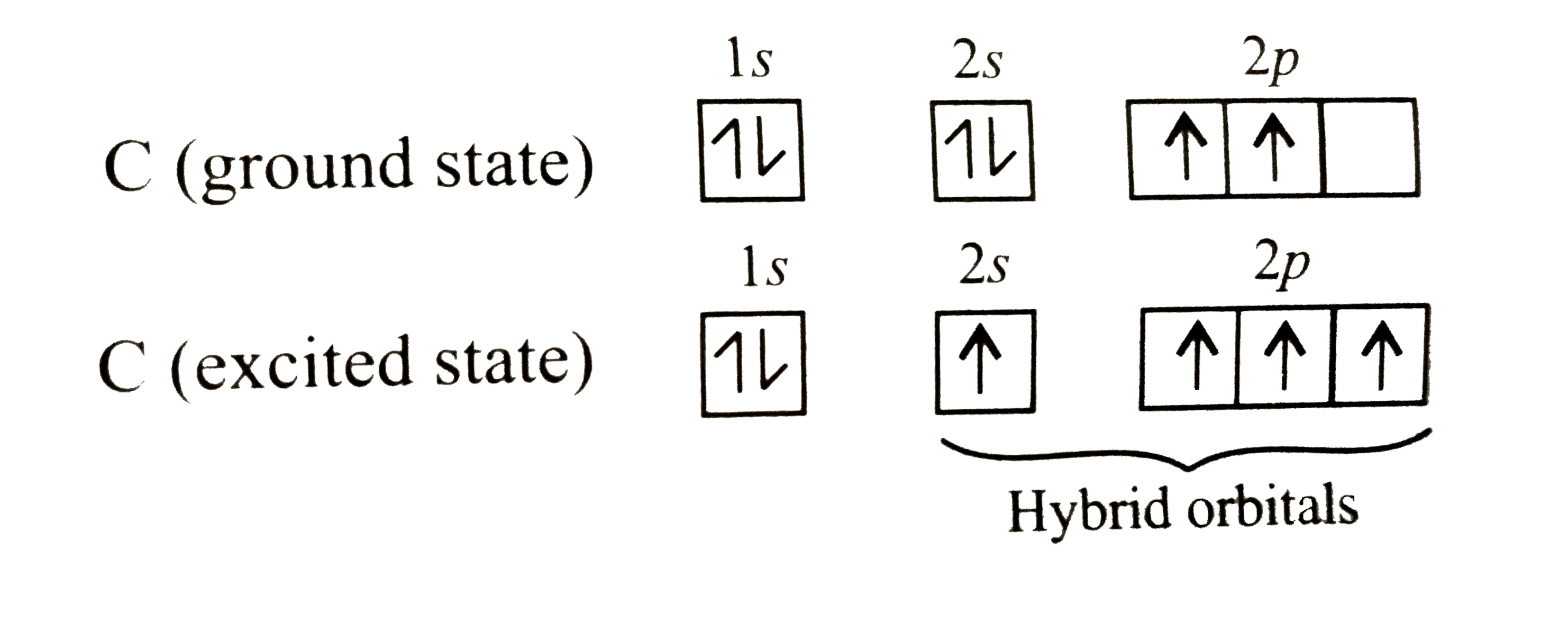
In carbon, only s and p-orbitals are available for fonding and therefore, it can accommodate only four pairs of electrons around it. This would limit the maximum covalence to four in carbon.
Promotional Banner

Topper's Solved these Questions

  • THE P-BLOCK ELEMENTS

    NCERT FINGERTIPS ENGLISH|Exercise Group 13 Elements - The Boron Family|23 Videos
  • THE P-BLOCK ELEMENTS

    NCERT FINGERTIPS ENGLISH|Exercise Important Trends And Anomalous Properties Of Boron|4 Videos
  • THE P-BLOCK ELEMENTS

    NCERT FINGERTIPS ENGLISH|Exercise EXEMPLAR PROBLEMS|15 Videos
  • STRUCTURE OF ATOM

    NCERT FINGERTIPS ENGLISH|Exercise Assertion And Reason|15 Videos
  • THE S-BLOCK ELEMENTS

    NCERT FINGERTIPS ENGLISH|Exercise Assertion And Reason|15 Videos

Similar Questions

Explore conceptually related problems

A particle (m = 1kg) slides down a frictionless track (AOC) starting from rest at a point A (height 2m). After reaching C, the particle continues to move freely in air as a projectile. When it reaches point C (height 1 m), the vertical speed of the particle (in m/s) is (Figure drawn is schematic and not to scale , take g = 9.8 m/ sec^(2) ) [Take ]

A particle (m = 1kg) slides down a frictionless track (AOC) starting from rest at a point A (height 2m). After reaching C, the particle continues to move freely in air as a projectile. When it reaches point C (height 1 m), the vertical speed of the particle (in m/s) is (Figure drawn is schematic and not to scale , take g = 9.8 m/ sec^(2) ) [Take ]

A particle (m = 2 kg) slides down a smooth track AOC starting from rest at point A (height = 5m). After reaching point C (height =1m), the particle continues to move freely in air as a projectile. The particle velocity at point C is at angle 60^(@) with the horizontal. The maximum height attained by particle after leaving point C is _____(in m). [figure drawn is schematic and hot to scale : take =ms^(-2) ]

A particle (m = 2 kg) slides down a smooth track AOC starting from rest at point A (height = 5m). After reaching point C (height =1m), the particle continues to move freely in air as a projectile. The particle velocity at point C is at angle 60^(@) with the horizontal. The maximum height attained by particle after leaving point C is _____(in m). [figure drawn is schematic and hot to scale : take =ms^(-2) ]

A particle (m=1kg) slides down in frictionless-track AOC starting from rest at a point A(height 2m). After reaching on horizontal smooth track compresses a light spring of spring constant K= 100N/m, by distance 0.5 m before coming to rest. The height (in m) of horizontal track is.........(Take g= 10 m//s^(2) )

A particle slides down a frictionless track AOC starting from rest at a point A (height 2m). After reaching on horizontal smooth track compresses a light spring of spring constant k=100n/m by distance 0.5 m before coming to rest. The height (in m) of horizontal track is ........... (Take g = 10 m//s^(2))

A particle slides down a frictionless paraboli (y=x^(2)) track (A-B-C) starting from rest at point A .Point B is at the vertex of parabola and point C is at a height less than that of point A .After C ,the particle moves freely in air as a projectile. If the particle reaches highest point at P ,then

A man M slides down a curved frictionless track, starting from rest. The curve obeye the equation y=(x^(2))/(2) . The tangential acceleration of man is

A particle of mass m slides on a frictionaless surface ABCD, starting from rest as shown in figure. The part BCD is a circular arc. If it looses contact at point P, the maximum height attained by the particle from point C is

