Home
Class 11
CHEMISTRY
Which of the following species does not ...

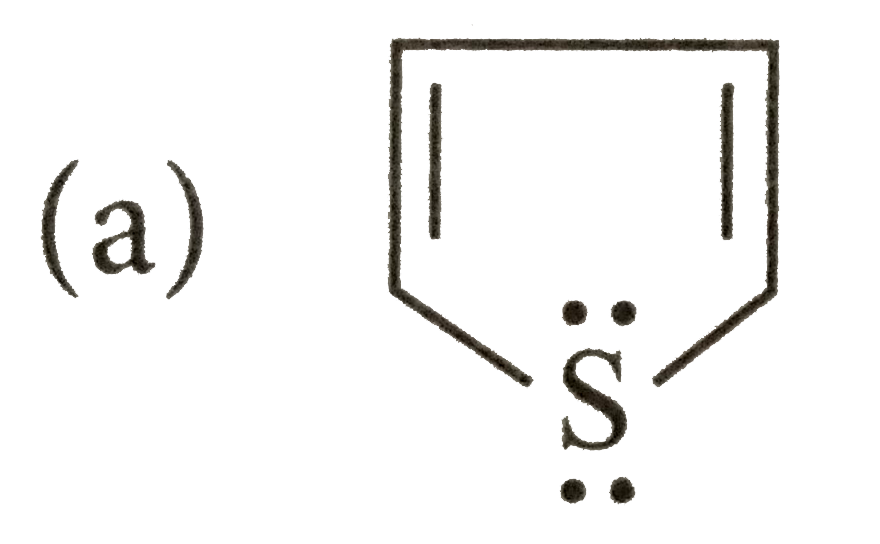
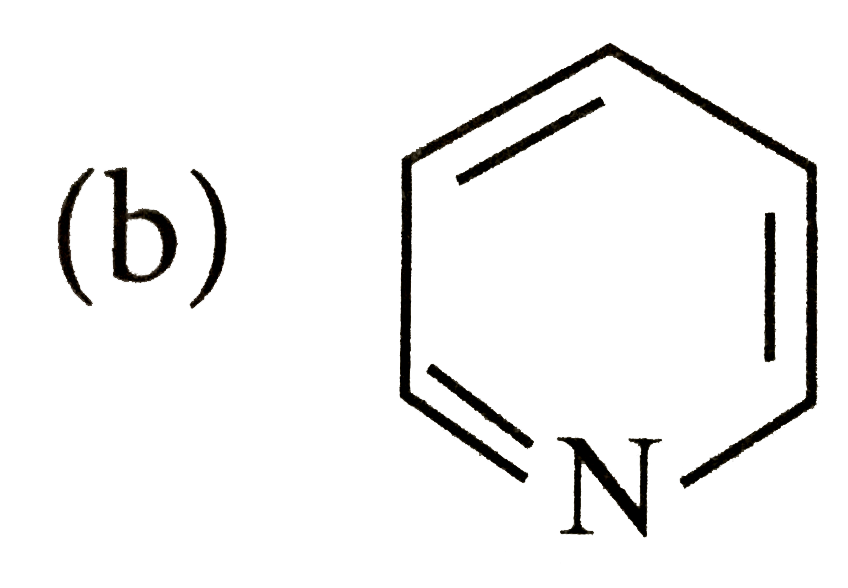
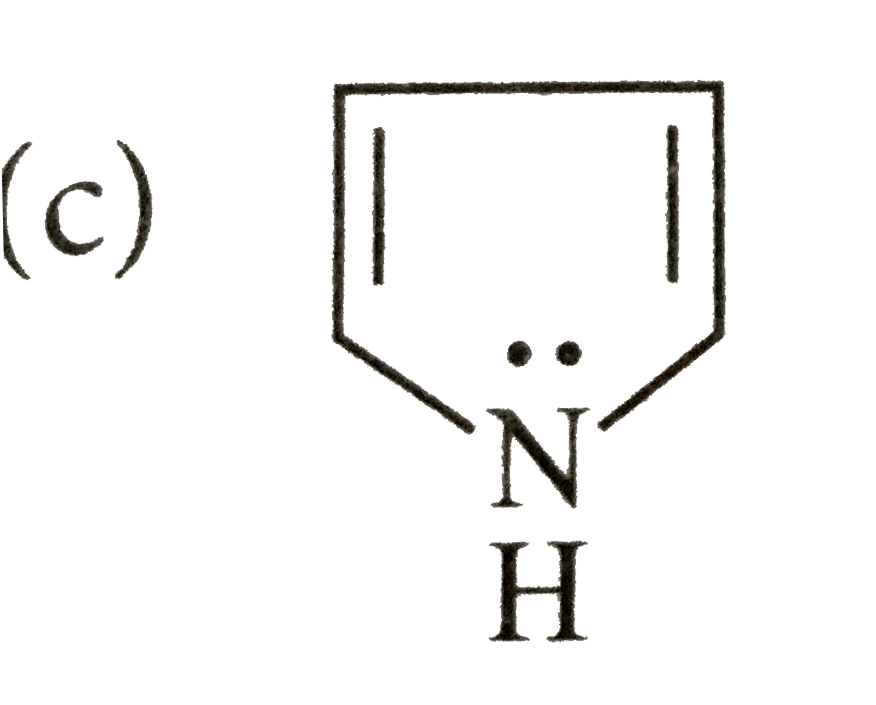
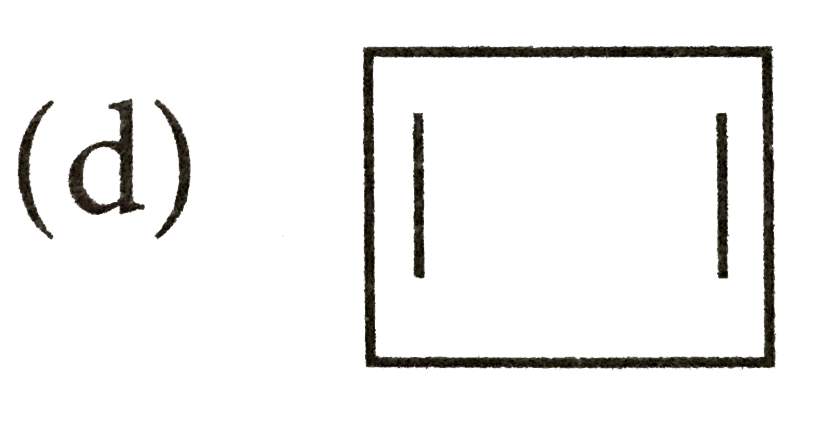
Which of the following species does not show aromaticity?

A

B

C

D

Text Solution

AI Generated Solution

The correct Answer is:

To determine which of the following species does not show aromaticity, we need to analyze each option based on the criteria for aromaticity. Aromatic compounds must satisfy the following conditions: 1. **Cyclic Structure**: The compound must be cyclic. 2. **Planarity**: The compound must be planar. 3. **Conjugation**: The compound must have a continuous overlap of p-orbitals, allowing for delocalization of π electrons. 4. **Hückel's Rule**: The compound must have (4n + 2) π electrons, where n is a non-negative integer. Now, let’s evaluate each species provided in the options: ### Step-by-Step Solution: 1. **Identify the Species**: List the species given in the question. For example, let's assume the options are: - A) Benzene - B) Cyclobutadiene - C) Pyridine - D) Cyclooctatetraene 2. **Evaluate Each Species**: - **Benzene (C6H6)**: - Cyclic: Yes - Planar: Yes - Conjugation: Yes (all carbon atoms are sp2 hybridized) - π Electrons: 6 (satisfies Hückel's rule, n=1) - **Conclusion**: Aromatic. - **Cyclobutadiene (C4H4)**: - Cyclic: Yes - Planar: Yes - Conjugation: Yes (all carbon atoms are sp2 hybridized) - π Electrons: 4 (satisfies Hückel's rule for anti-aromaticity, n=0) - **Conclusion**: Anti-aromatic. - **Pyridine (C5H5N)**: - Cyclic: Yes - Planar: Yes - Conjugation: Yes (the nitrogen atom contributes to the π system) - π Electrons: 6 (satisfies Hückel's rule, n=1) - **Conclusion**: Aromatic. - **Cyclooctatetraene (C8H8)**: - Cyclic: Yes - Planar: No (it adopts a non-planar "tub" shape to minimize strain) - Conjugation: Yes (if planar) - π Electrons: 8 (satisfies Hückel's rule for anti-aromaticity, n=2) - **Conclusion**: Non-aromatic due to non-planarity. 3. **Final Conclusion**: Based on the evaluations, the species that does not show aromaticity is **Cyclooctatetraene**. ### Summary of Findings: - **Benzene**: Aromatic - **Cyclobutadiene**: Anti-aromatic - **Pyridine**: Aromatic - **Cyclooctatetraene**: Non-aromatic Thus, the answer to the question is **Cyclooctatetraene**.

To determine which of the following species does not show aromaticity, we need to analyze each option based on the criteria for aromaticity. Aromatic compounds must satisfy the following conditions: 1. **Cyclic Structure**: The compound must be cyclic. 2. **Planarity**: The compound must be planar. 3. **Conjugation**: The compound must have a continuous overlap of p-orbitals, allowing for delocalization of π electrons. 4. **Hückel's Rule**: The compound must have (4n + 2) π electrons, where n is a non-negative integer. Now, let’s evaluate each species provided in the options: ...
Promotional Banner

Topper's Solved these Questions

  • HYDROCARBONS

    NCERT FINGERTIPS ENGLISH|Exercise Higher Order Thinkin Skills|7 Videos
  • HYDROCARBONS

    NCERT FINGERTIPS ENGLISH|Exercise Assertion & Reason|15 Videos
  • EQUILIBRIUM

    NCERT FINGERTIPS ENGLISH|Exercise Assertion And Reason|15 Videos
  • HYDROGEN

    NCERT FINGERTIPS ENGLISH|Exercise Assertion And Reason|15 Videos

Similar Questions

Explore conceptually related problems

Which of the following species does not exist?

Which of the following species does not exist ?

Which of the following species is aromatic :

Which of the following species does not have the ability to fix atmospheric nitrogen?

Which of the following defects does KBr show?

Which of the following species is aromatic?

Which of the following species does / do not exist ?

Which of the following species does / do not exist ?

Which of the following does not show protogyny?

NCERT FINGERTIPS ENGLISH-HYDROCARBONS -Assertion And Reason
  1. Which of the following species does not show aromaticity?

    Text Solution

    |

  2. Assertion: 2,2-Dimethylbutane does not have any tertiary carbon atom. ...

    Text Solution

    |

  3. Assertion: The reaction, C(2)H(5)Br +2Na+C(2)H(5)Br to C(4)H(10)+2NaBr...

    Text Solution

    |

  4. Assertion: Wurtz reaction is not preferred for the preparation of alka...

    Text Solution

    |

  5. Assertion: Sodium salt of butanoic acid on heating with soda lime give...

    Text Solution

    |

  6. Assertion: Boiling point of pentane is higher than 2,2-dimethylpropane...

    Text Solution

    |

  7. Assertion: Iodination of alkanes is carried out in the presence of oxi...

    Text Solution

    |

  8. Assertion: Staggered conformation of ethane is most stable while eclip...

    Text Solution

    |

  9. Assertion: cis-form of alkene is found to be more polar than the trans...

    Text Solution

    |

  10. Assertion: Alkenes are easily attacked by electrophilic reagents. Re...

    Text Solution

    |

  11. Assertion: Addition of HBr to propene yields 2-bromopropane but in pre...

    Text Solution

    |

  12. Assertion: Decolourisation of KMnO(4) solution is used as a test for u...

    Text Solution

    |

  13. Assertion: Ethyne reacts with sodium metal and sodamide to form sodium...

    Text Solution

    |

  14. Assertion: Cyclopentadienyl anion is aromatic in nature. Reason: Cyc...

    Text Solution

    |

  15. Assertion: The second substituent may enter the mono-substituted benze...

    Text Solution

    |

  16. Assertion: In case of aryl halides, halogens are moderately deactivati...

    Text Solution

    |
