Home
Class 10
BIOLOGY
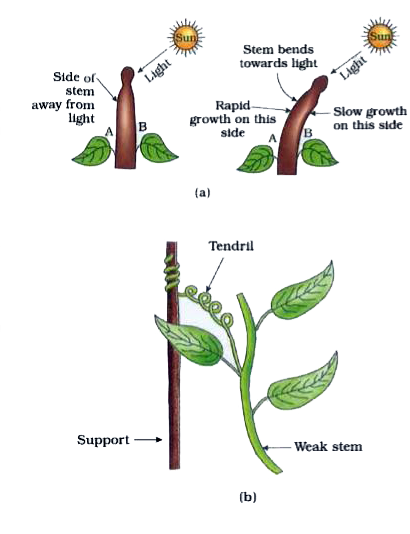
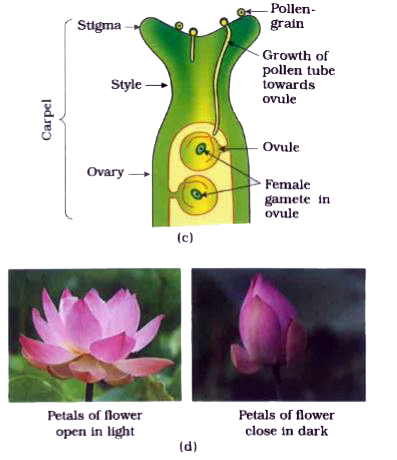
Observe figs. (a), (b), (c) and (d). r...

Observe figs. (a), (b), (c) and (d).
`rarr` Determine on the basis of your observations whether the movement occurring in the plant is growth based or not?
`rarr` State the type of movement occurred herein.

Text Solution

Verified by Experts

In figures (a), (b), and (c) the movements are growth related and in fig. (d) the movement is not related to growth.
Promotional Banner

Topper's Solved these Questions

  • CONTROL AND COORDINATION

    KUMAR PRAKASHAN|Exercise VALUE BASED QUESTIONS WITH ANSWERS|11 Videos
  • HEREDITY AND EVOLUTION

    KUMAR PRAKASHAN|Exercise PRACTICAL SKILL BASED QUESTIONS WITH ANSWERS|5 Videos

Similar Questions

Explore conceptually related problems

To study the vegetative propagation in potato. Apparatus : Tray, cotton Material : Potato Procedure : rarr Take potato tuber and observe its surface. rarr Observe the pits on its surface and bud present in the pit. rarr Make circle around them with the help of marker. rarr Cut the potato into small pieces in such a way that, some of them possess bud. rarr Now put wet cotton in the tray and put the potato pieces on it. rarr Water for some days in tray, so that cotton remains wet. rarr Observe the changes that occur in the potato piece. Which other plants except potato produce buds for vegetative propagation ?

To study the vegetative propagation in potato. Apparatus : Tray, cotton Material : Potato Procedure : rarr Take potato tuber and observe its surface. rarr Observe the pits on its surface and bud present in the pit. rarr Make circle around them with the help of marker. rarr Cut the potato into small pieces in such a way that, some of them possess bud. rarr Now put wet cotton in the tray and put the potato pieces on it. rarr Water for some days in tray, so that cotton remains wet. rarr Observe the changes that occur in the potato piece. Which are the potato pieces, that give rise to fresh green shoots and roots ?

To study the vegetative propagation in potato. Apparatus : Tray, cotton Material : Potato Procedure : rarr Take potato tuber and observe its surface. rarr Observe the pits on its surface and bud present in the pit. rarr Make circle around them with the help of marker. rarr Cut the potato into small pieces in such a way that, some of them possess bud. rarr Now put wet cotton in the tray and put the potato pieces on it. rarr Water for some days in tray, so that cotton remains wet. rarr Observe the changes that occur in the potato piece. Is potato tuber root or stem?

Carefully observe the given diagram/chart and answer the questions based on it. (1) Observe the following pie-chart showing the major sources of energy. Label 'c' and state the name of any two place where such power plants are established.

To suggest rule for inheritance of earlobe type. Procedure /Method : rarr The lowest part of the ear pinna called the earlobe, is closely attached to the side of the head, i.e., attached or not, i.e., free. rarr Observe the earlobes of all the students in the class. Prepare a list of students. Enter the data about the earlobes whether they are free or attached. rarr Find out about the earlobes of the parents of each student in the class. rarr Correlate earlobe type of each student with that of their parents. rarr In the column write F for free earlobe and A for attached earlobe. Answer the following questions on the basis of the collected data: Which expression of earlobe is observed more in number in your class?
