

Home
Class 11
PHYSICS
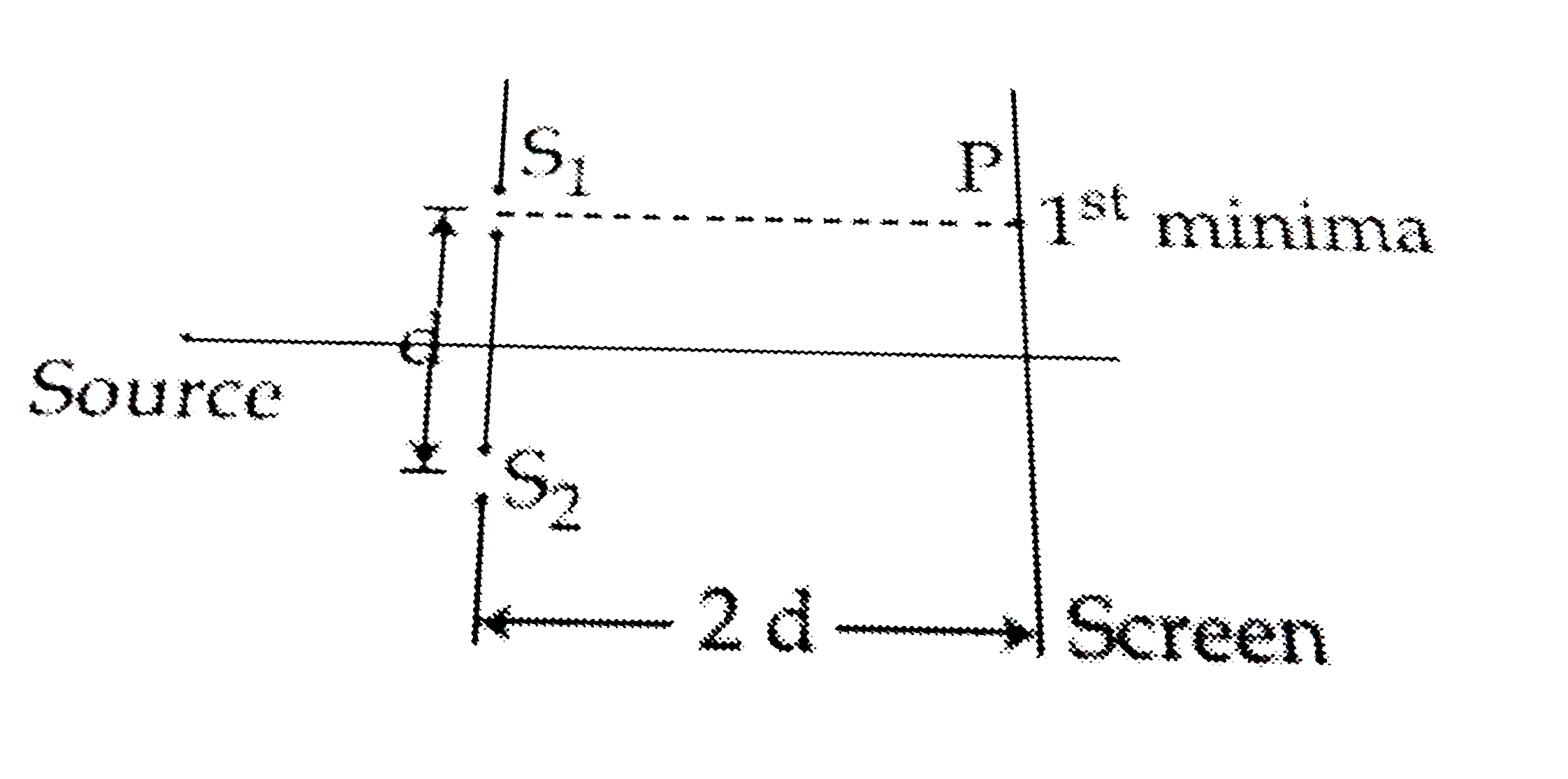
Consider a Young's double slit experimen...

Consider a Young's double slit experiment as shown in figure. What would be the slit separation d in terms of wavelength `lamda` such that the first minima occurs directly in front of the `(S_(1))` ?

Promotional Banner

Similar Questions

Explore conceptually related problems

Wave Front|Young Double Slit Experiment

In a Young's double slit experiment if the slit separation is twice the wavelength of light used then the maximum number of interference maxima is

In Young's double slit experiment, if the widths of the slits are in the ratio 4:9 , the ratio of the intensity at maxima to the intensity at minima will be

In Young's double slit experiment, if the widths of the slits are in the ratio 4:9, the ratio of the intensity at maxima to the intensity at minima will be

In Young's double slit experiment interference fringes 1^(@) apart are produced on the screen, the slit separation is (lambda = 589 nm)

White light is used to illuminate the two slits in a Young's double slit experiment. The separation between the slits is b and the screen is at a distance d (gtb) from the slits. At a point on the screen directly in front of one of the slits, certain wavelength are missing. Some of these missing wavelength are

White light is used to illuminate the two slits in a Young's double slit experiment. The separation between the slits is b and the screen is at a distance d (gt gtb) from the slits At a point on the screen directly in front of one of the slits, certain wavelengths are missing some of these missing wavelengths are

In Young's double slit experiment, if the slit widths are in the ratio 1:9 , then the ratio of the intensity at minima to that at maxima will be

Young's double slit experimental arrangement is shown in figure. If lamda is the wavelength of light used and angleS_(1)CS_(2)=theta , then the fringe width will be

White light is used to illuminate the two slits in a Young's double slit experiment. The separation between the slits is b and the screen is at a distance d(gtgtb) from the slits. At a point on the screen directly in front of one of the slits, certain wavelengths are missing. Some of these missing wavelength are (a) lambda = b^2//d (b) lambda=2b^2//d (c) lambda = b^2//3d (d)lambda = 2b^2//3d .