Home
Class 10
PHYSICS
Some fun. Try to see if you can see di...

Some fun.
Try to see if you can see dispersion of light using plastic jar, mirror and water.

Text Solution

Verified by Experts
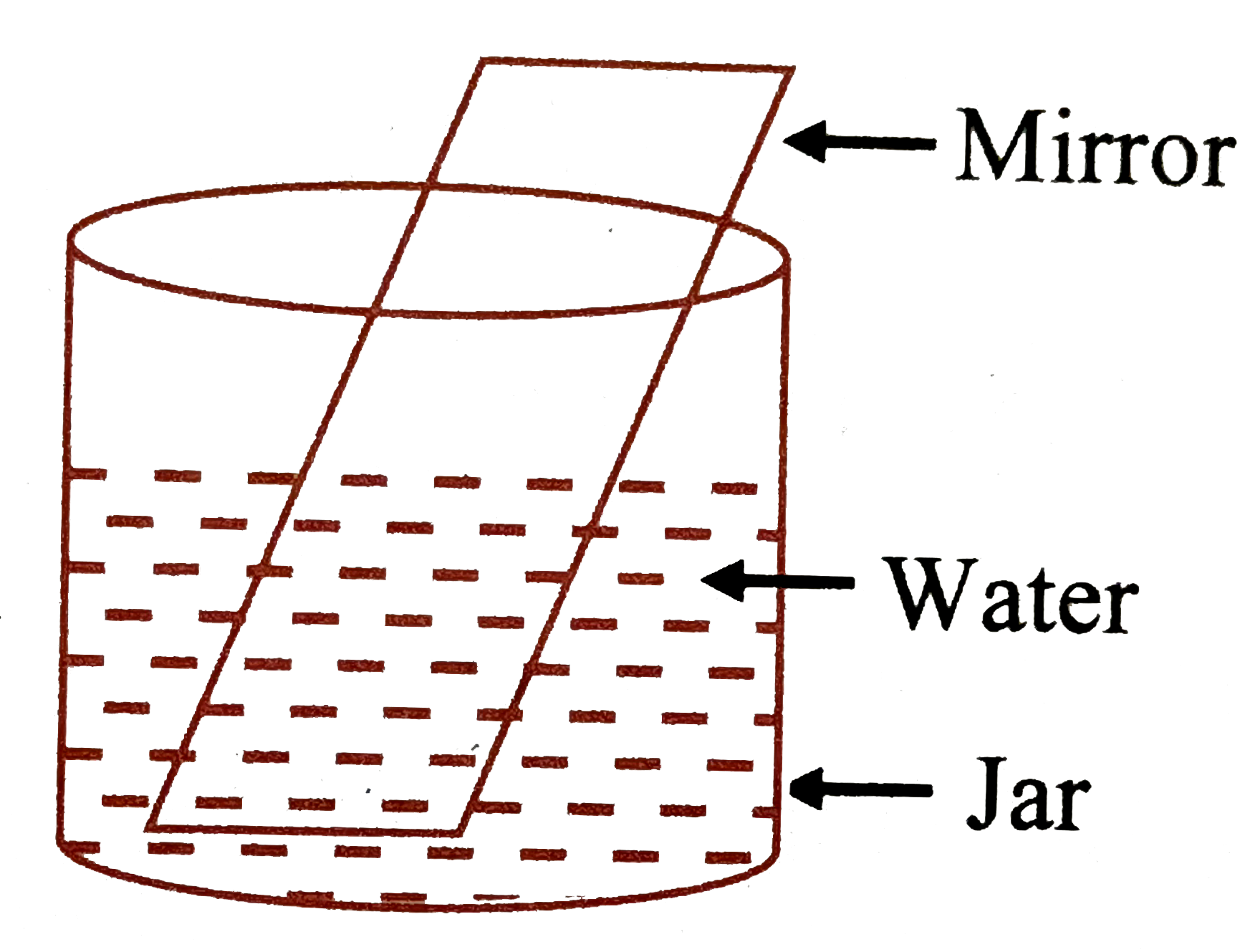
Fill a plastic jar with water. Place mirror into water inside the jar at an angle. Position the jar such that sunlight shines directly at the mirror. Also, adjust the angle of mirror until rainbow is observed on wall. (It would be easier to spot the rainbow if room is dark.)
Promotional Banner

Similar Questions

Explore conceptually related problems

Oral Work : How can we see objects at night using infrared camera?

Answer the following questions:Make two sufficiently long, identical tubes out of a cardboard. Arrange them on a table, in front of a wall as shown in figure . Place a clock near the end of one of the tubes and try to hear the ticking of the clock at the end of the other tube by placing your ear there. Adjust the angles of the two tubes till you can hear the sound very clearly Measure the angle of incidence theta_1 and the angle of reflection theta_2 . Try to see if they are related in any way. In the experiment, what will happen if you lift one of the tubes to some height?

You must have seen chandeliers having glass prism. The light from a tungsten bulb gets dispersed while passing through these prisms and we see coloured spectrum. If we use on LED light instead of tungsten bulb, will we be able to see the same effect?

If we hold a page of a book in front of a mirror , we can see laterally inverted letters in the mirror. Why does it happen?

Let’s try this : Fix a powerful bar magnet to a stand as shown in the figure. Fix an iron bar at a short distance below the magnet. Take iron filings near the iron bar. What do you see ?

Assertion: The rainbow is seen sometimes in the sky when it is raining. When one sees a rainbow, one's back is towards the sun. Reason: Interanl reflection from water droplet causes dispersion. The final ray is in the backward direction.

Complete the paragraph given below by using the appropriate word given below: (optical telescope, X-rays, light, radio telescopes, electromagnetic waves, visible radiation) The ….....................…..which our eyes can see in a tiny part of electromagnetic spectrum. Light has..........................................and it is called radiation. Radiation is seen in the form of visible light, infrared waves, micro-waves as well as in the form of ........................and ultraviolet rays. However, we can see only.................................................... ........ are used to capture visible radiation. But different types of telescopes are used to receive other types of radiation, and all such telescope are called.........................................................................................................................................

Try this. Take a suitable glass vessel like conical flask or beaker.Add some garden soil in it and sow some pulse grains in it in such away that you can observe them through glass. Water it every day and record the changes.

Apparatus: Evaporating dish, Bunsen burner, etc. Chemicals: Sugar Procedure: Take some sugar in an evaporating dish and heat it with the help of a Bunsen burner. After some time you will see the formation of a burnt out black substance. Exactly what must have happened in this activity?

A person can see objects clearly only when they lie between 50cm and 400 cm from his eyes. In order to increase the maximum distance of distinct vision to infinity, the type and power of the correcting lens, the person has to use, will be

