Home
Class 12
BIOLOGY
The following is the illustration of the...

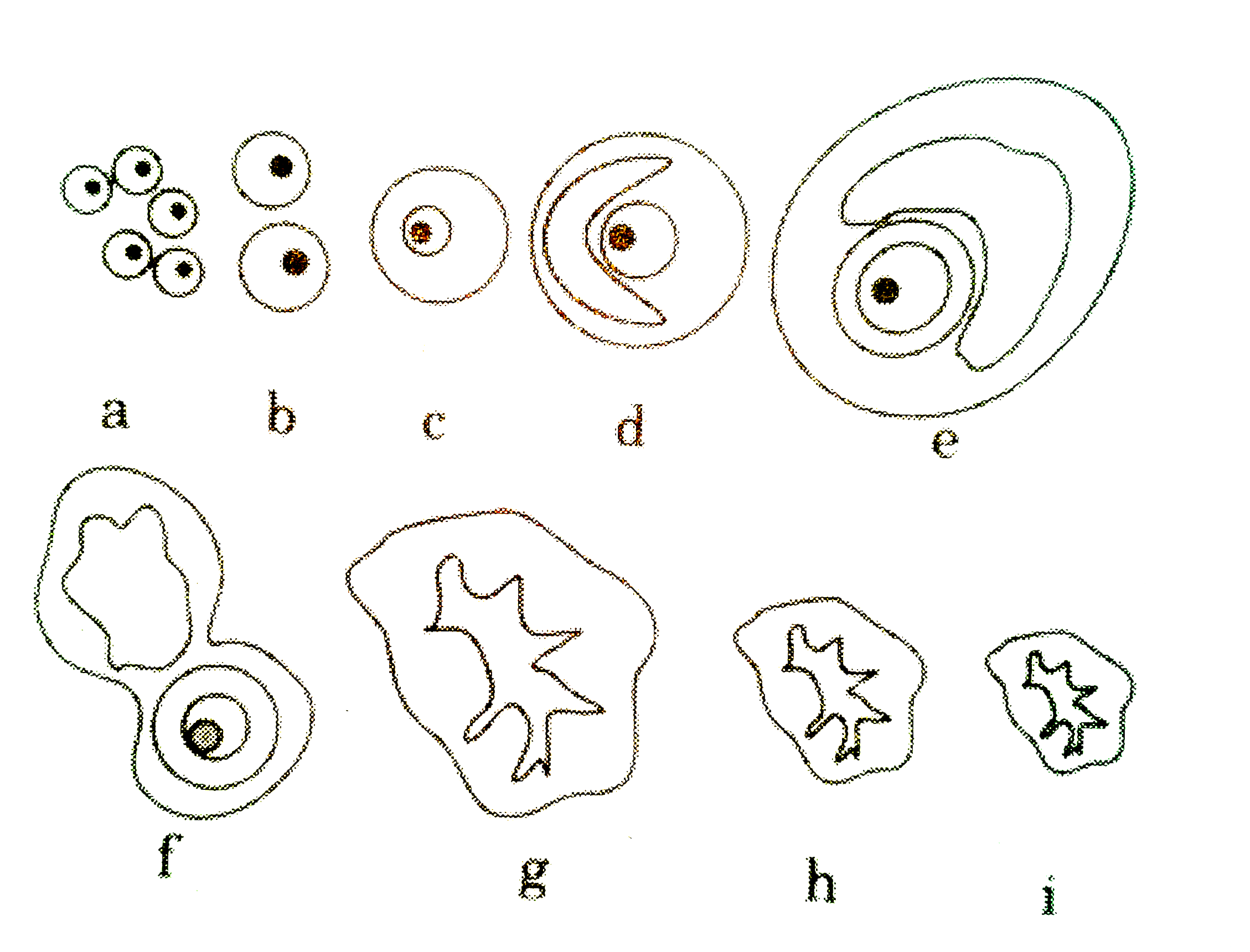
The following is the illustration of the sequence of ovarian events (a - 1) in a human female. (a) Identify the figure that illustrates ovulation and mention the stage of oogenesis it represents.
(b) Name the pituitary hormone that has caused the above mentioned event.
(c) Explain the changes that occur in the uterus simultaneously in anticipation
(d) Write the differences between 'c and 'h'.
(e ) Draw a labelled sketch of the structure of a human ovum prior to fertilization.

Text Solution

Verified by Experts
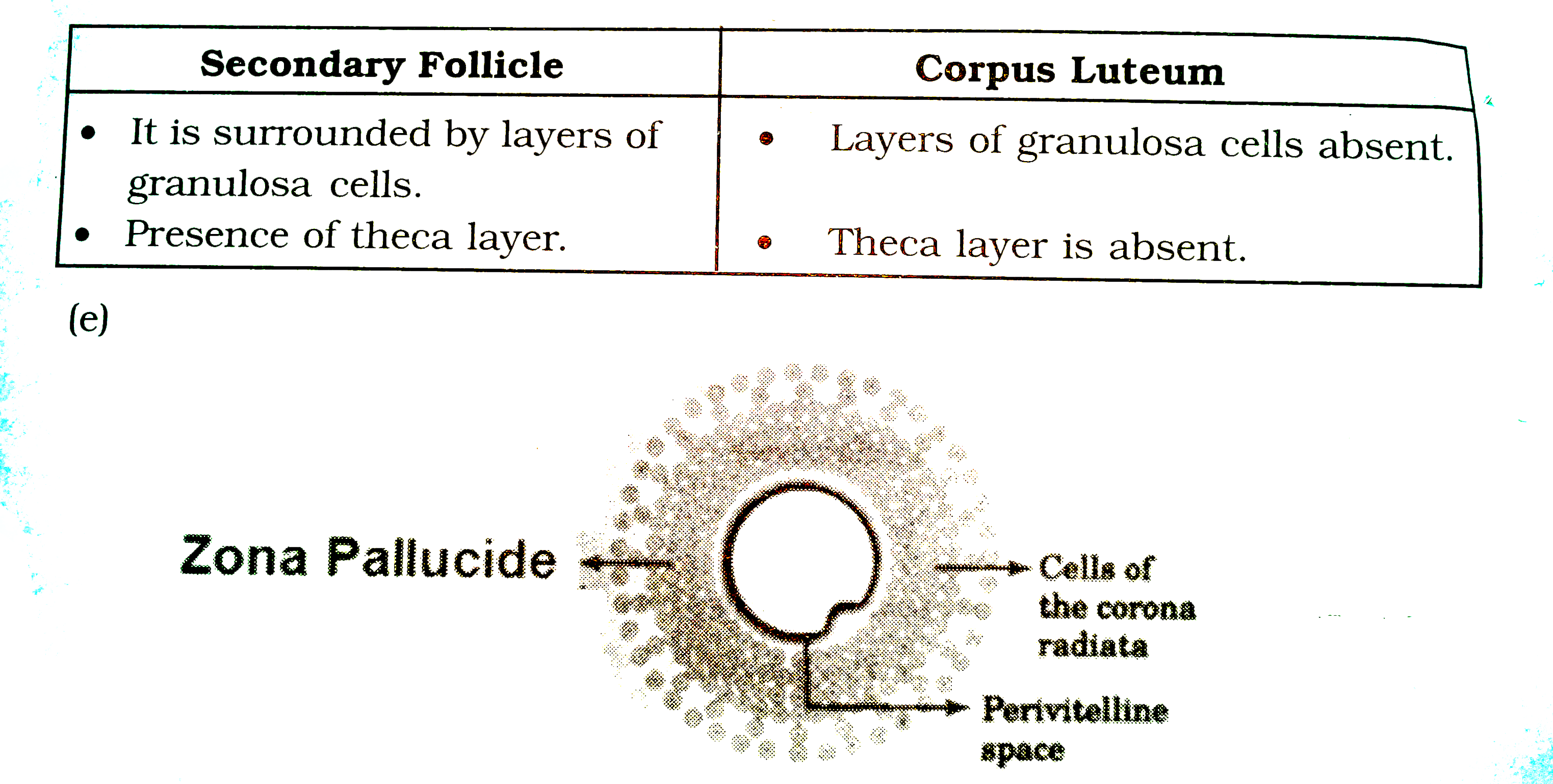
(a)Figure 'f illustrates ovulation. It represents the ovulatory stage of oogenesis
(b) Luteinizing Hormone (LH) is the pituitary hormone released during ovulation
(c) In anticipation of receiving the fertilized egg. the endometrium of the uterus gets thickened and also the blood supply to the endometrium increases
(d) In the figure (c) stage represents the secondary follicle and the th) stage represents the degenerating corpus luteum
Promotional Banner

Topper's Solved these Questions

  • REPRODUCTION

    TRUEMEN BIOLOGY ENGLISH|Exercise SECTION -C|22 Videos
  • Protista

    TRUEMEN BIOLOGY ENGLISH|Exercise ASSERTION AND REASON|6 Videos
  • Reproduction In Organisms

    TRUEMEN BIOLOGY ENGLISH|Exercise MULTIPLE CHOICE QUESTION|131 Videos

Similar Questions

Explore conceptually related problems

The following is the illustration of the sequence of ovarian events (a - i) in human female. (i) Identify the figure that illustrates ovulation and mention the stage of oogenesis it represents. (ii) Name the ovarian hormone and the pituitary hormone that have caused the above mentioned event. (iii) Explain the changes that occur in the uterus simultaneously in anticipation. (iv) Write the difference between 'c' and 'h' (v) Draw a labelled sketch of the structure of a human ovum prior to fertilization.

The following is the illustration of the sequence of ovarian events (a - i) in human female. ltimg src="https://d10lpgp6xz60nq.cloudfront.net/physics_images/SB_BIO_XII_SET_I_2012_E01_032_Q01.png" width="80%"gt (i) Identify the figure that illustrates ovulation and mention the stage of oogenesis it represents. (ii) Name the ovarian hormone and the pituitary hormone that have caused the above mentioned event. (iii) Explain the changes that occur in the uterus simultaneously in anticipation. (iv) Write the difference between 'c' and 'h' (v) Draw a labelled sketch of the structure of a human ovum prior to fertilization.

The following is the illustration of the sequence of ovarian events "a" to "I" in a human female : Identify developing follicle, mature follicles and corpus luteum.

The following is the illustration of the sequence of ovarian events ''a'' to ''I'' in a human female : (a) Identify the figure that illustrates corpus luteum and name the pituitary hormone that inhuences its formation. (b) Specify the endocrine function of corpus luteum. How does it influence the uterus? Why is it essential? (c) What is the difference between “d” and “e”? (d) Draw a neat labelled sketch of Graafian follicle.

the stages of oogenesis in human females. (b) Draw a labelled diagram of a human ovum released after ovulation.

Choose the correct sequence of events that occur in human reproduction

Explain the development of a secondary oocyte ( ovum) in a human female from the embryonic stage upto its ovulation. Name the hormones involved in this process.

At what stage of life is oogenesis initiated in a human female?

At what stage of life is oogenesis initiated in a human female?

Name the type of human cell HIV attacks on its entry into the body. Explain the events that occur in the cell which further lead to cause immuno deficinency syndrome.

TRUEMEN BIOLOGY ENGLISH-REPRODUCTION-SECTION-D
  1. Explain the different stages of oogenesis in human starting from life ...

    Text Solution

    |

  2. (a) When and how does placenta develop in human female? (b) How is ...

    Text Solution

    |

  3. Give reasons why: (i) Most zygotes in angiosperms divide only afte...

    Text Solution

    |

  4. Describe in sequence the events that lead to the development of a 3-ce...

    Text Solution

    |

  5. (a ) Trace the development of megaspore mother cell up to the formatio...

    Text Solution

    |

  6. (a ) Draw a labelled longitudinal view of an albuminous 'seed'· (b)...

    Text Solution

    |

  7. Describe the post-zygotic events leading to implantation and placenta ...

    Text Solution

    |

  8. Although sexual reproduction is a long drawn, energy-intensive complex...

    Text Solution

    |

  9. Embryo sacs of some apomitic species appear normal but contain diploid...

    Text Solution

    |

  10. Meiotic division during oogenesis is different from that in spermatoge...

    Text Solution

    |

  11. Enumerate and describe any five reasons for introducing sex education ...

    Text Solution

    |

  12. The following is the illustration of the sequence of ovarian events (a...

    Text Solution

    |

  13. (a) Draw a schematic labelled diagram of a fertilised embryo sac of an...

    Text Solution

    |

  14. (a) Draw a labelled diagram of sectional view of human ovary showing d...

    Text Solution

    |

  15. (a) Draw a labelled diagram of the sectional view of a typical anatrop...

    Text Solution

    |

  16. (a) Draw a diagrammatic sectional view of a mature anatropous ovule an...

    Text Solution

    |

  17. (a) Draw a diagrammatic sectional view of the female reproductive syst...

    Text Solution

    |

  18. (a) Draw a labelled schematic diagram of the transverse section of a m...

    Text Solution

    |

  19. Write two differences between spermtogenesis and oogenesis

    Text Solution

    |

  20. (a) Draw a diagram of a mature embryo sac of an angiosperm and label t...

    Text Solution

    |

