Home
Class 11
CHEMISTRY
Hydrogenation of adjoining compound in t...

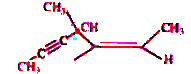
Hydrogenation of adjoining compound in the presence of poisoned palladium catalyst gives

A

An optically active compound

B

An optically inactive compound

C

A racemic inactive compound

D

A diastereomeric mixture

Text Solution

Verified by Experts

The correct Answer is:
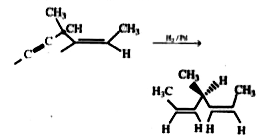
B

Hydrogenation with poisoned palladium brings about C is hydrogenation of Alkyne and does not affect double bond.
Promotional Banner

Similar Questions

Explore conceptually related problems

Hydrogenation of benzoyl chloride in the presence of Pd and BaSO_(4) gives

Hydrogenation of vegetable oils in presence of finely divided Nickel as catalyst. The reaction is

Carbon and its compounds burn in presence of oxygen air to give

In presence of nickel cyanide , acetylene gives

An element occupies group number 15 and period number 2 reacts with hydrogen under high pressure and in the presence of a catalyst it terms a hydride (A). In presence of excess of air and in the presence of platinum it forms an oxyacid (B). Identify the element, A and B.

In halogenation of aromatic compounds, catalyst is

Methyl alcohol when reacted with carbon monoxide using cobalt or rhodium as catalyst , compound underlineA is formed . underlineA on heating with HI in the presence of red phosphorus as catalyst underlineB is formed . Identify underlineB

When alkyl substituted acetylene undergoes addition with hydrogen in presence of Lindlar's catalyst, the alkene formed is

A hydrogenation reaction is carried out at 500 K. If the same reaction is carried out in the presence of a catalyst at the same rate with same frequency factor, the temperature required is 400 K. What is the activation energy of the eaction. If the catalyst lowers the activation energy barrier by 16 KJ/mol?

An organic compound with molecular formula C_5H_5Cl exists in two optically active forms A and B . A on hydrogenation in presence of a catalyst gives an optically inactive compound (C). While B gives an optically active compound D. Which of the following is the correct IUPAC name of compound D

