Home
Class 11
CHEMISTRY
1) The -=C-H unit of an alkyne is more a...

1) The `-=C-H` unit of an alkyne is more acidic than a C – H unit of an alkene or alkane, allowing acetylene and terminal alkynes to be converted to their conjugate bases `-= C`.
2) Unlike alkenes, alkynes are reduced by metals, especially Li, Na and K.
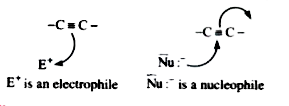
3) Unlike alkenes, alkynes can undergo nucleophilic as well as electrophilic addition.

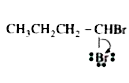
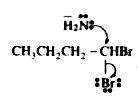
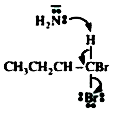
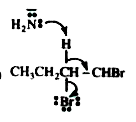
Which of the following best describes what happens in the first step in the mechanism of the reaction shown?
`CH_3 CH_2CH_2CHBr_2 + 3NaNH_2 overset(NH_3)to CH_3CH_2C -=CNa +2NaBr +3NH_3`

A

B

C

D

Text Solution

Verified by Experts

The correct Answer is:

D

Conceptual
Promotional Banner

Similar Questions

Explore conceptually related problems

1) The -=C-H unit of an alkyne is more acidic than a C – H unit of an alkene or alkane, allowing acetylene and terminal alkynes to be converted to their conjugate bases -= C . 2) Unlike alkenes, alkynes are reduced by metals, especially Li, Na and K. 3) Unlike alkenes, alkynes can undergo nucleophilic as well as electrophilic addition. Which of the following best describes what happens in the first step in the mechanism of the hydrogen - deuterium exchange reaction shown? CH_3 -= CD underset(NH_3)overset(NaNH_2)to CH_3C -= CH

Which of the following is not a alkene?

Which of the following alkenes are more stable than

What are alkynes?

Alkynes are represented by the formula

The general formula of alkynes is

Which of the following molecular formula belongs to alkyne family ?

Which one of the following is used to obtain the maximum percentage of terminal alkene by dehydrohalogenation of CH_3CH_2C(CH_3)_2 Br ?

Explain why Aldehydes and ketones undergoes nucleophilic addition while alkenes undergoes electrophilic addition though both are unsaturated compounds.
