Home
Class 11
CHEMISTRY
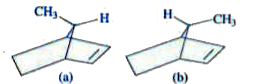
Rate of reaction towards reduction using...


Rate of reaction towards reduction using `(H_2 // Pt)` :

A

` a gt b`

B

`a=b`

C

`b gt a `

D

Reduction of given molecule is not possible

Text Solution

Verified by Experts

The correct Answer is:

A

`a gt b`
Promotional Banner

Similar Questions

Explore conceptually related problems

(A) The rate of the reaction is the rate of change of concentration of a reactant or a product. (R ) Rate of reaction remains constant during the complete reaction.

For the reaction 4NH_(3)+5O_(2)to4NO+6H_(2)O the rate of reaction with respection with respect to NH_(3) is 2xx10^(-3)Ms^(-1) . Then the rate of the reaction with respect to oxygen is _______ Ms^(-1)

Define rates with respect to substance and rate of the reaction for Haber's process. N_(2)+ 3H_(2) to 2NH_(3) .

(A) The rate of reaction is always negative. (R ) Minus sign used in expressing the rate shows that concentration of product is decreasing

Pure H_(2)O_(2) is not very stable and decomposes in the presence of light or on standing or heating overset((-1))(H_(2)O_(2l))+overset((2-)) (H_(2)O_((l)))+overset((0))(O_(2(g))) The oxidation state of oxygen in H_(2)O_(2) is 1 it is oxidistion state of zero in O_(2) and is reduced to an oxidation state of -2 in H_(2)O . Thus, this decomposition is an example of auto oxidation reduction reaction or disproportionation reaction. Pure H_(2)O is

Define average rate of a reaction. How is the rate of reaction expressed in term of charge in the concentration of reactansts and products for the following reactions. 1) 2HI_((g))to H_(2(g))+I_(2(g)) 2) Hg_((l))+CL_(2(g))to Hg Cl_(2(g)) 3) 5 Br _((aq))+ BrO_((aq))^(-) +6H_((aq))^(+)to 3 Br _(2(aq)) +3H_(2) O_((l))

What is the rate of the reaction for 2AtoB

For H_2 + Cl_2overset(hv)(to) 2HCl , rate of reaction at t=0 is given by rate= - (d)/(dt) [H_2] = 6 xx 10^(-3) M-"min"^(-1) then rate of the reaction at t = 30 min is

From the rate expression for the following reactions, determine their order of reaction and the admensions of the rate constants. i) 3NO (g)to N_(2)O (g)" "Rate=k[NO]^(2) ii) H_(2)O_(2)(aq) +3I^(-)(aq)+ 2H^(+) to 2H_(2)O(l)+I_(3)" "Rate =k [H_(2)O_(2)][I^(-)] iii) C_(2) H_(5)Cl(g) to C_(2) H_(4)(g) +CO(g)" "Rate =k[CH_(3)CHO]^(3//2) iv) C_(2) H_()5) Cl (g) to C_(2)H_(2) to C_(2)H_(4) (g) + HCl(g)" "Rate =k [C_(2)H_(5)Cl]

NO_(3)^(-)(aq) + 2H^(+) (aq) + e^(-) to NO_(2)(g) + H_2O . Calculate the reduction potential of the half reaction in neutral solution, if all other species to be at unit concentration and the standard reduction potential is 0.78 V.
