


Similar Questions
Explore conceptually related problems
Recommended Questions
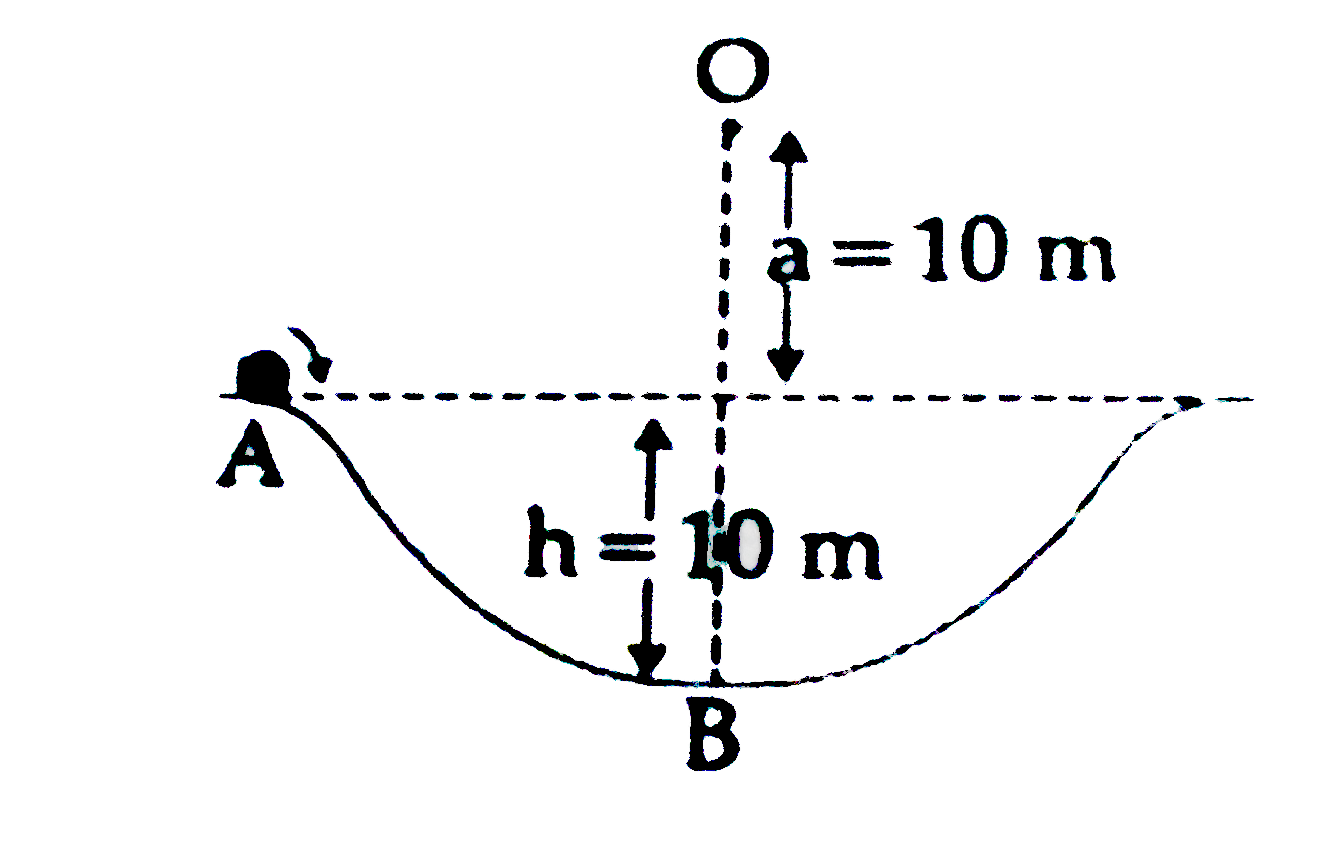
- A particle of mass 20 g is released with an initial velocity 5m//s alo...
Text Solution
|
- A particle of mass m=5.00kg is released from point A and it slides on ...
Text Solution
|
- A particle A is projected from the ground with an initial velocity of ...
Text Solution
|
- A smooth sphere (mass 10kg. negligible radius) rolls on a smooth curve...
Text Solution
|
- A particle of mass 20 g is released with an initial velocity 5m//s alo...
Text Solution
|
- A particle is projected from point A perpendicular to inclined plane w...
Text Solution
|
- A particle of mass 20 g is released with an initial velocity 5m//s alo...
Text Solution
|
- A particle is thrown vertically up from the top of a building of heigh...
Text Solution
|
- A particle P is moving along a straight line as shown in the figure. D...
Text Solution
|