

Home
Class 12
CHEMISTRY
The diagram of a cubic crystal whose mol...

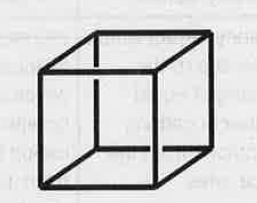
The diagram of a cubic crystal whose molecular mass=M, edge length=a, density=P , is given below. N is the Avogrado number.

From the above given details find the mass of this cube and also the mass of N particles?

Promotional Banner

Similar Questions

Explore conceptually related problems

The diagram of a cubic crystal whose molecular mass=M, edge length=a, density=P , is given below. N is the Avogrado number. By equating these two equations, try to find out a suitable equation for the density of this cube.

a) Find the moment of inertia of a sphere about a tangent to the sphere, given the moment of inertia of the sphere about any of its diameters to be (2MR^2)/5 , where M is the mass of the sphere and R is the radius of the sphere. b) Given the moment of inertia of a disc of mass M and radius R about any of its diameters to be MR^2/4 , find its moment of inertia about an axis normal to the disc and passing through a point on its edge.

A cubic unit cell is characterized by a = b = c and alpha = beta = gamma = 90° A metal forms cubic crystals. The mass of one unit cell of it is M/N_A gram, where M is the atomic mass of the metal and N_A is Avogardo Number. What is the type of cubic unit cell possessed by the metal?

A cubic unit cell is characterised by a=b=c and alpha=beta=gamma=90^@ . A metal forms cubic crystals. The mass of one cell of it is frac{M}{N_A} gram where M is the atomic mass of the metal and N_A is avogadra number. What is the type of cubic unit cell.

Some details of the atoms X and Y are given below. a) Find the mass number of elements X and Y. b) Find the relationship between these two atoms. c) Write there electronic configuration.

A-scientist was performing X-ray diffraction studies on a crystal having rock salt structure. The molecular mass of the.crystal ls 239 gmol^-1 .The density of the crystal was found to be 12.7 gcm^-3 The scientist is supposed to study only those crystals having edge length below 0.75 mm. Show whether the crystal selected by the scientist was appropriate or not.

How many GAMs are present in each the samples given below? Calculate the number of atoms present in each of the sample ? (Atomic mass N= 14,0=16). 42g Nitrogen.

MAXIMUM PUBLICATION-THE SOLID STATE-EXAMPLE
  1. NaCl is an example for diamagnetic substance. What is the difference b...

    Text Solution

    |

  2. NaCl is an example for diamagnetic substance. In case of feri magnetic...

    Text Solution

    |

  3. The diagram of a cubic crystal whose molecular mass=M, edge length=a, ...

    Text Solution

    |

  4. The diagram of a cubic crystal whose molecular mass=M, edge length=a, ...

    Text Solution

    |

  5. Classify each ofthe following as being either a ptype or a n-type semi...

    Text Solution

    |

  6. A compound is formed by two elements P and Q. The element Q forms ccp ...

    Text Solution

    |

  7. Schottky defects and Frenkel defects are two stoichiometric defects sh...

    Text Solution

    |

  8. Schottky defects and Frenkel defects are two stoichiometric defects sh...

    Text Solution

    |

  9. Schematic alignment of magnetic moments of ferromagnetic, antiferromag...

    Text Solution

    |

  10. Based on the nature of order, present in the arrangement of the consti...

    Text Solution

    |

  11. A list of solids are given below : Quartz, glass, iodine, ice. From ...

    Text Solution

    |

  12. A list of solids are given below : Quartz, glass, iodine, ice. From ...

    Text Solution

    |

  13. Cristal defects give rise to certain special properties in the solids....

    Text Solution

    |

  14. Cristal defects give rise to certain special properties in the solids....

    Text Solution

    |

  15. Cristal defects give rise to certain special properties in the solids....

    Text Solution

    |

  16. A cubic unit cell is characterized by a = b = c and alpha = beta = gam...

    Text Solution

    |

  17. A cubic unit cell is characterized by a = b = c and alpha = beta = gam...

    Text Solution

    |

  18. Solids can be classified into three types on the basis of their electr...

    Text Solution

    |

  19. Solids can be classified into three types on the basis of their electr...

    Text Solution

    |

  20. Schottky and Frenkel defects are stoichiometric defects. Write any tw...

    Text Solution

    |