Home
Class 12
CHEMISTRY
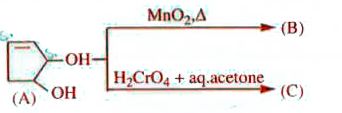
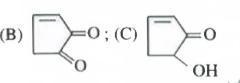
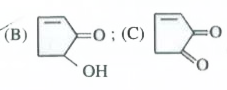
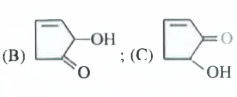
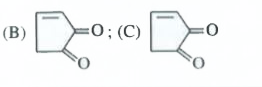
The compounds B and C , respectively are...


The compounds B and C , respectively are

A

B

C

D

Text Solution

Verified by Experts

The correct Answer is:

B
Promotional Banner

Topper's Solved these Questions

  • ALCOHOLS, PHENOLS AND ETHERS

    AAKASH SERIES|Exercise ETHERS (OBJECTIVE EXERCISE-1 (INTRODUCTION AND PREPARATIONS))|14 Videos
  • ALCOHOLS, PHENOLS AND ETHERS

    AAKASH SERIES|Exercise ETHERS (OBJECTIVE EXERCISE-1 (PROPERTIES))|14 Videos
  • ALCOHOLS, PHENOLS AND ETHERS

    AAKASH SERIES|Exercise PHENOLS (OBJECTIVE EXERCISE - 2A)|30 Videos
  • ALDEHYDES AND KETONES

    AAKASH SERIES|Exercise Exercise 3.2|41 Videos

Similar Questions

Explore conceptually related problems

Compounds A and B respectively are

An alkali metal hydride (NaH) reacts with diborane in 'A' to give a tetrahedral compound 'B' which is extensively used as reducing agent in organic synthesis. The compounds 'A' and 'B' respectively are

A bluish green coloured compound 'A' on heating gives two products 'B' and 'C'. A metal 'D' is deposited on passing H_(2) through heated 'B'. The compound 'A' and 'B' are insoluble in water. 'B' is black in colour, dissolves in HCI and on treatment with K_(4)[Fe(CN)_(6)] gives a chocolate brown ppm of compound 'E'. 'C' is colourless, odourless gas and turns lime water milkly. The compounds 'B' and 'C' are respectively

Compounds (B) and (D) are, respectively

Compound B is

SiCl_(4) on hydrolysis forms 'X' and HCl. Compound 'X' loses water at 1000^(@)C and gives 'Y' compounds 'X' and 'Y' respectively are

Monosaccharides have -CHO (or C=O) and -OH groups, so they undergo usual oxidation and reduction. Further, monosaccharides from osazone when treated with excess of phenylhdrazine (3 equivalents). In osazone formation only the first two carbon atoms are involved. Thus monosaccharidxes having identical configuration on reset of C atoms except first two will form same osazone, as is the case with glucose and fructose. A, B and C are three hexoses and form same osazone D. Compounds A to D behave as below (A) D overset(HCl)rarr underset(CH_(3)COOH)overset(Zn)rarr D - Fructose (B) A overset(Ni.H_(2))rarr overset(HNO_(3))rarr underset(H_(3)O^(+))overset(Na-Hg)rarr B + C (C ) B overset(HNO_(3))rarr Optically active glycaric acid (D) C overset(HNO_(3))rarr Optically inactive glycaric acid Compound B and C, respectively are

Compounds (C) and (E) are respectively

A bluish green coloured compound 'A' on heating gives two products 'B' and 'C'. A metal 'D' is deposited on passing H_(2) through heated 'B'. The compound 'A' and 'B' are insoluble in water. 'B' is black in colour, dissolves in HCI and on treatment with K_(4)[Fe(CN)_(6)] gives a chocolate brown ppm of compound 'E'. 'C' is colourless, odourless gas and turns lime water milkly. The compounds 'D' and 'E' are respectively
