Home
Class 11
PHYSICS
As the position of an object (u) reflect...

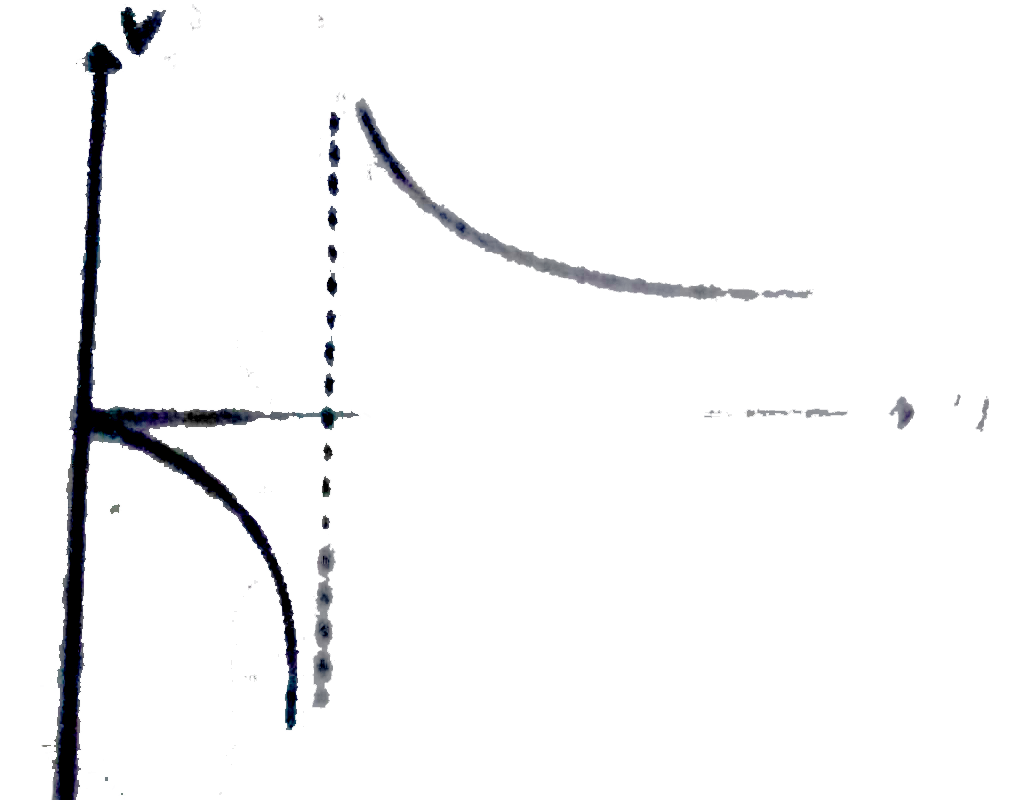
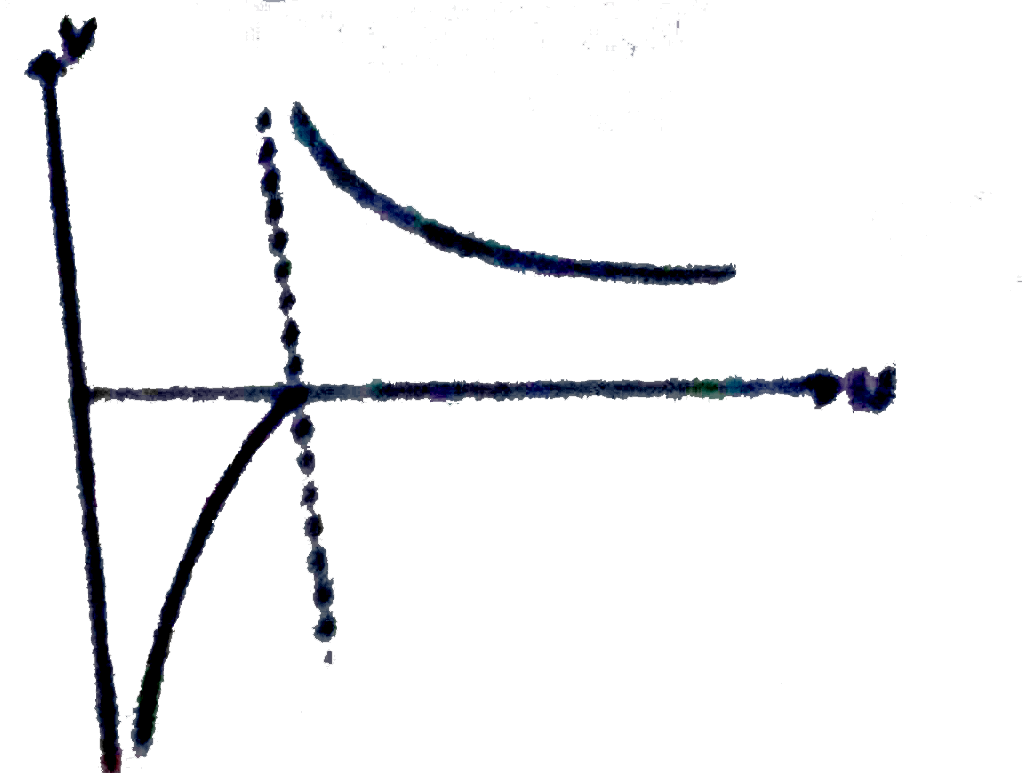
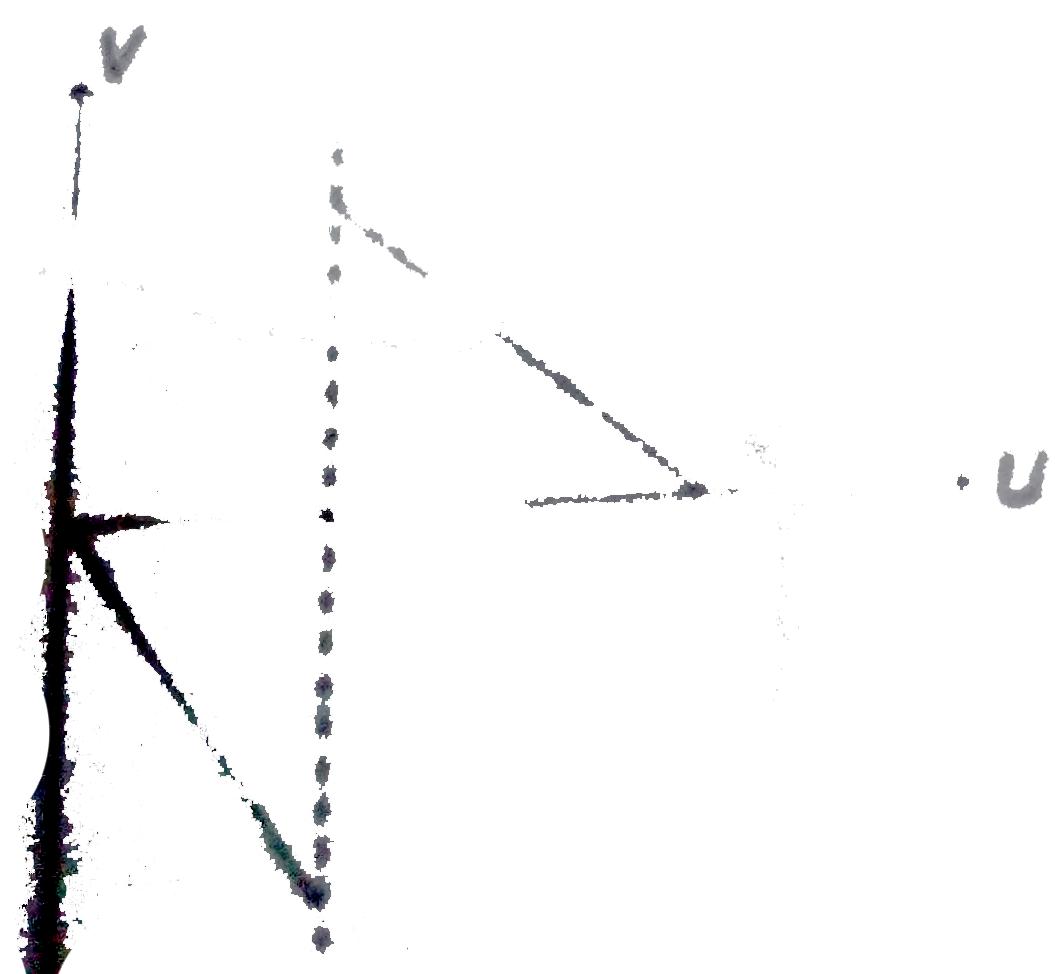
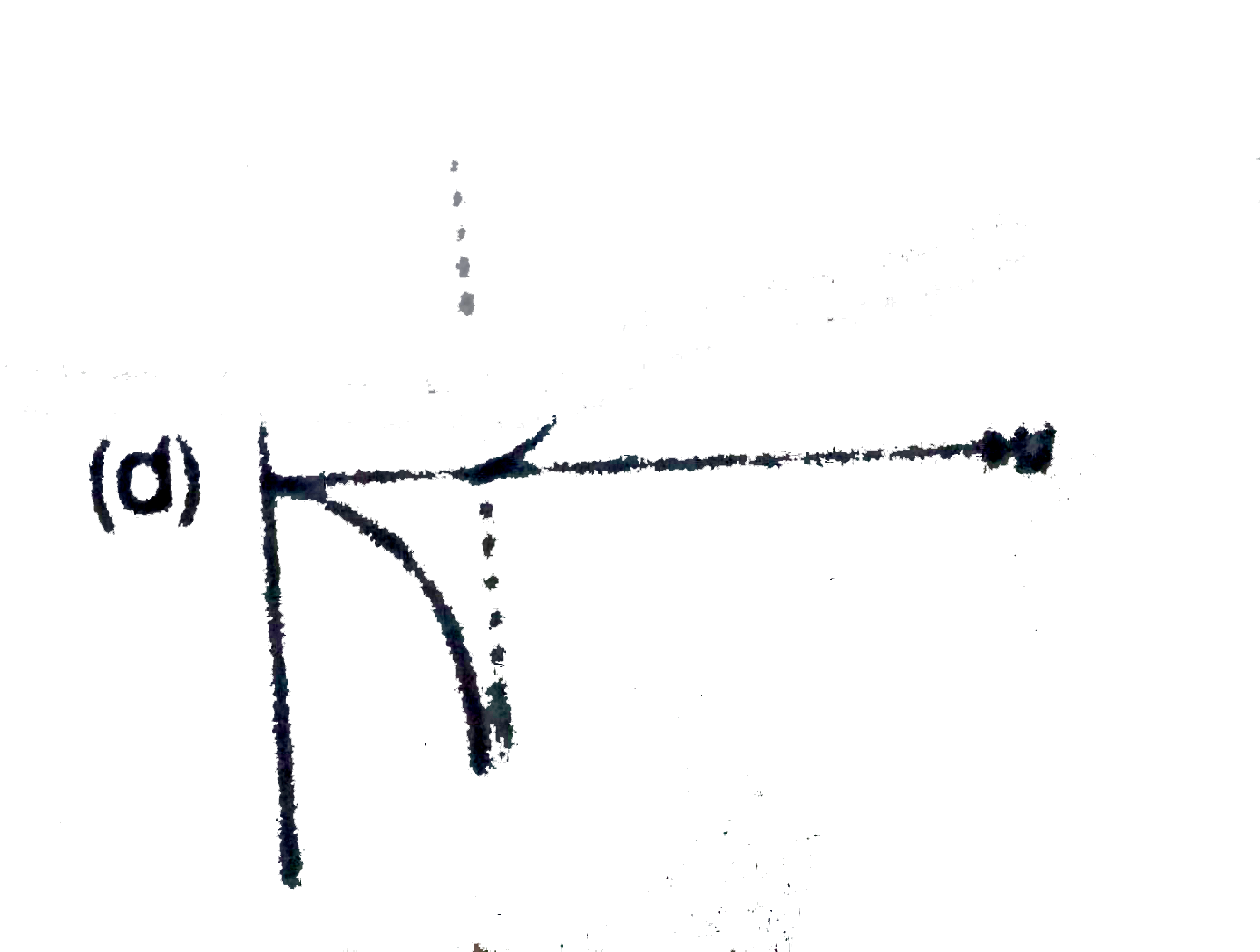
As the position of an object (u) reflected from a concave mirror is varied, the position of the image (v) also varies. By latting the u changes from 0 to `+ oo` the graph between v versus u will be

A

B

C

D

Text Solution

AI Generated Solution

The correct Answer is:

To solve the problem of finding the relationship between the object distance (u) and the image distance (v) for a concave mirror, we will use the mirror formula and analyze the behavior of the graph as u varies from 0 to +∞. ### Step-by-Step Solution: 1. **Understand the Mirror Formula**: The mirror formula for a concave mirror is given by: \[ \frac{1}{f} = \frac{1}{v} + \frac{1}{u} \] Rearranging this gives: \[ \frac{1}{v} = \frac{1}{f} - \frac{1}{u} \] or equivalently, \[ v = \frac{uf}{u - f} \] 2. **Analyze the Behavior as u Approaches 0**: - When \( u = 0 \): \[ v = \frac{0 \cdot f}{0 - f} = 0 \] - Thus, when the object is at the pole of the mirror, the image is also at the pole. 3. **Analyze the Behavior as u Approaches +∞**: - When \( u \) approaches \( +\infty \): \[ v = \frac{u \cdot f}{u - f} \approx f \quad \text{(since } u \text{ is much larger than } f\text{)} \] - Therefore, as the object moves far away, the image distance approaches the focal length \( f \). 4. **Identify Key Points**: - At \( u = 0 \), \( v = 0 \). - As \( u \to +\infty \), \( v \to f \). 5. **Graphing the Relationship**: - The graph starts at the origin (0,0) and approaches the line \( v = f \) as \( u \) increases. - The curve will be hyperbolic in nature, reflecting that as \( u \) increases, \( v \) approaches a constant value (the focal length). 6. **Conclusion**: - The graph of \( v \) versus \( u \) will start from the origin and will asymptotically approach the line \( v = f \) as \( u \) increases.
Promotional Banner

Topper's Solved these Questions

  • RAY OPTICS

    DC PANDEY ENGLISH|Exercise B. More than one option is correct|20 Videos
  • RAY OPTICS

    DC PANDEY ENGLISH|Exercise C. comprehension type question|14 Videos
  • RAY OPTICS

    DC PANDEY ENGLISH|Exercise Integer type q.|14 Videos
  • PROPERTIES OF MATTER

    DC PANDEY ENGLISH|Exercise Integer|8 Videos
  • ROTATION

    DC PANDEY ENGLISH|Exercise (C) Chapter Exercises|39 Videos

Similar Questions

Explore conceptually related problems

The graph between u and v for a convex mirrorr is

The erect image formed by a concave mirror is of size double the size of object. How are u and v related?

The graph between (1)/(v) and (1)/(u) for a concave mirror looks like.

The graph between (1)/(v) and (1)/(u) for a concave mirror looks like.

A real inverted image in a concave mirror is represented by ( u , v , f are corrdinates)

An object is brought from a far distance towards a concave mirror. How do the nature, position and size of image change?

In an optics experiment, with the position of the object fixed, a student varies the position of a convex lens and for each position, the screen is adjusted to get a clear image of the object. A graph between the object distance u and the image distance v, from the lens, is plitted using the same scale for the two axes. A straight line passing through the origin and making an angle of 45^circ with x-axis meets the experimental curve at P. The coordinates of P will be.

An object is placed at a distance u from a concave mirror and its real image is received on a screen placed at a distance of v from the mirror. If f is the focal length of the mirror, then the graph between 1/v versus 1/u is

For an object placed at a distance 20 cm from a concave mirror, the image is formed at the same position. What is the focal length of the mirror?

An object 2 mm high is placed 150 mm from a concave mirror of focal length 5 cm. Find the position (in mm) and size (in mm) of the image.

DC PANDEY ENGLISH-RAY OPTICS-A. Only one option is correct (JEE Advance)
  1. A plane mirror is placed at origin parallel of y-axis, facing the posi...

    Text Solution

    |

  2. As the position of an object (u) reflected from a concave mirror is va...

    Text Solution

    |

  3. A 2 cm diameter coin rests flat on the bottom of a bowl in which the w...

    Text Solution

    |

  4. Refraction takes place at a convex spherical boundary separating air-g...

    Text Solution

    |

  5. Light is incident normally on face AB of a prism as shown in Figure. A...

    Text Solution

    |

  6. An infinitely long rod lies along the axis of a concave mirror of foca...

    Text Solution

    |

  7. Two point sources S(1) and S(2) are 24 cm apart. What should a convex ...

    Text Solution

    |

  8. Two identical thin planoconvex lenses of refractive index n are silver...

    Text Solution

    |

  9. A refracting surface is represented by the equation x^(2)+y^(2) = a^(2...

    Text Solution

    |

  10. An object infront of a concave mirror of focal length f. A virtual ima...

    Text Solution

    |

  11. For an equilateral prism, it is observed that when a ray strikes grazi...

    Text Solution

    |

  12. A convex lens of focal length 30 cm forms a real image three times lar...

    Text Solution

    |

  13. A real image is formed by a convex lens. Then it is put in contact wit...

    Text Solution

    |

  14. A convex lens is in contact with a concave lens. The magnitude of the ...

    Text Solution

    |

  15. What is the minimum value of the refractive index for a 90^(@)-45^(@)-...

    Text Solution

    |

  16. An object O is placed in front of a small plane mirror M(1) and a larg...

    Text Solution

    |

  17. An object is kept at a distance of 16 cm from a thin lens and the imag...

    Text Solution

    |

  18. A plane mirror is placed at the bottom of a tank containing a liquid o...

    Text Solution

    |

  19. A real image of a point object O was formed by an equi-convex lens of ...

    Text Solution

    |

  20. One side of a glass slab is silvered as shown. A ray of light is incid...

    Text Solution

    |
