Home
Class 11
PHYSICS
A particle is thrown vertically upwards ...

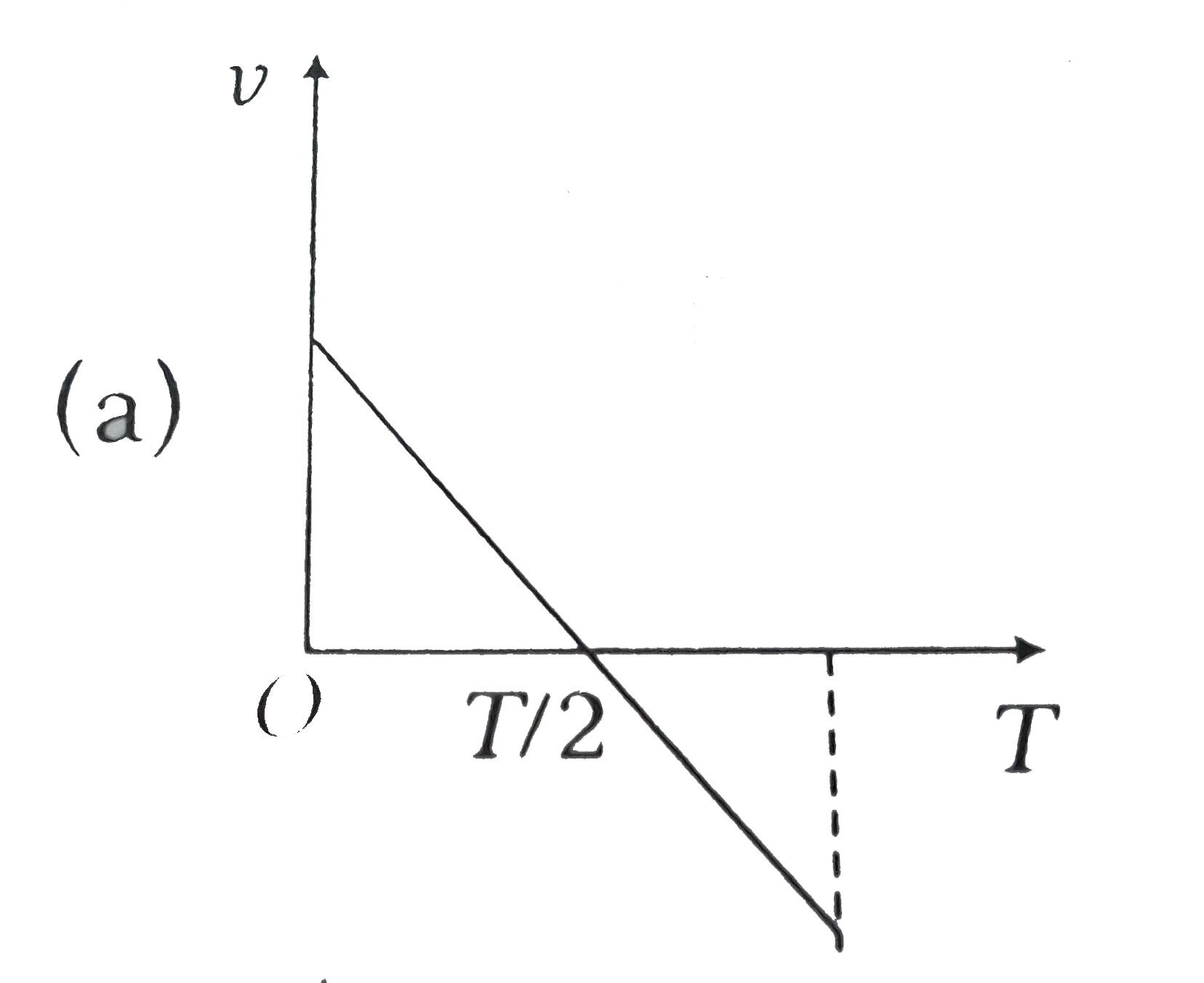
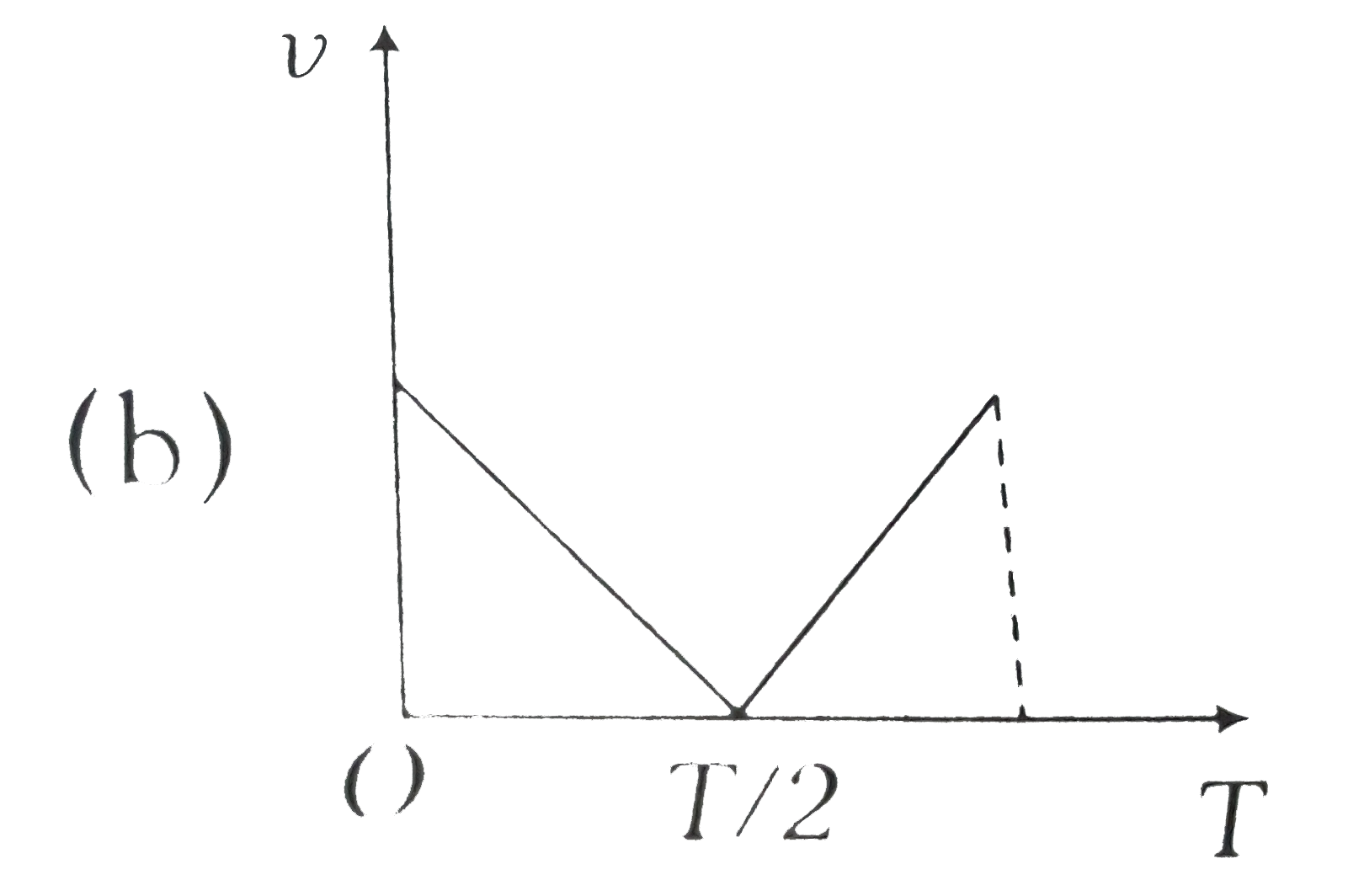
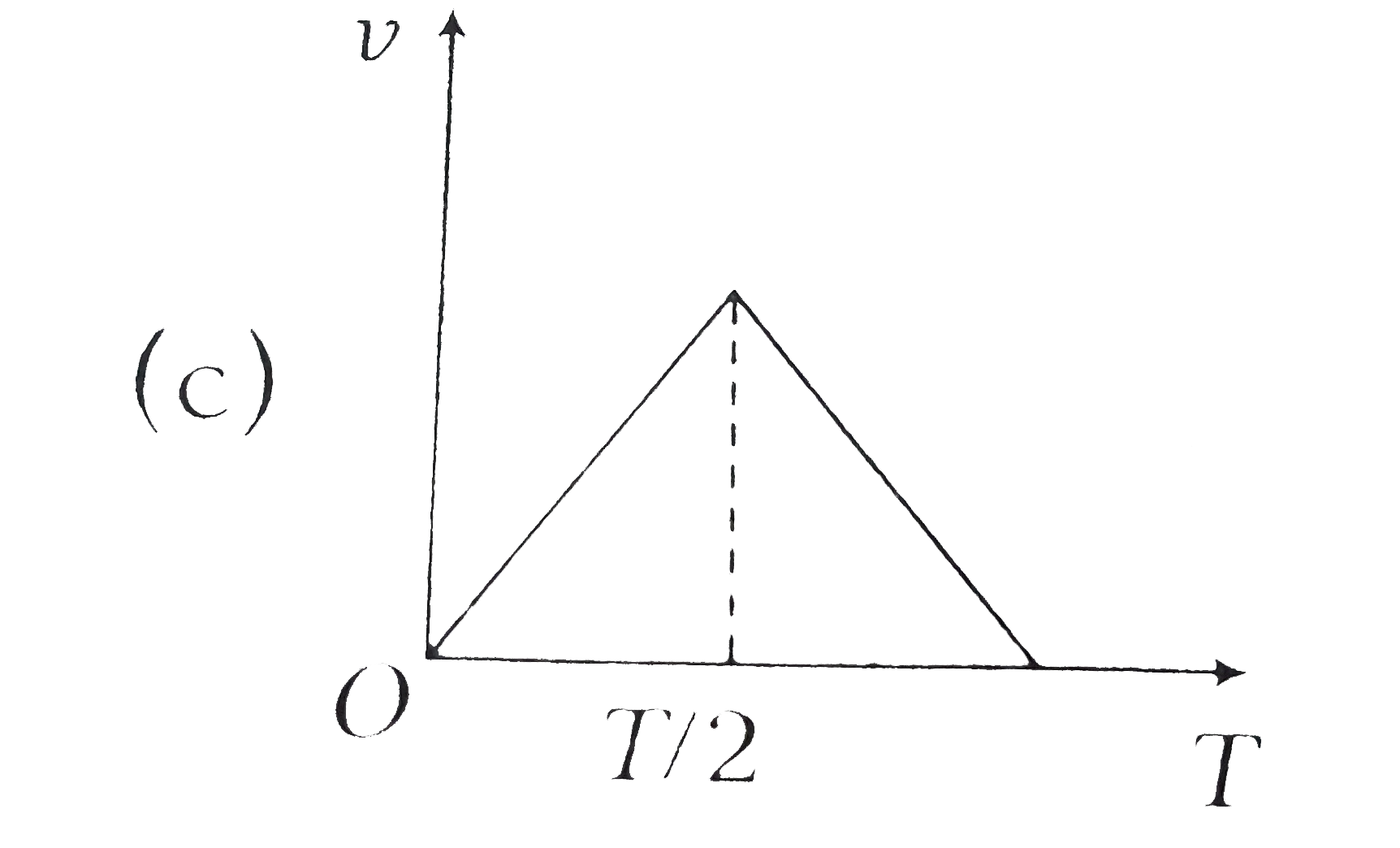
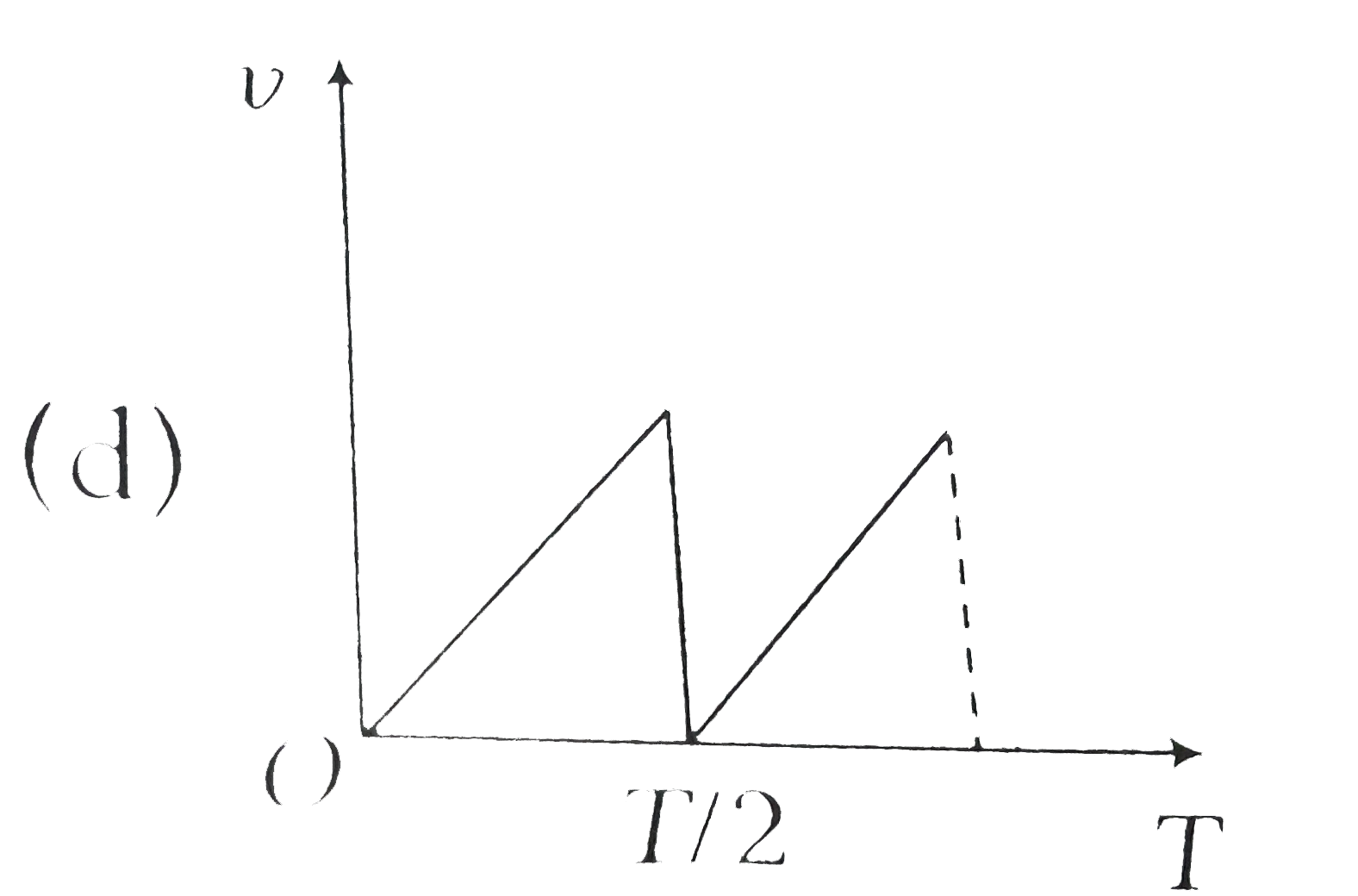
A particle is thrown vertically upwards with a velocity `v`. It returns to the ground in time T. which of the following graphs correctly represents the motion ?

A

B

C

D

Text Solution

AI Generated Solution

The correct Answer is:

To solve the problem of a particle thrown vertically upwards with an initial velocity \( v \) and returning to the ground in time \( T \), we need to analyze the motion of the particle step by step. ### Step-by-Step Solution: 1. **Understanding the Motion**: - When a particle is thrown upwards, it moves against the force of gravity. The initial velocity is \( v \), and it will decelerate due to gravitational acceleration \( g \) until it reaches its maximum height. 2. **Time to Reach Maximum Height**: - The time taken to reach the maximum height (where the velocity becomes zero) is given by: \[ t_{\text{up}} = \frac{v}{g} \] 3. **Total Time of Flight**: - The total time of flight \( T \) is the time taken to go up and come back down. Since the time taken to go up is equal to the time taken to come down: \[ T = 2 \cdot t_{\text{up}} = 2 \cdot \frac{v}{g} \] 4. **Velocity vs. Time Graph**: - The velocity of the particle changes over time. Initially, it starts with a positive velocity \( v \) and decreases to 0 at \( t = \frac{T}{2} \) (the maximum height). After that, it starts increasing in the negative direction (downwards) until it reaches the ground at \( t = T \). - The graph will start at \( v \), decrease linearly to 0 at \( t = \frac{T}{2} \), and then linearly increase in the negative direction until it reaches \( -v \) at \( t = T \). 5. **Choosing the Correct Graph**: - The correct graph should show a linear decrease from \( v \) to 0 and then a linear increase from 0 to \( -v \). This corresponds to a straight line that slopes downwards and then slopes upwards in the negative direction. ### Conclusion: The correct graph that represents the motion of the particle is option A, which shows the velocity decreasing to 0 and then increasing in the negative direction. ---

To solve the problem of a particle thrown vertically upwards with an initial velocity \( v \) and returning to the ground in time \( T \), we need to analyze the motion of the particle step by step. ### Step-by-Step Solution: 1. **Understanding the Motion**: - When a particle is thrown upwards, it moves against the force of gravity. The initial velocity is \( v \), and it will decelerate due to gravitational acceleration \( g \) until it reaches its maximum height. 2. **Time to Reach Maximum Height**: ...
Promotional Banner

Topper's Solved these Questions

  • MOTION IN A PLANE

    DC PANDEY ENGLISH|Exercise Check point 3.7|15 Videos
  • MOTION IN A PLANE

    DC PANDEY ENGLISH|Exercise (A) Taking it together|75 Videos
  • MOTION IN A PLANE

    DC PANDEY ENGLISH|Exercise Check point 3.5|25 Videos
  • MOTION

    DC PANDEY ENGLISH|Exercise Medical entrances gallery|19 Videos
  • PROJECTILE MOTION

    DC PANDEY ENGLISH|Exercise Level - 2 Subjective|10 Videos

Similar Questions

Explore conceptually related problems

Which of the following x-t graphs does not represent periodic motion?

Which of the following velocity-time graphs represent uniform motion

A body is thrown vertically upwards. Which one of the following graphs correctly represent the velocity vs time?

A particle is projected vertically upward with velocity u from a point A , when it returns to the point of projection .

A particle is projected vertically upward with initial velocity 25" ms"^(–1) . During third second of its motion, which of the following statement is correct ?

A ball is thrown vertically upwards with a velocity of 10 ms^(-1) . It returns to the ground with a velocity of 9 ms^(-1) . If g=9.8 ms^(-2) , then the maximum height attained by the ball is nearly (assume air resistance to be uniform)

A ball thrown vertically upward with initial velocity u. Which of the following graphs represent the velocity of ball correctly as function of time? (Take upward direction as positive)

A ball is thrown vertically upwards and its velocity v varies with time t as shown in the figure. Which of the graphs (1),(2),(3),(4) shows the correct vurve of displacement versus time ?

A ball is thrown vertically upward with a velocity 'u' from the balloon descending with velocity v. After what time, the ball will pass by the balloon ?

From a tower of height H, a particle is thrown vertically upwards with a speed u. The time taken by the particle, to hit the ground, is n times that taken by it to reach the highest point of its path. The relation between H, u and n is

DC PANDEY ENGLISH-MOTION IN A PLANE-Check point 3.6
  1. Which of the following graph represents uniform motion

    Text Solution

    |

  2. From the following displacement-time graph find out the velocity of a ...

    Text Solution

    |

  3. The distance time graph of a particle at time t makes angle 45^(@) wit...

    Text Solution

    |

  4. The graph between displacement and time for a particle moving with uni...

    Text Solution

    |

  5. The v -t graph of a moving object is given in figure. The maximum acce...

    Text Solution

    |

  6. The variation of velocity of a particle with time moving along a strai...

    Text Solution

    |

  7. A lift is going up. The variation in the speed of the lift is as given...

    Text Solution

    |

  8. System is shown in the figure. Velocity of sphere A is 9 (m)/(s). Find...

    Text Solution

    |

  9. The x-t equation is given as x=2t+1. The corresponding v-t graph is

    Text Solution

    |

  10. Which of the following graph correctly represents velocity-time relati...

    Text Solution

    |

  11. A particle is thrown vertically upwards with a velocity v. It returns ...

    Text Solution

    |

  12. The velocity time graph of a body is shown in fig. it indicates that :

    Text Solution

    |

  13. The velocity - time graph is shown in the figure, for a particle. The ...

    Text Solution

    |

  14. The v-t plot of a moving object ios shown in the figure. The average v...

    Text Solution

    |

  15. Which of the following graphs cannot possibly represent one dimensiona...

    Text Solution

    |

  16. If the velocity v of particle moving along a straight line decreases l...

    Text Solution

    |

  17. v^(2) versus s-graph of a particle moving in a straight line is shown ...

    Text Solution

    |

  18. A graph between the square of the velocity of a particle and the dista...

    Text Solution

    |

  19. The area under acceleration-time graph represents the

    Text Solution

    |

  20. A particle starts from rest at t= 0 and undergoes and acceleration (a...

    Text Solution

    |
