Home
Class 14
MATHS
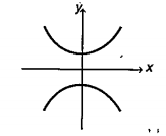
In the adjacent diagram two graphs of eq...

In the adjacent diagram two graphs of equal magnitude are being shown. Their maxima and minima are also same, then the correct choice for the two equation of functions is:

A

`y=ax^2+b` and `y=ax^2-b`

B

`f(x)=ax^2` and `f(x)=bx^2 , aneb`

C

`f(x)=ax^2+bx` and `f(x)=-ax^2+bx`

D

`y+ax^2+c=0` and `y-ax^2-c=0`

Text Solution

Verified by Experts

The correct Answer is:

D
Promotional Banner

Topper's Solved these Questions

  • ELEMENTS OF ALGEBRA

    QUANTUM CAT|Exercise QUESTION BANK|196 Videos
  • GEOMETRY

    QUANTUM CAT|Exercise QUESTION BANK|547 Videos

Similar Questions

Explore conceptually related problems

The graph, shown in the adjacent diagram, represents the variation of temperature (T) of two bodies, x and y having same surface area, with time (t) due to the emission of radiation. Find the correct relation between the emissivity and absorptivity power of the two bodies

In the figure shown, forces of equal magnitude are applied to the two ends of a uniform rod. Consider A as the cross-sectional area of the rod. For this situation, mark out the incorrect statements.

There are two vectors of equal magnitudes. When these vectors are added, then magnitude of the resultant is also equal to the magnitude of each of the two given vectors. Angle between the vectors is

Two equal capacitors are as shown in the two figure I and 2.The ratio of the equvalent capacitance in the two diagrams is.

If the magnitudes of two vectors a and b are equal then which one of the following is correct?

T-V diagram of two moles of a monoatomic gas is as shown in figure. For the process abcda choose the correct options given below

The stress-strain graphs for two materials A and are shown in figure. The graphs are drawn to the same scale. Select the correct statement

The graph shown in the adjacement diagram represents the variation of temperature (T) of two bodies x and y having the same surface area, with time (t). Both of these bodies lose heat only due to the emission of radiation. Find the correct relation between the emissive and absorptive power of the two bodies.

QUANTUM CAT-FUNCTIONS AND GRAPHS-QUESTION BANK
  1. In each of the following questions a pair of graphs f(x) and g(x) is g...

    Text Solution

    |

  2. In each of the following questions a pair of graphs f(x) and g(x) is g...

    Text Solution

    |

  3. In the adjacent diagram two graphs of equal magnitude are being shown....

    Text Solution

    |

  4. If f(x)=(1)/(x),xne0 and f^(n+1)(x)=f^(n)(f(x)), find the product of ...

    Text Solution

    |

  5. If f(x)=(1)/(x), x ne 0 f^(n)(x)=f(f^(n-1)(x)) and f^(12)(x)=11, what ...

    Text Solution

    |

  6. if f ( x ) = 2x e^ (2x) find f ' ( x )

    Text Solution

    |

  7. A program module is given below with various steps involved, which sta...

    Text Solution

    |

  8. A on reaction with Br-Cl gives :

    Text Solution

    |

  9. In following algorithm x,y and z are variables which change their valu...

    Text Solution

    |

  10. In following algorithm x,y and z are variables which change their valu...

    Text Solution

    |

  11. If x+y +z=0, then (x+y) (y+z) (z+x) is equal to which of the followin...

    Text Solution

    |

  12. How much water would be there in bottle labelled L after the execution...

    Text Solution

    |

  13. After executing a sequence of 6 instructions, bottle K has half of the...

    Text Solution

    |

  14. In which of the following both pairs have correct combination ?

    Text Solution

    |

  15. Solve the following questions on the basis of the following questions ...

    Text Solution

    |

  16. Solve the following questions on the basis of following functions P(...

    Text Solution

    |

  17. Solve the following questions on the basis of the following questions ...

    Text Solution

    |

  18. Solve the following questions on the basis of the following questions ...

    Text Solution

    |

  19. Solve the following questions on the basis of following functions P(...

    Text Solution

    |

  20. Solve the following questions on the basis of the following questions ...

    Text Solution

    |
