

Home
Class 12
BIOLOGY
Observe the global biodiversity distribu...

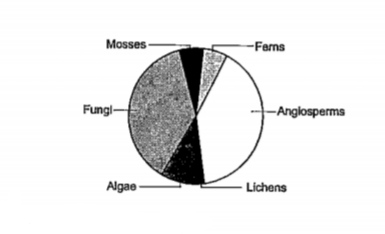
Observe the global biodiversity distribution of major plant taxa in the below diagram and answer the questions that follow:
(b)Why are mosses/ferns so few?Give reason.

Promotional Banner

Topper's Solved these Questions

  • P.S.E.B SAMPLE PAPER - 2021 (SOLVED)

    JMD PUBLICATION|Exercise EXERCISE|24 Videos
  • P.S.E.B SAMPLE PAPER-2021(SOLVED)

    JMD PUBLICATION|Exercise EXERCISE|30 Videos

Similar Questions

Explore conceptually related problems

Why mosses/ferns are so few? Give reason.

Observe the global biodiversity distribution of major plant taxa in the below diagram and answer the questions that follow: (d)Which group of plants is most advanced, and which one is most primitive?

Observe the global biodiversity distribution of major plant taxa in the below diagram and answer the questions that follow: (a) Which group of plants are most endangered?

Observe the global biodiversity distribution of major plant taxa in the below diagram and answer the questions that follow: (c)How do fungi that are heterotrophs sustain themselves as a large population?

Large quantity of sewage is generated every day in cities and towns, Which is treated in Sewage Treatment Plants (STPs) to make it less polluted. Given below is the flow diagram of one of the stages of STP. Observe the given flow diagram and answer the questions accordigly. Why is primary effluent passed into large aeration tanks?

(Observe the diagram given below and answer the following questions : What does this diagram depict ?

Large quantity of sewage is generated every day in cities and towns, Which is treated in Sewage Treatment Plants (STPs) to make it less polluted. Given below is the flow diagram of one of the stages of STP. Observe the given flow diagram and answer the questions accordigly. Write the technical term used for the sediment formed. MEntion its significance.

Large quantity of sewage is generated every day in cities and towns, Which is treated in Sewage Treatment Plants (STPs) to make it less polluted. Given below is the flow diagram of one of the stages of STP. Observe the given flow diagram and answer the questions accordigly. Explain the final step that results in the formation of biogas in the large tank before the treated effluent is released into waterbodies.

Given below is the diagram of a human ovum surrounded by a few sperms. Observe the diagram and answer the following questions. Compare the fate of sperms shown in the diagram.

Given below is the diagram of a human ovum surrounded by a few sperms. Observe the diagram and answer the following questions. What is the role of zona pellucida in this process?