


Similar Questions
Explore conceptually related problems
Recommended Questions
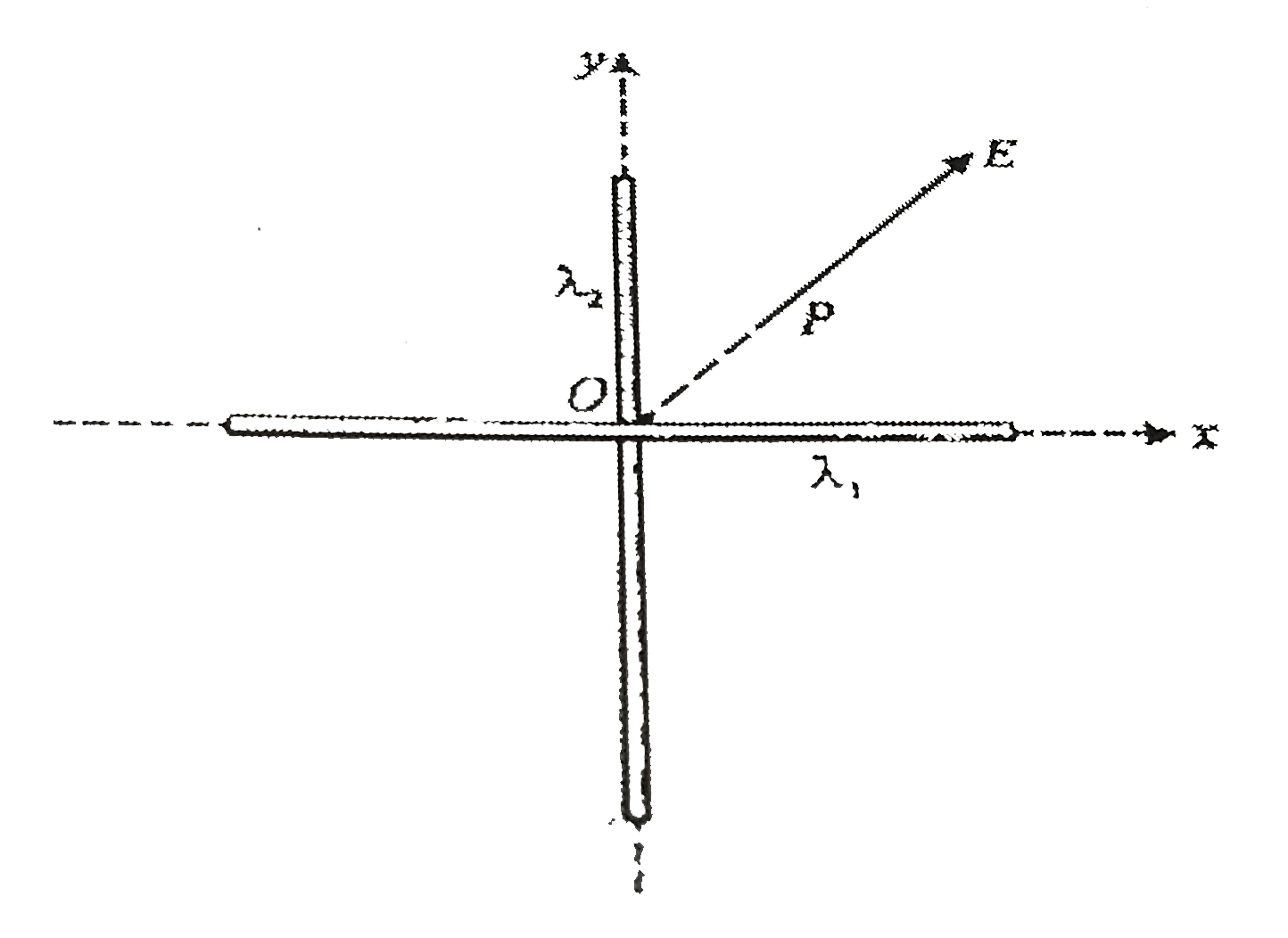
- Two mutually perpendicular infinite wires along x-axis and y-axis carr...
Text Solution
|
- If tan 82(1)/(2^(@))=sqrt(lambda(1))+sqrt(lambda(2))+sqrt(lambda(3))+2...
Text Solution
|
- If lambda(1),lambda(2)(lambda(1)>lambda(2)) are two values of lambda f...
Text Solution
|
- Two particle are moving perpendicular to each with de-Broglie wave len...
Text Solution
|
- Two mutually perpendicular infinite wires along x-axis and y-axis carr...
Text Solution
|
- In a figure shown find the ratio of the linear charge densites lambda(...
Text Solution
|
- Two mutually perpendicular infinite wires along x-axis and y-axis carr...
Text Solution
|
- Consider the family of lines 5x+3y-2+lambda(1)(3x-y-4)=0 " and " x-y+1...
Text Solution
|
- For balmer series wavelength of first line is lambda(1) and for bracke...
Text Solution
|