As a result of change in the magnetic flux linked to the closed loop shown in figure, and emf, V volt is induced in the loop. The work done (in joule) in taking a charge q coulomb once along the loop is
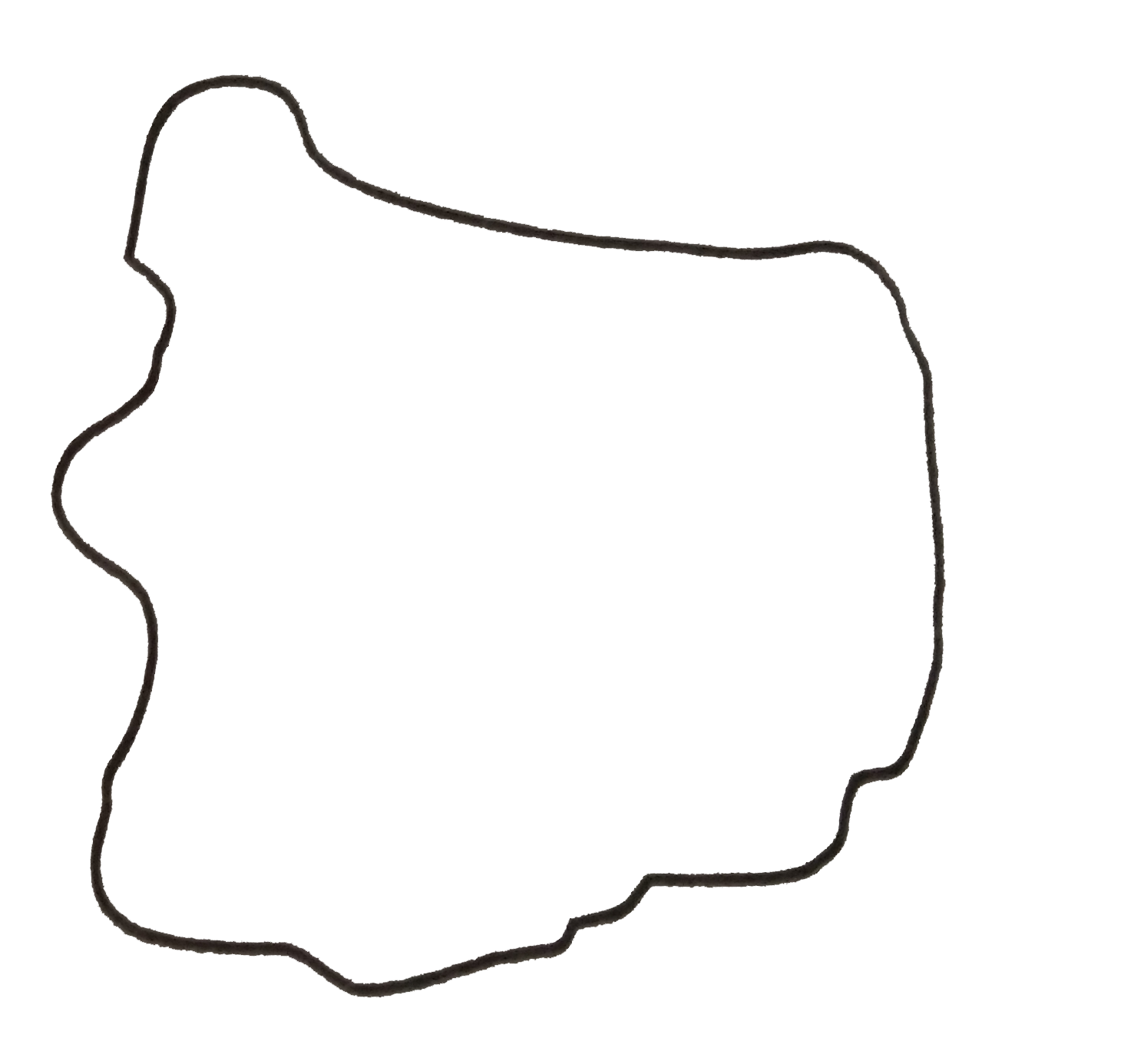
As a result of change in the magnetic flux linked to the closed loop shown in figure, and emf, V volt is induced in the loop. The work done (in joule) in taking a charge q coulomb once along the loop is
A
qv
B
Zero
C
2qv
D
`(qv)/(2)`
Text Solution
Verified by Experts
The correct Answer is:
a
CBSE AIPMT 2005



Similar Questions
Explore conceptually related problems
As a result of change in the magnetic flux linked to the closed loop shown in the fig, an e.m.f. V volt is induced in the loop. The work done (joule) in taking a charge Q coulomb once along the loop is
A current l flows through a closed loop as shown in figure .The magnetic field at the centre O is
A triangular loop is placed in a dot o. magnetic field as shown in figure. Find the direction of induced current in the loop if magnetic field is increasing.
At time t=0 magnetic Field of 1000 Gausses is passing perpendicularly through the area defined by the closed loop shown in the Figure. If the magnetic Field reduces linearly to 500 Gausses, in the next 5s, then induces EMF in the loop is:
Arrangements of charges are shown in the figure. Flux linked with the closed surface P and Q respectively are ……….and ……….
A long solenoid having n = 200 turns per metre has a circular cross-section of radius a_(1) = 1 cm . A circular conducting loop of radius a_(2) = 4 cm and resistance R = 5 (Omega) encircles the solenoid such that the centre of circular loop coincides with the midpoint of the axial line of the solenoid and they have the same axis as shown in Fig. A current 't' in the solenoid results in magnetic field along its axis with magnitude B = (mu)ni at points well inside the solenoid on its axis. We can neglect the insignificant field outside the solenoid. This results in a magnetic flux (phi)_(B) through the circular loop. If the current in the winding of solenoid is changed, it will also change the magnetic field B = (mu)_(0)ni and hence also the magnetic flux through the circular loop. Obvisouly, it will result in an induced emf or induced electric field in the circular loop and an induced current will appear in the loop. Let current in the winding of solenoid be reduced at a rate of 75 A //sec . Magentic flux through the loop due to external magnetic field will be I is the current in the loop a_(1) is the radius of solendoid and a_(1)=1cm (given) a_(2) is the radius of circular loop and a_(2)=4cm (given) i is hte current in the solenoid
A long solenoid having n = 200 turns per metre has a circular cross-section of radius a_(1) = 1 cm . A circular conducting loop of radius a_(2) = 4 cm and resistance R = 5 (Omega) encircles the solenoid such that the centre of circular loop coincides with the midpoint of the axial line of the solenoid and they have the same axis as shown in Fig. A current 't' in the solenoid results in magnetic field along its axis with magnitude B = (mu)ni at points well inside the solenoid on its axis. We can neglect the insignificant field outside the solenoid. This results in a magnetic flux (phi)_(B) through the circular loop. If the current in the winding of solenoid is changed, it will also change the magnetic field B = (mu)_(0)ni and hence also the magnetic flux through the circular loop. Obvisouly, it will result in an induced emf or induced electric field in the circular loop and an induced current will appear in the loop. Let current in the winding of solenoid be reduced at a rate of 75 A //sec . Magnitude of induced current that appears in the circular loop is
A point charges Q is moving in a circular orbit of radius R in the x-y plane with an angular velocity omega . This can be considered as equivalent to a loop carrying a steady current (Q omega)/(2 pi) . S uniform magnetic field along the positive z-axis is now switched on, which increases at a constant rate from 0 to B in one second. Assume that the radius of the orbit remains constant. The application of the magnetic field induces an EMF in the orbit. The induced EMF is defined as the work done by an induced electric field in moving a unit positive charge around a closed loop. It is known that, for an orbiting charge, the magnetic dipole moment is proportional to the angular momentum with a proportionality constant lambda . The charge in the magnetic dipole moment associated with the orbit, at the end of the time interval of the magnetic field charge, is
A point charges Q is moving in a circular orbit of radius R in the x-y plane with an angular velocity omega . This can be considered as equivalent to a loop carrying a steady current (Q omega)/(2 pi) . S uniform magnetic field along the positive z-axis is now switched on, which increases at a constant rate from 0 to B in one second. Assume that the radius of hte orbit remains constant. The application of hte magnetic field induces an emf in the orbit. The induced emf is defined as the work done by an induced electric field in moving a unit positive charge around a closed loop. It si known that, for an orbiting charge, the magnetic dipole moment is proportional to the angular momentum with a porportionality constant lambda . The charge in the magnetic dipole moment associated with the orbit. at the end of the time interval of hte magnetic field charge, is
A point charges Q is moving in a circular orbit of radius R in the x-y plane with an angular velocity omega . This can be considered as equivalent to a loop carrying a steady current (Q omega)/(2 pi) . S uniform magnetic field along the positive z-axis is now switched on, which increases at a constant rate from 0 to B in one second. Assume that the radius of hte orbit remains constant. The application of hte magnetic field induces an emf in the orbit. The induced emf is defined as the work done by an induced electric field in moving a unit positive charge around a closed loop. It si known that, for an orbiting charge, the magnetic dipole moment is proportional to the angular momentum with a porportionality constant lambda . The magnitude of the induced electric field in the orbit at any instant of time during the time interval of the mangnetic field change is
Recommended Questions
- As a result of change in the magnetic flux linked to the closed loop s...
Text Solution
|
- A metallic loop is placed in a nonuiform magnetic field. Will an emf b...
Text Solution
|
- As a result of change in the magnetic flux linked to the closed loop s...
Text Solution
|
- Assertion If a loop is placed in a non-uniform (with respect to positi...
Text Solution
|
- निम्न चित्र में प्रदर्शित लूप से सम्बद्ध फ्लक्स में V वोल्ट के परिवर...
Text Solution
|
- A semicircle loop PQ of radius 'R' is moved with velocity 'v' in trans...
Text Solution
|
- A: When the magnetic flux through a loop is maximum, induced emf is ma...
Text Solution
|
- A rectangular closed loop moves horizontally in a uniform magnetic fie...
Text Solution
|
- The electric carrying force of the V bolt is induced in the loop due t...
Text Solution
|