Home
Class 12
CHEMISTRY
Trichloroacetaldehyde, C Cl(3)CHO reacts...

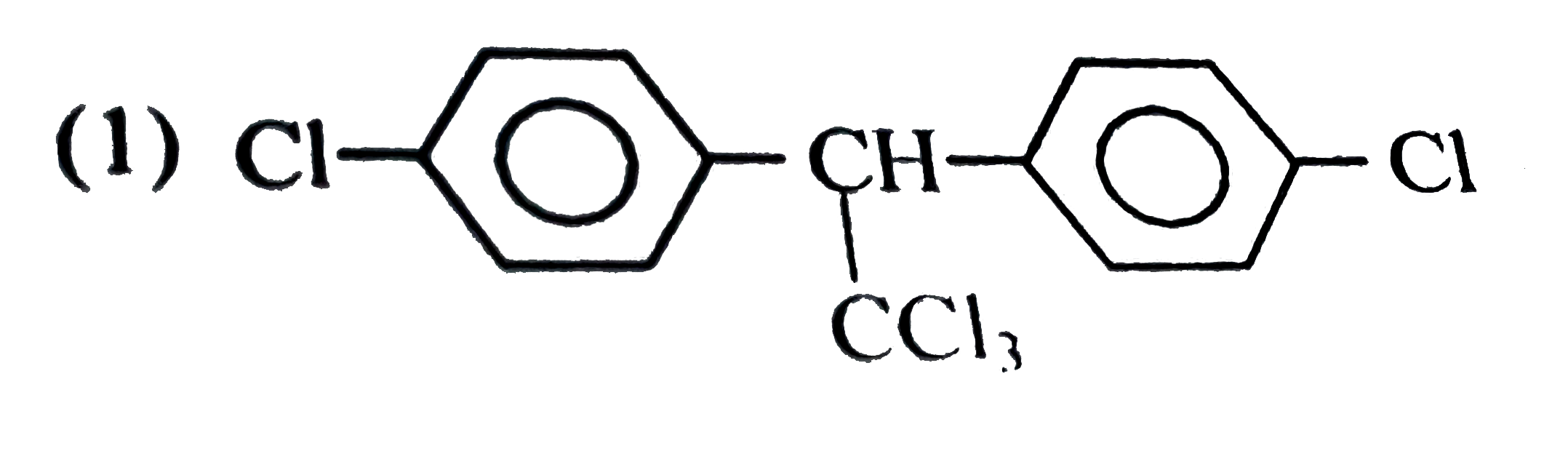
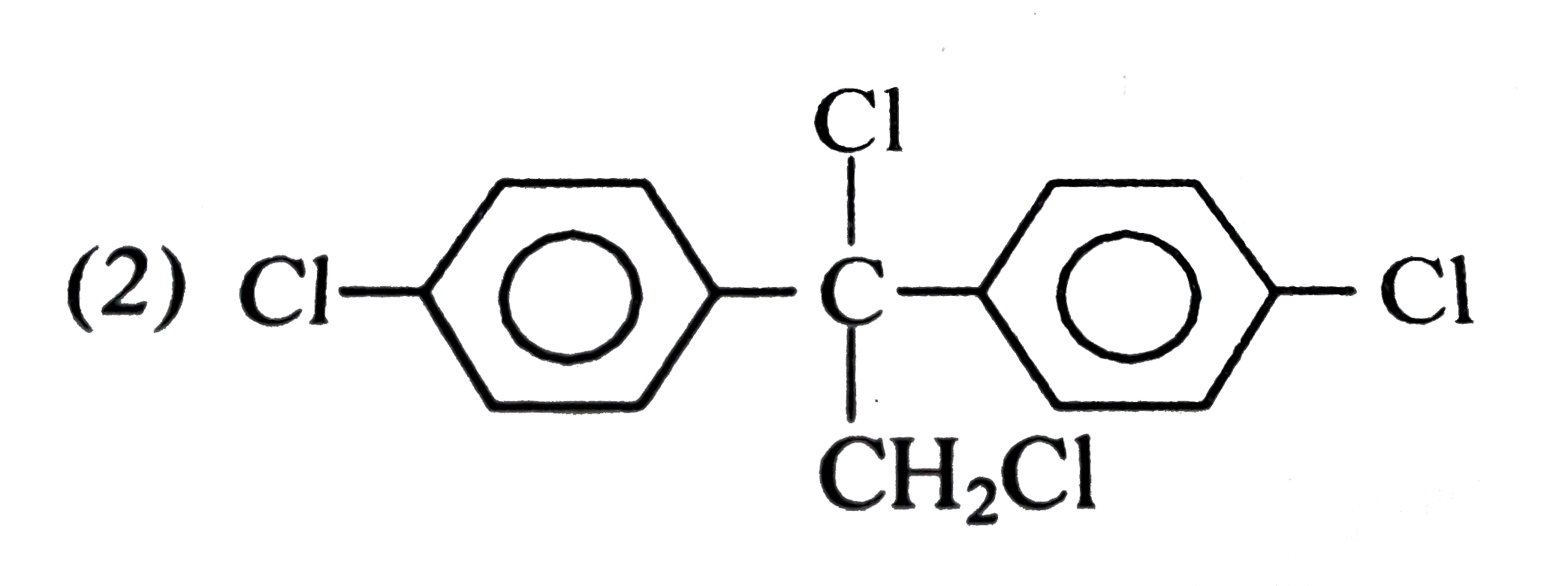
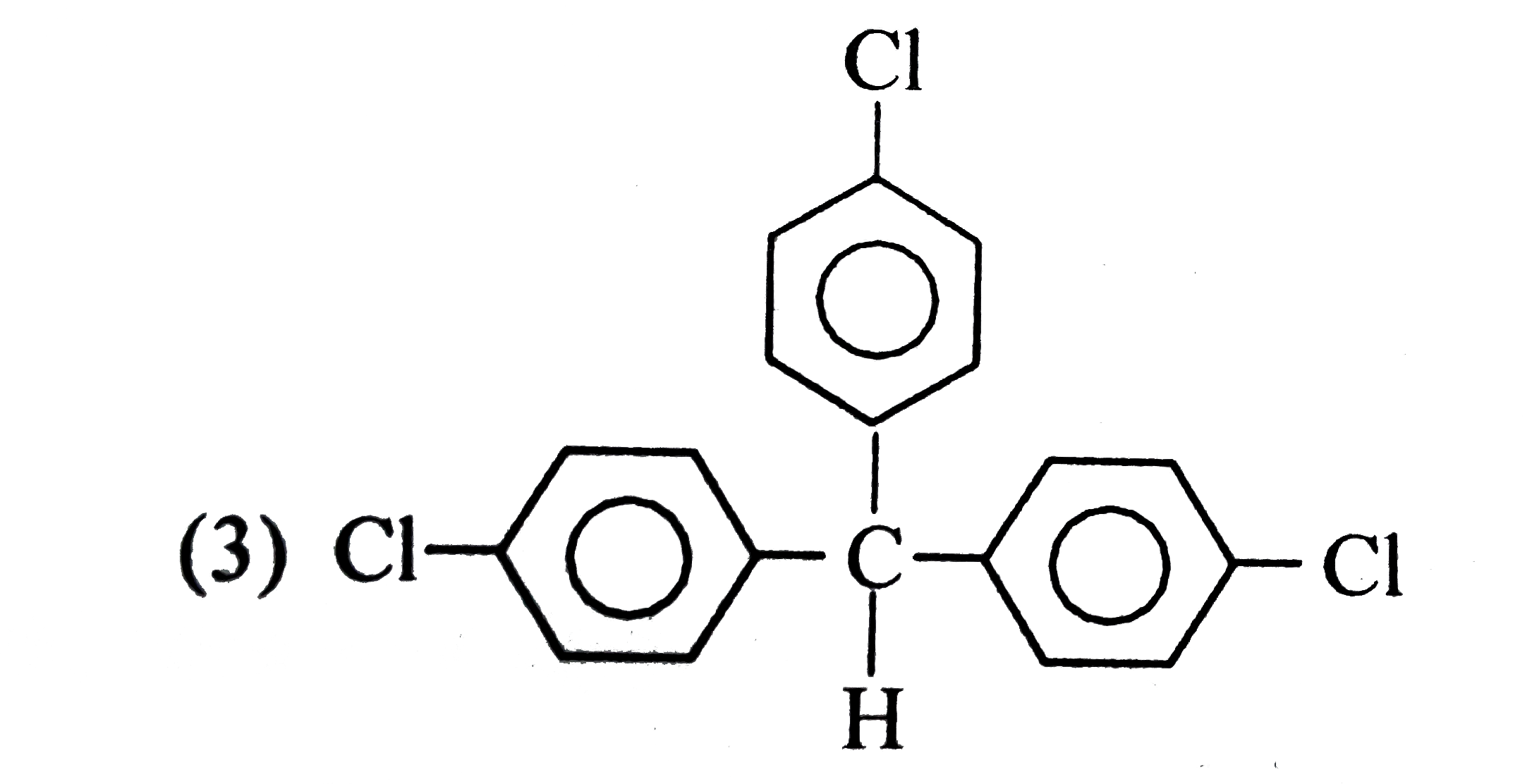
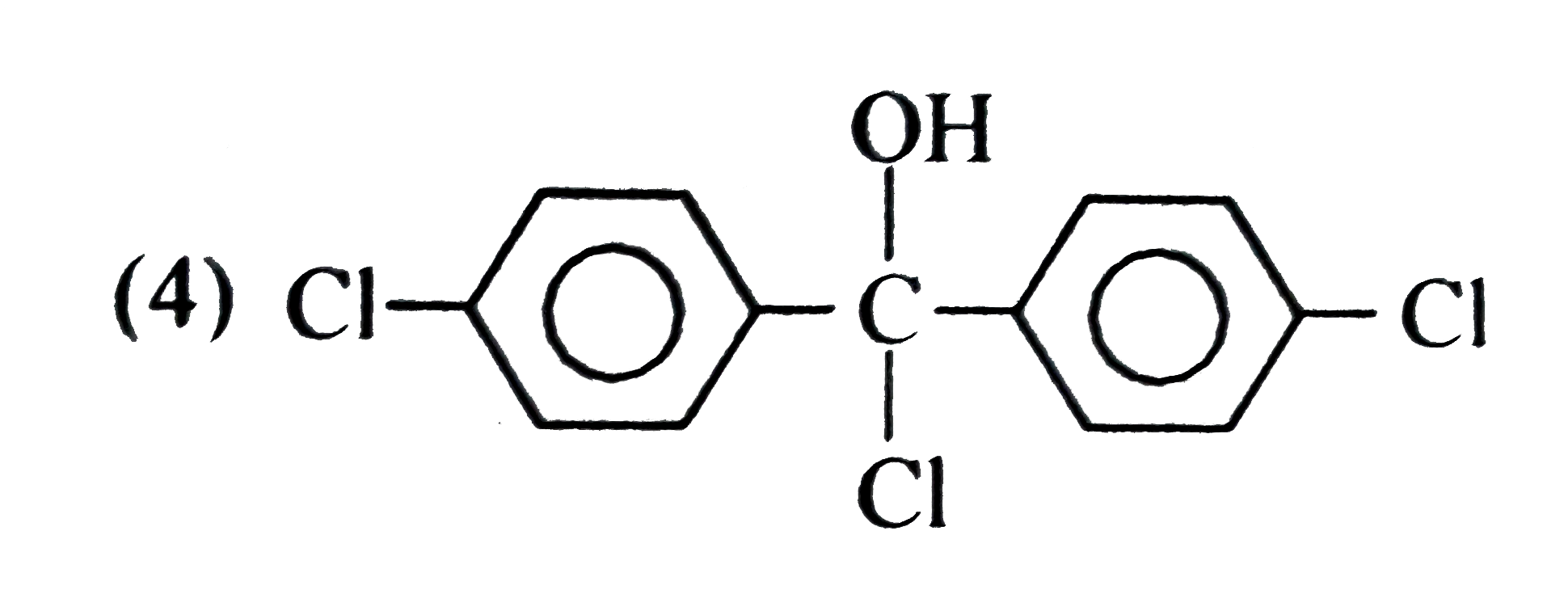
Trichloroacetaldehyde, `C Cl_(3)CHO` reacts with chlorobenzene in presence of sulphuric acid and produces.

A

B

C

D

Text Solution

AI Generated Solution

The correct Answer is:

To solve the problem of what product is formed when trichloroacetaldehyde (CCl3CHO) reacts with chlorobenzene in the presence of sulfuric acid, we can follow these steps: ### Step 1: Identify the Reactants We have two reactants: 1. Trichloroacetaldehyde (CCl3CHO) 2. Chlorobenzene (C6H5Cl) ### Step 2: Understand the Reaction Conditions The reaction occurs in the presence of sulfuric acid (H2SO4), which acts as a catalyst. This suggests that we may be looking at a condensation reaction where water is eliminated. ### Step 3: Draw the Structures - **Trichloroacetaldehyde (CCl3CHO)** has a carbonyl group (C=O) and a formyl group (–CHO). - **Chlorobenzene (C6H5Cl)** is a benzene ring with a chlorine substituent. ### Step 4: Reaction Mechanism The reaction involves the formation of a new bond between the carbon of the trichloroacetaldehyde and the chlorobenzene. The aldehyde group will react with the chlorobenzene, leading to the elimination of a water molecule (H2O). ### Step 5: Form the Product The product formed from this reaction is **Dichlorodiphenyltrichloroethane (DDT)**. The structure can be represented as follows: - The central carbon is bonded to the trichloro group (CCl3). - On either side of this carbon, there are two chlorobenzene rings (C6H5). ### Step 6: Final Structure The final structure can be depicted as: - A central carbon atom bonded to a trichloro group (CCl3). - Two chlorobenzene rings (C6H5) attached to the central carbon. ### Conclusion The product formed from the reaction of trichloroacetaldehyde with chlorobenzene in the presence of sulfuric acid is **Dichlorodiphenyltrichloroethane (DDT)**.

To solve the problem of what product is formed when trichloroacetaldehyde (CCl3CHO) reacts with chlorobenzene in the presence of sulfuric acid, we can follow these steps: ### Step 1: Identify the Reactants We have two reactants: 1. Trichloroacetaldehyde (CCl3CHO) 2. Chlorobenzene (C6H5Cl) ### Step 2: Understand the Reaction Conditions ...
Promotional Banner

Similar Questions

Explore conceptually related problems

Cl_(2) reacts with CS_(2) in presence of AlCl3 to form:

Benzene reacts with excess of chlorine in presence of ultraviolet light to produce

The treatment of benzene with isobutene in the presence of sulphuric acid gives

The product formed when ethene gas reacts with water in the presence of sulphuric acid is______ (ethanol/ethanal/ethanoic acid)

The product formed by the reaction of acetaldehyde with excess of ethanol in the presence of sulphuric acid is:

Cl_(3)C.CHO will reacts with water.True/False

(i) An organic compound A with molecular formula C_(7)H_(8) on oxidation by chromyl chloride in the presence of C Cl_(4) gives a compound B which gives positive Tollen's test. The compound B on treatment with NaOH followed by acid hydrolysis gives two product C and D. C on oxidation gives B which on further oxidation gives D. the compound D on distillation with sodalime gives a hydrocarbon E. Below 60^(@)C , concentrated nitric acid reacts with E in the presence of concentrated sulphuric acid forming a compound F. identify the compounds A,B,C,D,E and F. (ii) Give chemical test to distinguish : Formaldehyde and acetaldehyde.

The compound formed on heating chlorobenzene with chloral in the presence of concentrated sulphuric acid is-
