Home
Class 12
MATHS
Let x^2-(m-3)x+m=0 (m epsilon R) be a qu...

Let `x^2-(m-3)x+m=0 (m epsilon R)` be a quadratic equation . Find the values of m for which the roots are (ix)one root is smaller than 2 & other root is greater than 2 (x) both the roots are greater than 2 (xi) both the roots are smaller than 2 (xii)exactly one root lies in the interval (1;2) (xiii) both the roots lies in the interval (1;2) (xiv) atleast one root lies in the interval (1;2) (xv) one root is greater than 2 and the other root is smaller than 1

Text Solution

Verified by Experts
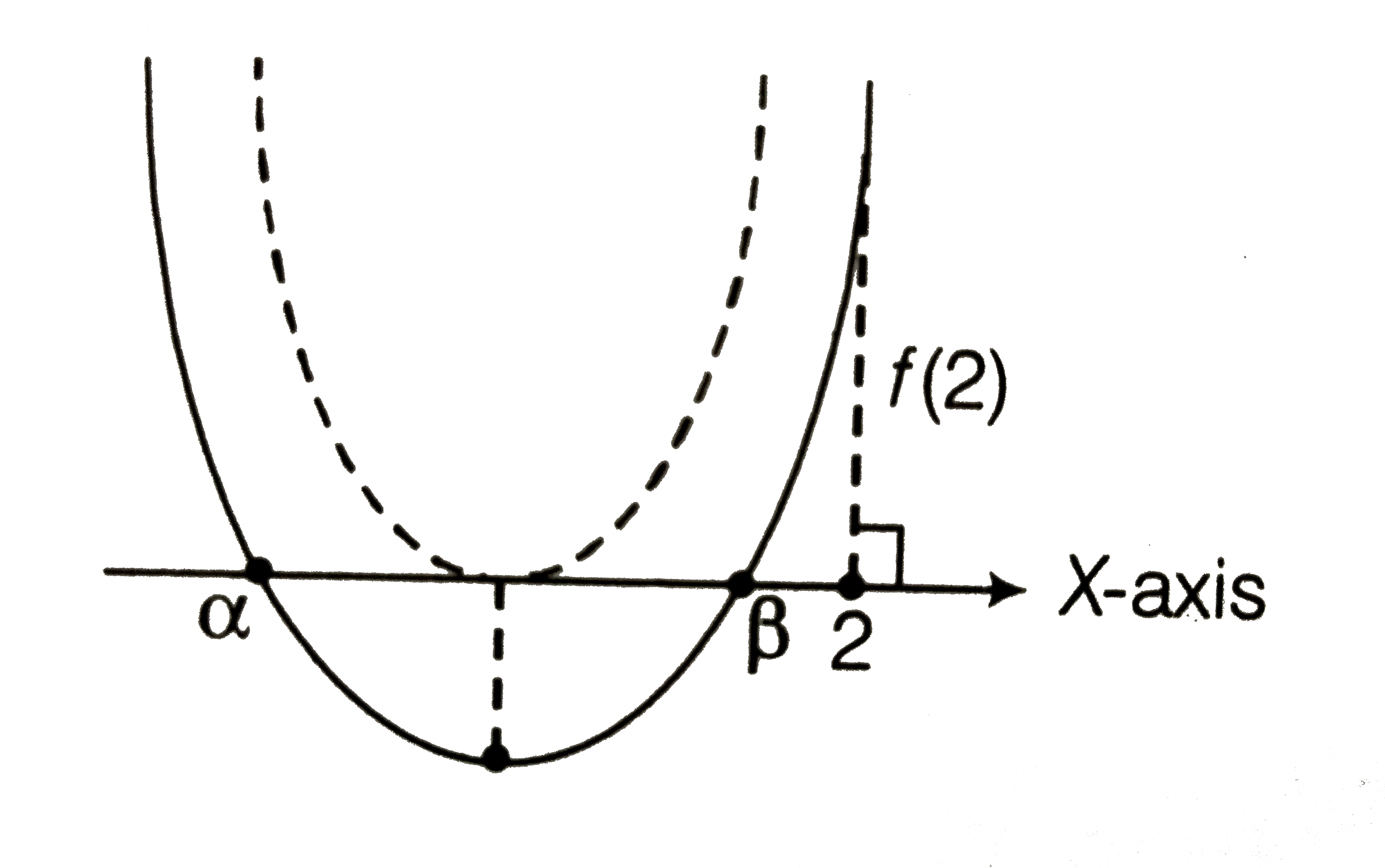
Let `f(x)=x^(2)-(m-3)x+m`
Here `a=1, b=-(m-3),c=m`
and `D=b^(2)-4ac=(m-3)^(2)-4m`
`=m^(2)-10m+9=(m-1)(m-9)`
and `x`-x coordinate of vertex `=-b/(2a)=((m-3))/2`
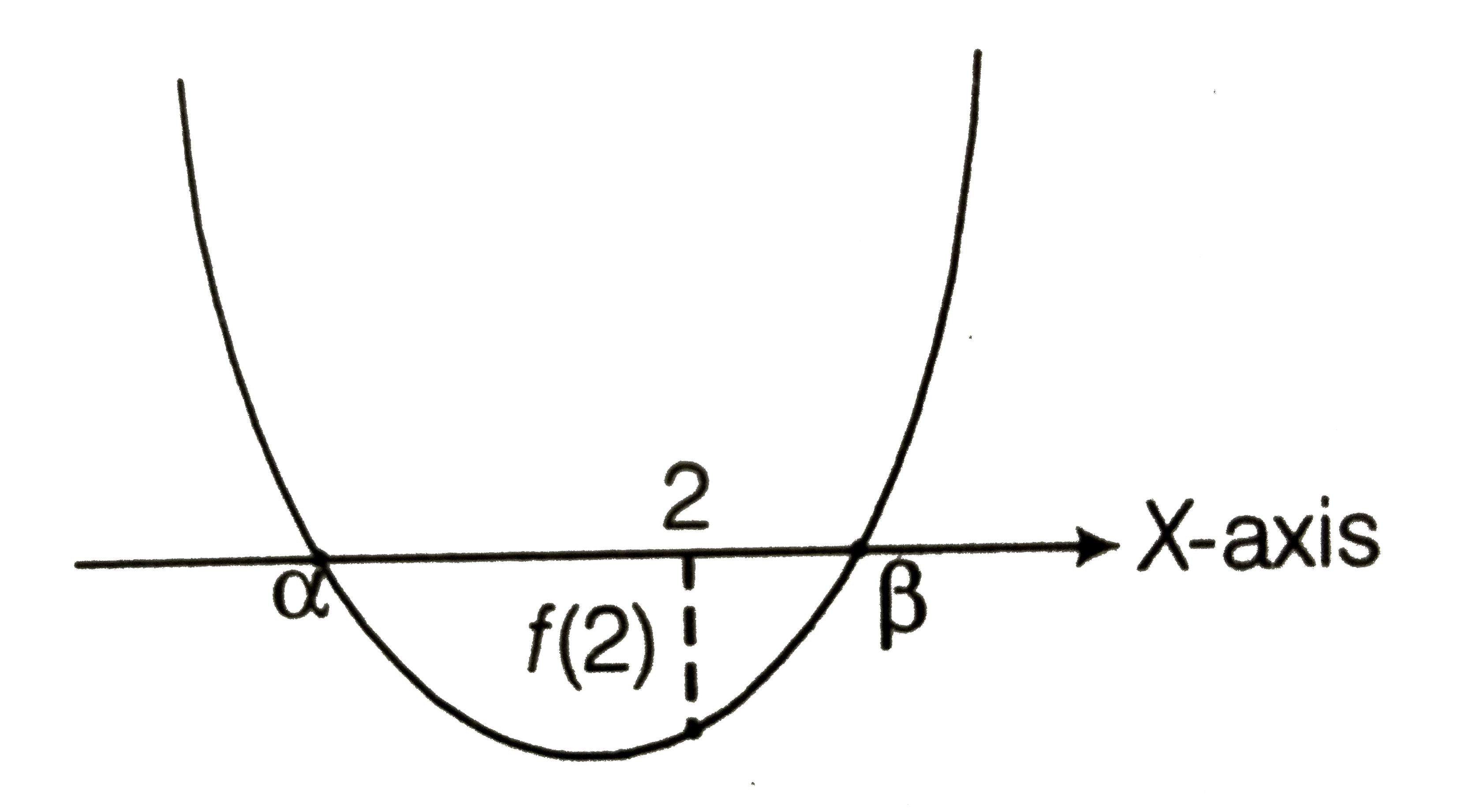
(i) Both the roots are smaller than 2 `Dge0`

i.e. `(m-1)(m-9)ge0`
`:.m epsilon(-oo1[uu[9,oo)` ............i
`f(2)gt0`
i.e. `4-2(m-3)+mge0`
`impliesmlt10`
`:.m epsilon(-oo,10)`......ii and `x`- coordinate of vertex `lt2`
i.e. `((m-3))/2ltimpliesmlt7`
`:.m epsilon(-oo,7)` iii
On combining Eqs.i,ii, and iii we get
`m epsilon (-oo,1]`
(ii) Both the roots are greater than 2 `Dge0`

i.e. `(m-1)(m-9)ge0`
`:.m epsilon(-oo,1]epsilon[9,oo)`.........i
`f(2)gt0`
i.e. `4-2(m-3)+mgt0`
`impliesm lt 10`......ii
and x-coordinate of vertex `gt2`
i.e. `((m-3))/2gtimpliesmlt7`
`:. m epsilon(7,oo)` .....iii
On combining Eqs. i, ii and iii we get
`m epsilon[9,10)`
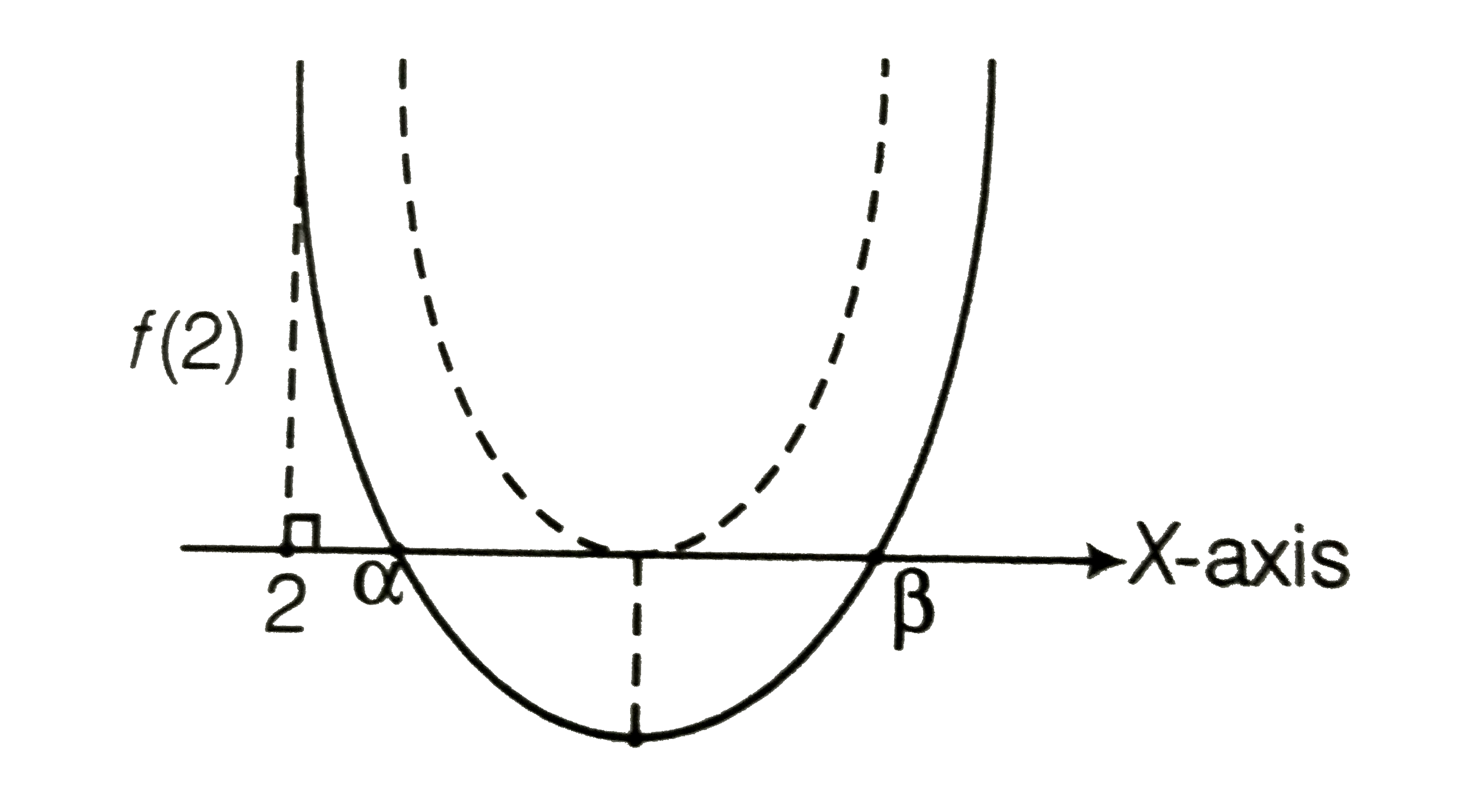
(iii) One root is smaller than 2 and the other root is greater than 2
`Dlt0`

i.e. `(m-1)(m-9)gt0`
`:.m epsilon (-oo,1)uu(9,oo)`....i
`f(2)lt0`
i.e `4-2(m-3)+mlt0`
`:.mgt10`
`:.m epsilon (10,oo)`....ii
On combining Eqs i and ii we get
` m epsilon (10,oo)`
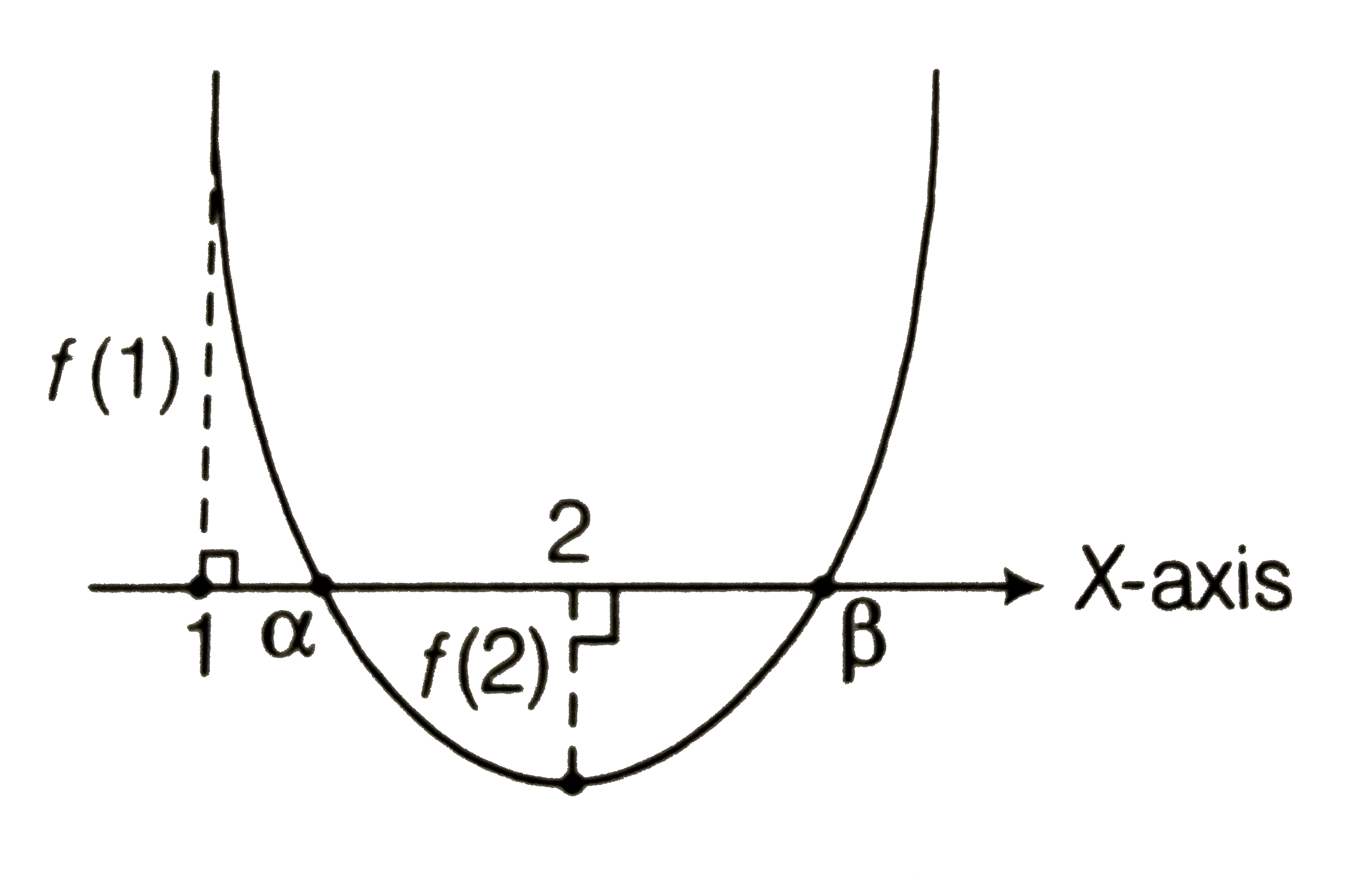
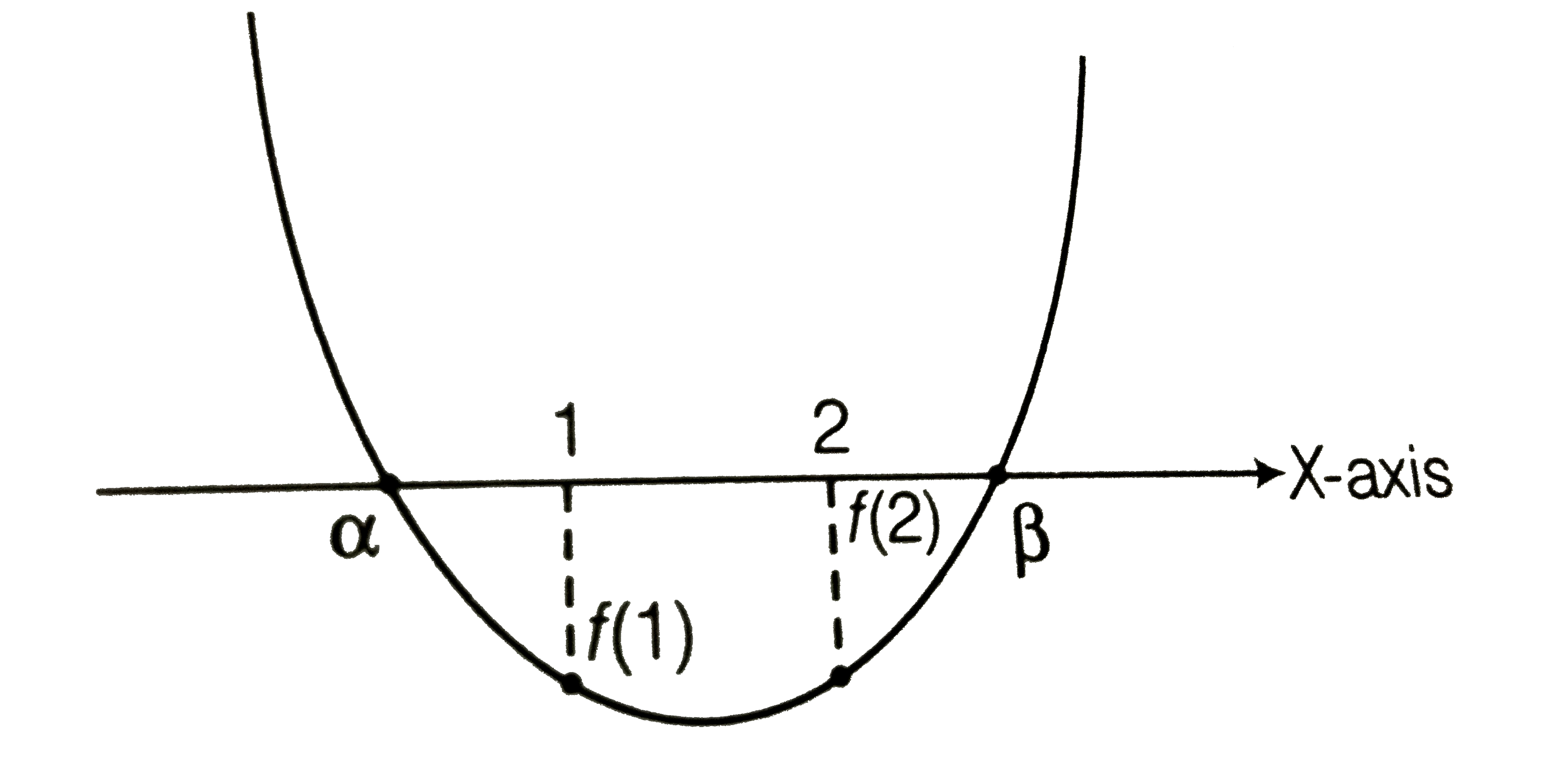
(iv) Exactly one root lies in the interval (1,2)
`Dgt0`

i.e., `(m-1)(m-9)gt0`
`:. m epsilon (-oo,1)uu(9,oo)`...i
`f(1)f(2)lt0`
`(1-(m-3)+m)(4-2(m-3)+m)lt0`
`implies4(-m+10)lt0`
`impliesm-10gt0impliesmgt10`
`:.m epsilon (10,oo)` ....ii
On combining Eqs (i) and (ii) we get
` m epsilon (10,oo)`
(v) Both the roots lie in the interval (1,2)
`Dge0`

i.e. `(m-1)(m-9)ge0`
`:. m epsilon (-oo,1]uu[9,oo)`...i
`f(1)gt0`
i.e. `(1-(m-3)+m)gt0implies4gt0`
`:.mepsilonR`.ii
`f(2)gt0`
i.e. `4-2(m-3)+mgt0impliesmlt10`
`:.m epsilon (-oo,10)`..iii
`1ltx` coordinate of vertex `lt2`
i.e. `1lt((m-3))/2lt2`
`implies2ltm-3lt4` or `5ltmlt7`
`:.m epsilon (5,7)`.iv
On combining Eqs. i,ii,iii and iv we get
`m epsilon phi`
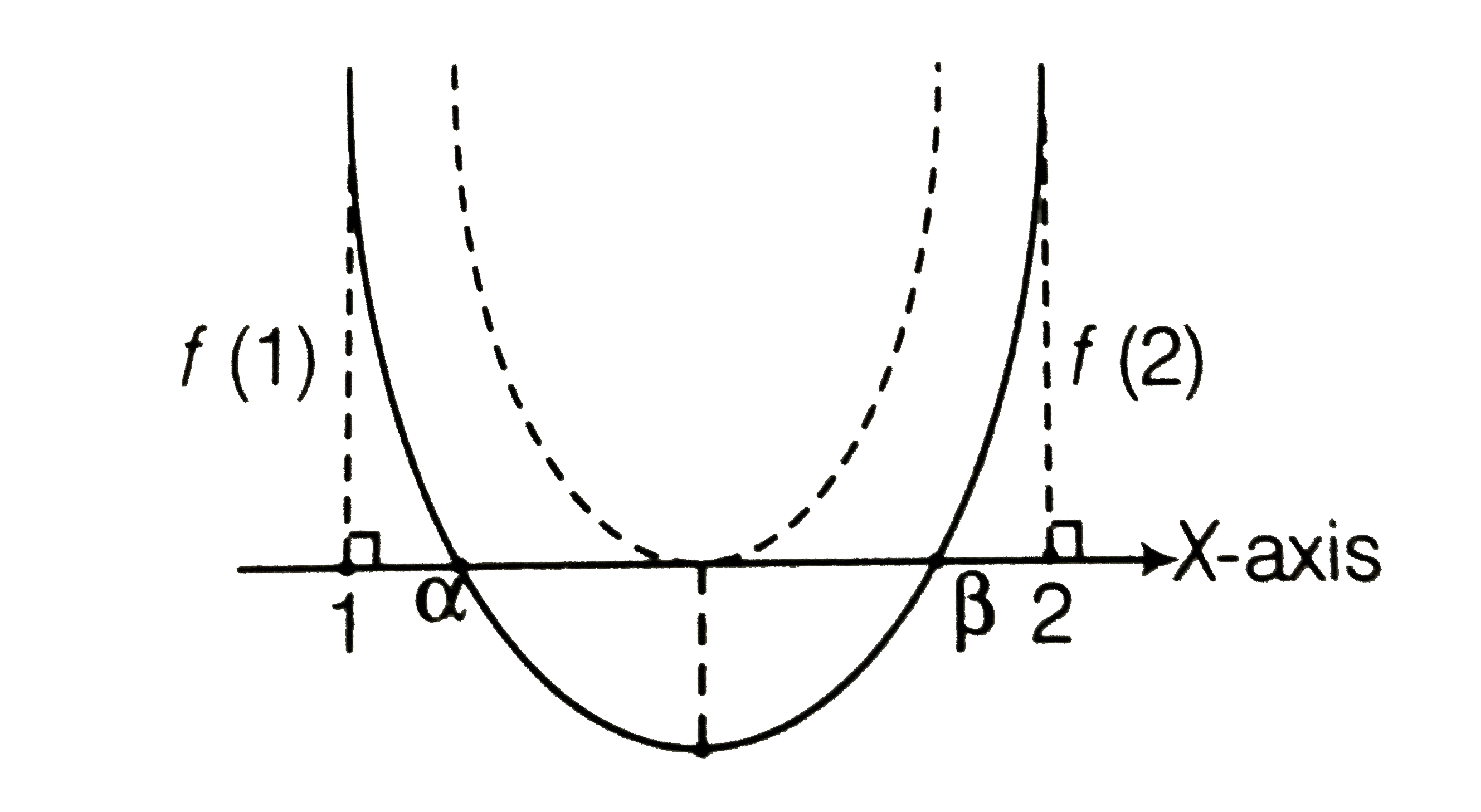
(vi) One root is greater than 2 and the other root is smaller than `1 Dgt0`

i.e. `(m-1)(m-9)gt0`
`:.m epsilon (-oo,1)uu(9,oo)`.i
`f(1)lt0`
i.e. `4lt0` which is not possible.
Thus , no such `m` exists.
(vii) At least one root lie in the interval (1,2)
Case I Exactly one root lies in (1,2)
`mepsilon(10,oo)` [from (iv) part]
Case II Both roots lie in the interval (1,2).
`m epsilon (10,oo)`
(viii) Atleast one root is greater than 2
Case I One root is smaller than 2 and the other root is greater than 2.
Then, `m epsilon(10,oo)` [from iii) part]
Case II Both the roots are greaters than 2 then `m epsilon [9,10)`.
Hence atleast one root is greater than 2.
`:.m epsilon (10,oo)uu[9,10)` or `m epsilon [9,10)uu(10,oo)`
Promotional Banner

Topper's Solved these Questions

  • THEORY OF EQUATIONS

    ARIHANT MATHS ENGLISH|Exercise Exercise For Session 1|11 Videos
  • THEORY OF EQUATIONS

    ARIHANT MATHS ENGLISH|Exercise Exercise For Session 2|10 Videos
  • THE STRAIGHT LINES

    ARIHANT MATHS ENGLISH|Exercise Exercise (Questions Asked In Previous 13 Years Exam)|17 Videos
  • THREE DIMENSIONAL COORDINATE SYSTEM

    ARIHANT MATHS ENGLISH|Exercise Three Dimensional Coordinate System Exercise 12 : Question Asked in Previous Years Exam|2 Videos

Similar Questions

Explore conceptually related problems

Let x^2-2(a - 1)x + a - 1 = 0 (a in R) be a quadratic equation, then find the value of 'a' for which (a) Both the roots are positive (b)Both the roots are negative (c) Both the roots are opposite in sign. (d) Both the roots are greater than 1. (e)Both the roots are smaller than 1. (f) One root is small than 1 and the other root is greater than 1.

Find the values of a for which one root of equation (a-5)x^(2)-2ax+a-4=0 is smaller than 1 and the other greater than 2.

Let x^2 - 2(a - 1)x + a - 1 = 0 (a in R) be a quadratic equation, then find the values of "a" for which (i) Exactly one root lies in (0,1) (ii) Both roots lies in (0, 1). (iii) Atleast one root lies in (0,1). (iv) One root is greater than 1 and other root is smaller than 0.

Find the values of m for which roots of equation x^(2)-mx+1=0 are less than unity.

Let x^2 - (m - 3) x + m = 0 (m in R) be a quadratic equation, then find the values of 'm' for which both (a) the roots are greater than 2. (b) both roots are positive, ( c) one root is positive and other is negative. ( d) One root is greater than 2 and other smaller than 1 ( e) Roots are equal in magnitude and opposite in sign, ( f) both roots lie in the interval (1, 2)

Find the values of the parameter a for which the roots of the quadratic equation x^(2)+2(a-1)x+a+5=0 are such that one root is greater than 3 and the other root is smaller than 1.

If a, p are the roots of the quadratic equation x^2 - 2p (x - 4) - 15 = 0 , then the set of values of p for which one root is less than 1 and the other root is greater than 2 is:

Let 4x^2 - 4(alpha - 2)x + alpha - 2 = 0 (alpha in R) be a quadratic equation. Find the values of 'a' for which (i) Both roots are real and distinct. (ii) Both roots are equal. (iii) Both roots are imaginary (iv) Both roots are opposite in sign. (v) Both roots are equal in magnitude but opposite in sign

If both the roots of the equation 4x^(2)-2x+m=0 lie in the interval (-1, 1) , then

The values of a for which the equation 2x^(2) -2(2a+1) x+a(a+1) = 0 may have one root less them a and other root greater than a are given by

ARIHANT MATHS ENGLISH-THEORY OF EQUATIONS-Exercise (Questions Asked In Previous 13 Years Exam)
  1. Let x^2-(m-3)x+m=0 (m epsilon R) be a quadratic equation . Find the va...

    Text Solution

    |

  2. In the quadratic equation ax^2 + bx + c = 0. if delta = b^2-4ac and al...

    Text Solution

    |

  3. Let S denote the set of all polynomials P(x) of degree lt=2 such th...

    Text Solution

    |

  4. If the roots of x^2-b x+c=0 are two consecutive integers, then b^2-4c ...

    Text Solution

    |

  5. If the equation a(n)x^(n)+a(n-1)x^(n-1)+..+a(1)x=0, a(1)!=0, n ge2, ha...

    Text Solution

    |

  6. If both the roots of the quadratic equation x^(2)-2kx+k^(2)+k-5=0 are ...

    Text Solution

    |

  7. Let aa n db be the roots of the equation x^2-10 c x-11 d=0 and those o...

    Text Solution

    |

  8. Let a,b,c be the sides of a triangle. No two of them are equal and lam...

    Text Solution

    |

  9. All the values of m for whilch both the roots of the equation x^2-2m x...

    Text Solution

    |

  10. If the roots of the quadratic equation x^2+p x+q=0 are tan30^0a n dtan...

    Text Solution

    |

  11. Let alpha,beta be the roots of the equation x^2-p x+r=0a n dalpha//2,2...

    Text Solution

    |

  12. If the difference between the roots of the equation x^2+a x+1=0 is les...

    Text Solution

    |

  13. Let a ,b , c ,p ,q be real numbers. Suppose alpha,beta are the roots o...

    Text Solution

    |

  14. The quadratic equations x^2""-6x""+""a""=""0""a n d ""x^2""-c x""+""...

    Text Solution

    |

  15. How many real solutions does the equation x^7+14 x^5+16 x^3+30 x-560=0...

    Text Solution

    |

  16. Suppose the cubic x^(3)-px+q has three distinct real roots, where pgt0...

    Text Solution

    |

  17. The smallest value of k, for which both the roots of the equation, x^2...

    Text Solution

    |

  18. If the roots of the equation b x^2+""c x""+""a""=""0 be imaginary, t...

    Text Solution

    |

  19. Let p and q real number such that p!= 0,p^3!=q and p^3!=-q. if alpha a...

    Text Solution

    |

  20. solve 0=1+2x+3x^2

    Text Solution

    |

  21. Find the roots of x^2-6x-2=0

    Text Solution

    |