Home
Class 12
PHYSICS
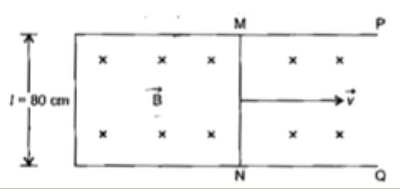
Figure 1 below shows a metallic rod MN o...

Figure 1 below shows a metallic rod MN of length l= 80cm, kept in a uniform magnetic field of flux density B= 0.5T, on two parallel metallic rails P and Q. Calculate the emf that will be induced between its two ends, when it is moved towards right with a constant velocity v of 36km/hr

Text Solution

Verified by Experts

l=80cm, B= 0.5T
v= 36km/hr= 10 m/s
Induced emf: e= Bvl `=0.5 xx 10 xx 80 xx 10^(-2)`
e= 4V
Promotional Banner

Similar Questions

Explore conceptually related problems

Figure shows a conducting rod PQ in contact with metal rails RP and SQ which are 0.257 apart in i uniform magnetic field of flux density 0.4T acting perpendicular to the plane of the paper. Ends R and S are connected through a 5 Omega resistance. What is the emf when the rod moves to the right with a velocity of 5 ms^(-1) ? What is the magnitude and direction of the current through the 5 Omega resistance? If the rod PQ moves to the left with the same speed, what will be the new current and its direction?

A straight conductor 0.1 m long moves in a uniform magnetic field 0.1 T. The velocity of the conductor is 15ms^(-1) and is directed perpendicular to the field. The emf induced between the two ends of the conductor is

A copper rod of length l is rotated about one end perpendicular to the uniform magnetic field B with constant angular velocity omega . The induced e.m.f. between its two ends is

A 0.5m long metal rod PQ completes the circuit as shown in the figure. The area of the circuit is perpendicular to the magnetic field of flux density 0.15 T . If the resistance of the total circuit is 3Omega calculate the force needed to move the rod in the direction as indicated with a constant speed of 2 ms^(-1)

A metallic rod CD rests on a thick metallic wire PQRS with arms PQ and RS parallel to each other, at a distance l = 40 cm, as shown in following figure. A uniform magnetic field B = 0:1 T acts perpendicular to the plane of this paper, pointing inwards (i.e., away from the reader). The rod is now made to slide towards right, with a constant velocity of v=5.0ms^(-1) . (i) How much emf is induced between the two ends of the rod CD ? (ii) What is the direction in which the induced current flows ?

A conducting rod of length l is rotating with constant angular velocity omega about point O in a uniform magnetic field B as shown in the figure . What is the emf induced between ends P and Q ?

A conducting rod of length 2l is rotating with constant angular speed w about its perpendicular bisector. A uniform magnetic field B exists parallel to the axis of rotation. The e.m.f. induced between two ends of the rod is

A conducting rod of length 2l is rotating with constant angular speed w about its perpendicular bisector. A uniform magnetic field B exists parallel to the axis of rotation. The e.m.f. induced between two ends of the rod is

A conducting rod AB of lemgth 2 l moves through a uniform magnetic field B. The rod makes an angle theta with the vertical while it falls with a uniform linear velocity v. The potential difference between the two ends of the rod is Bv^(2)l .

A metal rod length l rotates about on end with a uniform angular velocity omega . A uniform magnetic field vecB exists in the direction of the axis of rotation. Calculate the emf induced between the ends of the rod. Neglect the centripetal force acting on the free electrons as they moving in circular paths.
