Home
Class 12
CHEMISTRY
Ligands are broadly classified into two ...

Ligands are broadly classified into two classes classical and non-classical ligands, depending on their donor annd acceptor ability. Classical ligands form classical complexes while non-classical ligands form non-classical complex. Bonding mechanism in non-classical is called synergic bonding.
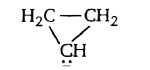
Q. Which is not `pi`-acceptor ligand?

A

B

`sigma-C_(5)H_(5)^(-)`

C

`PH_(3)`

D

B_(3)N_(3)H_(6)`

Text Solution

AI Generated Solution

The correct Answer is:

To determine which ligand is not a pi-acceptor ligand, we need to analyze the characteristics of each ligand based on the criteria for pi-acceptor ligands. Here’s a step-by-step solution: ### Step 1: Understand the Definition of Pi-Acceptor Ligands Pi-acceptor ligands are those that can accept electron density from a metal center through pi* (pi star) anti-bonding orbitals or have vacant d-orbitals. **Hint:** Remember that a ligand must have either a d-orbital or a pi* orbital to be a pi-acceptor. ### Step 2: Analyze Each Ligand 1. **CH (Methyl Group)**: - Carbon does not have d-orbitals. - There are no pi bonds, hence no pi* orbitals. - Conclusion: Cannot act as a pi-acceptor ligand. 2. **C5H5^- (Cyclopentadienyl Anion)**: - Carbon does not have d-orbitals, but it has pi bonds. - Since pi bonds are present, pi* orbitals exist. - Conclusion: Can act as a pi-acceptor ligand. 3. **Ph3 (Triphenylphosphine)**: - Phosphorus has vacant d-orbitals. - It can accept electron density. - Conclusion: Can act as a pi-acceptor ligand. 4. **B3N3H6 (Borazine)**: - Boron and Nitrogen do not have p-orbitals, but they can have pi bonds. - The structure has alternating double bonds, allowing for pi* orbitals. - Conclusion: Can act as a pi-acceptor ligand. ### Step 3: Identify the Answer From the analysis: - **CH** is the only ligand that does not meet the criteria to be a pi-acceptor ligand because it lacks both d-orbitals and pi* orbitals. ### Final Answer: The ligand that is not a pi-acceptor ligand is **CH**. ---

To determine which ligand is not a pi-acceptor ligand, we need to analyze the characteristics of each ligand based on the criteria for pi-acceptor ligands. Here’s a step-by-step solution: ### Step 1: Understand the Definition of Pi-Acceptor Ligands Pi-acceptor ligands are those that can accept electron density from a metal center through pi* (pi star) anti-bonding orbitals or have vacant d-orbitals. **Hint:** Remember that a ligand must have either a d-orbital or a pi* orbital to be a pi-acceptor. ### Step 2: Analyze Each Ligand ...
Promotional Banner

Topper's Solved these Questions

  • CO-ORDINATION COMPOUNDS

    VK JAISWAL ENGLISH|Exercise ONE OR MORE ANSWERS IS/ARE CORRECT|71 Videos
  • CO-ORDINATION COMPOUNDS

    VK JAISWAL ENGLISH|Exercise MATCH THE COLUMN|36 Videos
  • CO-ORDINATION COMPOUNDS

    VK JAISWAL ENGLISH|Exercise LEVEL 2|144 Videos
  • CHEMICAL BONDING (BASIC)

    VK JAISWAL ENGLISH|Exercise SUBJECTIVE PROBLEMS|54 Videos
  • d-BLOCK ELEMENTS

    VK JAISWAL ENGLISH|Exercise ASSERTION-REASON TYPE QUESTIONS|32 Videos

Similar Questions

Explore conceptually related problems

Ligands are broadly classified into two classes classical and non-classical ligands, depending on their donor annd acceptor ability. Classical ligands form classical complexes while non-classical ligands form non-classical complex. Bonding mechanism in non-classical is called synergic bonding. Q. Synergic bonding is absent in:

Ligands are broadly classified into two classes classical and non-classical ligands, depending on their donor annd acceptor ability. Classical ligands form classical complexes while non-classical ligands form non-classical complex. Bonding mechanism in non-classical is called synergic bonding. Q. In compound [M(CO)_(n)]^(x) , the correct match for highest 'M-C' bond length for given M, n and z respectively:

Ligands are broadly classified into two classes classical and non-classical ligands, depending on their donor annd acceptor ability. Classical ligands form classical complexes while non-classical ligands form non-classical complex. Bonding mechanism in non-classical is called synergic bonding. Q. In compound [M(CO)_(n)]^(z) , the correct match for highest 'M-C' bond length for given M, n and z respectively:

The pi acid ligand which uses it d-orbital during synergic bonding in its complex compound.

Assertion Chelates are relatively more stable than non-cheltated complexes Reason Complexes containing ligands which can be easily replaced by other ligands are called labile complexes .

Consider the two complexation equilibria in aqueous solution, between the cobalt (II) ion Co^(2+) (aq) and ethylenediamine (en) on the one hand and ammonia NH_(3) on the other. [Co(H_(2)O)_(6)]^(2+)+6NH_(3)hArr[Co(NH_(3))_(6)]^(2+)+6H_(2)O ...(1) [Co(H_(2)O_(6))]^(2+)+3enhArr[Co(en)_(3)]^(2+)+6H_(2)O ..(2) Electronicaly, the ammonia and en ligands are very similar, since both bond through N and since the liwis base strengths of their nitrogen atoms are similar. This means that DeltaH^(@) must be very similar for the two reactions, since six Co-N bonds are formed in each case. Interestingly however, the equilibrium constant is 100,000 times larger for the second reaction than it is for the first. This is the so called chelate effect: "the enhanced affinity of chelating ligands for a metal ion compared to similar non-chelating (monodentate) ligands for the same metal". The chelate effect is entropy-driven. Q. Which of the following can be classified as a chelating ligand?

When degenerate d-orbitals of an isolated atom/ion come under influence of magnetic field of ligands, the degeneray is lost. The two set t_(2g)(d_(xy),d_(yz),d_(xz)) and e_(g) (d_(x^(2))-d_(x^(2)-y^(2)) are either stabilized or destabilized depending upon the nature of magnetic field. it can be expressed diagrammatically as: Value of CFSE depends upon nature of ligand and a spectrochemical series has been made experimentally, for tetrahedral complexes, Delta is about 4/9 times to Delta_(0) (CFSE for octahedral complex). this energy lies in visible region and i.e., why electronic transition are responsible for colour. such transition are not possible with d^(0) and d^(10) configuration. Q. Which of the following is correct arrangement of ligand in terms of the Dq values of their complexes with any particularr 'hard' metal ion:

When degenerate d-orbitals of an isolated atom/ion come under influence of magnetic field of ligands, the degeneray is lost. The two set t_(2g)(d_(xy),d_(yz),d_(xz)) and e_(g) (d_(x^(2))-d_(x^(2)-y^(2)) are either stabilized or destabilized depending upon the nature of magnetic field. it can be expressed diagrammatically as: Value of CFSE depends upon nature of ligand and a spectrochemical series has been made experimentally, for tetrahedral complexes, Delta is about 4/9 times to Delta_(0) (CFSE for octahedral complex). this energy lies in visible region and i.e., why electronic transition are responsible for colour. such transition are not possible with d^(0) and d^(10) configuration. Q. Which of the following is correct arrangement of ligand in terms of the Dq values of their complexes with any particularr 'hard' metal ion:

Consider the two complexation equilibria in aqueous solution, between the cobalt (II) ion Co^(2+) (aq) and ethylenediamine (en) on the one hand and ammonia NH_(3) on the other. [Co(H_(2)O)_(6)]^(2+)+6NH_(3)hArr[Co(NH_(3))_(6)]^(2+)+6H_(2)O ...(1) [Co(H_(2)O_(6))]^(2+)+3enhArr[Co(en)_(3)]^(2+)+6H_(2)O ..(2) Electronicaly, the ammonia and en ligands are very similar, since both bond through N and since the liwis base strengths of their nitrogen atoms are similar. This means that DeltaH^(@) must be very similar for the two reactions, since six Co-N bonds are formed in each case. Interestingly however, the equilibrium constant is 100,000 times larger for the second reaction than it is for the first. This is the so called chelate effect: "the enhanced affinity of chelating ligands for a metal ion compared to similar non-chelating (monodentate) ligands for the same metal". The chelate effect is entropy-driven. Q. What may be main reason for reaction (2) having relatively such a large equilibrium constant?

When degenerate d-orbitals of an isolated atom/ion come under influence of magnetic field of ligands, the degeneray is lost. The two set t_(2g)(d_(xy),d_(yz),d_(xz)) and e_(g) (d_(x^(2))-d_(x^(2)-y^(2)) are either stabilized or destabilized depending upon the nature of magnetic field. it can be expressed diagrammatically as: Value of CFSE depends upon nature of ligand and a spectrochemical series has been made experimentally, for tetrahedral complexes, Delta is about 4/9 times to Delta_(0) (CFSE for octahedral complex). this energy lies in visible region and i.e., why electronic transition are responsible for colour. such transition are not possible with d^(0) and d^(10) configuration. Q. Cr^(3+) form four complexes with four different ligands which are [Cr(Cl)_(6)]^(3-), [Cr(H_(2)O)_(6)]^(3+) , [Cr(NH_(3))_(6)]^(3+) and [Cr(CN)_(6)]^(3-) , the order of CFSE (Delta_(0)) in these complexes in the order:

VK JAISWAL ENGLISH-CO-ORDINATION COMPOUNDS-LEVEL 3 (PASSAGE TYPE)
  1. The magnetic property, dipole moment, plane of symmetry, colour and ab...

    Text Solution

    |

  2. Ligands are broadly classified into two classes classical and non-clas...

    Text Solution

    |

  3. Ligands are broadly classified into two classes classical and non-clas...

    Text Solution

    |

  4. Ligands are broadly classified into two classes classical and non-clas...

    Text Solution

    |

  5. An isomerr of the complex CoBrCl(2)(en)(2)(H(2)O), on reaction with co...

    Text Solution

    |

  6. An isomerr of the complex CoBrCl(2)(en)(2)(H(2)O), on reaction with co...

    Text Solution

    |

  7. Crystal field theory provides correct electronic distribution of centr...

    Text Solution

    |

  8. Crystal field theory provides correct electronic distribution of centr...

    Text Solution

    |

  9. Crystal field theory provides correct electronic distribution of centr...

    Text Solution

    |

  10. Two important physical evidence support the synergic bonding in non-cl...

    Text Solution

    |

  11. Two important physical evidences supporting the synergic bonding in no...

    Text Solution

    |

  12. Two important physical evidences supporting the synergic bonding in no...

    Text Solution

    |

  13. Complex compounds that have the same molecular formula but have differ...

    Text Solution

    |

  14. Complex compounds that have the same molecular formula but have differ...

    Text Solution

    |

  15. Complex compounds that have the same molecular formula but have differ...

    Text Solution

    |

  16. A complex compound of chromium chromium contains five NH(3) molecules,...

    Text Solution

    |

  17. A complex compound of chromium chromium contains five NH(3) molecules,...

    Text Solution

    |

  18. A complex compound of chromium chromium contains five NH(3) molecules,...

    Text Solution

    |

  19. According to C.F.T, attraction between the central metal ion and ligan...

    Text Solution

    |

  20. According to C.F.T, attraction between the central metal ion and ligan...

    Text Solution

    |
