Home
Class 12
CHEMISTRY
In which of the following molecules mu(o...

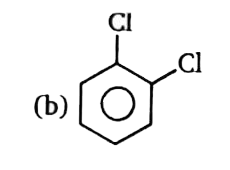
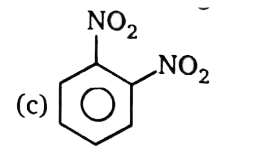
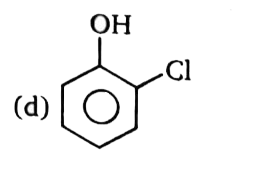
In which of the following molecules `mu`(oberved) is found to be greater than `mu` (theoretical):

A

`CHCl_(3)`

B

C

D

Text Solution

AI Generated Solution

The correct Answer is:

To solve the problem of determining in which molecule the observed dipole moment (μ_observed) is greater than the theoretical dipole moment (μ_theoretical), we can follow these steps: ### Step 1: Understand the Concept of Dipole Moment Dipole moment (μ) is a measure of the separation of positive and negative charges in a molecule. It is calculated using the formula: \[ \mu = q \times r \] where \( q \) is the charge and \( r \) is the distance between the charges. ### Step 2: Identify the Molecules The question implies that there are several molecules to consider. For this solution, let's assume the molecules are CHCl3, H2O, NH3, and HF. ### Step 3: Calculate Theoretical Dipole Moments Theoretical dipole moments can be calculated based on the molecular geometry and the electronegativity differences between the atoms. For example: - **CHCl3 (Chloroform)**: The dipole moment is expected to be significant due to the presence of chlorine. - **H2O (Water)**: The dipole moment is high due to the bent shape and the electronegativity of oxygen. - **NH3 (Ammonia)**: The dipole moment is also significant due to the pyramidal shape. - **HF (Hydrogen Fluoride)**: The dipole moment is high due to the strong electronegativity of fluorine. ### Step 4: Consider Hydrogen Bonding In some cases, the observed dipole moment can be greater than the theoretical dipole moment due to interactions such as hydrogen bonding. For example, in CHCl3, the hydrogen can form hydrogen bonds with other electronegative atoms (like chlorine), which can lead to an increase in the observed dipole moment. ### Step 5: Compare Observed and Theoretical Values - For **CHCl3**, the observed dipole moment is greater than the theoretical value due to hydrogen bonding. - For **H2O**, **NH3**, and **HF**, the observed dipole moments are typically close to the theoretical values, but they do not exceed them significantly. ### Conclusion Based on the analysis, the molecule in which the observed dipole moment (μ_observed) is greater than the theoretical dipole moment (μ_theoretical) is **CHCl3** due to the presence of hydrogen bonding. ### Final Answer **CHCl3** ---

To solve the problem of determining in which molecule the observed dipole moment (μ_observed) is greater than the theoretical dipole moment (μ_theoretical), we can follow these steps: ### Step 1: Understand the Concept of Dipole Moment Dipole moment (μ) is a measure of the separation of positive and negative charges in a molecule. It is calculated using the formula: \[ \mu = q \times r \] where \( q \) is the charge and \( r \) is the distance between the charges. ### Step 2: Identify the Molecules ...
Promotional Banner

Topper's Solved these Questions

  • CHEMICAL BONDING (ADVANCED)

    VK JAISWAL ENGLISH|Exercise Level 3|77 Videos
  • CHEMICAL BONDING (ADVANCED)

    VK JAISWAL ENGLISH|Exercise ONE OR MORE ANSWER IS/ARE CORRECT|78 Videos
  • CHEMICAL BONDING (ADVANCED)

    VK JAISWAL ENGLISH|Exercise SUBJECTIVE PROBLEMS|64 Videos
  • CHEMICAL BONDING (BASIC)

    VK JAISWAL ENGLISH|Exercise SUBJECTIVE PROBLEMS|54 Videos

Similar Questions

Explore conceptually related problems

For which of the following molecules mu ne0

In which of the following molecules mu_(exp) (observed dipole moment) is found to be greater than mu_(mu) (expected dipole moment)?

In which of the following compounds observed bond angle is found to be greater than expected, but not due to back bonding.

In which of the following compounds observed bond angle is found to be greater than expected, but not due to back bonding.

On mixing which of the following solutions, observed boiling point of mixture is higher than theoretical boiling point?

On mixing which of the following solutions, observed boiling point of mixture is higher than theoretical boiling point?

For which of the following molecule significant mu ne0 ?

For which of the following molecule significant mu ne0 ?

For which of the following molecule significant mu ne 0 ?

Which of the following molecule is theoretically not possible ?

VK JAISWAL ENGLISH-CHEMICAL BONDING (ADVANCED)-Level 2
  1. The geometry with respect to the central atom of the following molecul...

    Text Solution

    |

  2. Incorrect statement regarding BF(3)NH(3) molecule is :

    Text Solution

    |

  3. In which of the following molecules mu(oberved) is found to be greater...

    Text Solution

    |

  4. Among the following, the molecule with the highest dipole moment is :

    Text Solution

    |

  5. Which of the following is wheat fruit?

    Text Solution

    |

  6. Which of the following is wheat fruit?

    Text Solution

    |

  7. The bond having the minimum bond energy is :

    Text Solution

    |

  8. The correct increasing order of extent of hydrolysis is

    Text Solution

    |

  9. Inorganic benzene reacts with HCl to form a compounds B(3)N(3)H(9)Cl(...

    Text Solution

    |

  10. Select the correct statements about hydrolysis of BCl(3) and NCl(3):

    Text Solution

    |

  11. The incorrect statement regarding molecular orbital (s) is :

    Text Solution

    |

  12. Which of the following species absorb maximum energy in its HOMO-LUMO ...

    Text Solution

    |

  13. If P to T are second period p-block elements then which of the followi...

    Text Solution

    |

  14. Which of the following facts given is not correct? (I) Bond length o...

    Text Solution

    |

  15. N(2) and O(2) are converted to monocations N(2)^(+) and O(2)^(+) respe...

    Text Solution

    |

  16. In which of the following transformations, the bond order has increase...

    Text Solution

    |

  17. H.O.M.O (Highest Occupied Molecular Orbital ) of CO molecular is :

    Text Solution

    |

  18. The structure of B(3)N(3)H(6) is as follows: How may derivations...

    Text Solution

    |

  19. Correctly match is:

    Text Solution

    |

  20. Select correct statement (s) :

    Text Solution

    |
