Home
Class 12
CHEMISTRY
Three compound X, Y and Z were taken int...

Three compound X, Y and Z were taken into three different laboratory vessels annd they are carried out by a chemist in his car. The car caught fire due to short circuit and the chemist came out of the car and noticed following observations:
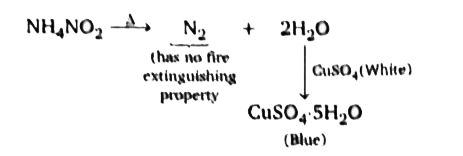
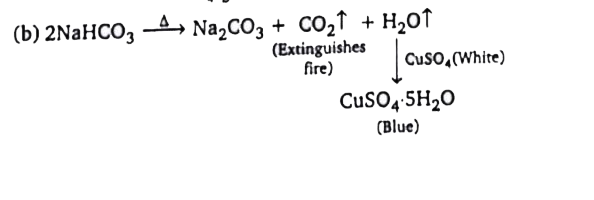
Q. Compound Y produced two oxides, among these oe oxide turns anhydrous `CuSO_(4)` into blue and other gas slows down fire in the car, then Y is

A

`NH_(4)NO_(2)`

B

`NaHCO_(3)`

C

`MgC_(2)O_(4)`

D

`NH_(4)NO_(3)`

Text Solution

Verified by Experts

The correct Answer is:
B


Promotional Banner

Topper's Solved these Questions

  • TYPES OF REACTIONS

    VK JAISWAL ENGLISH|Exercise ONE OR MORE ANSWERS IS/ARE CORRECT|40 Videos
  • TYPES OF REACTIONS

    VK JAISWAL ENGLISH|Exercise MATCH THE COLUMN|14 Videos
  • TYPES OF REACTIONS

    VK JAISWAL ENGLISH|Exercise LEVEL 2|196 Videos
  • s-BLOCK ELEMENTS

    VK JAISWAL ENGLISH|Exercise SUBJECTIVE PROBLEMS|2 Videos

Similar Questions

Explore conceptually related problems

Three compound X, Y and Z were taken into three different laboratory vessels annd they are carried out by a chemist in his car. The car caught fire due to short circuit and the chemist came out of the car and noticed following observations: Q. Which of the following compound does not react with cold and dil. HNO_(3) ?

Three compound X, Y and Z were taken into three different laboratory vessels annd they are carried out by a chemist in his car. The car caught fire due to short circuit and the chemist came out of the car and noticed following observations: Q. Compound X changes into white substnace along with liberation of neutral oxide and then white substnace decomposed into three products among which two are acidic oxides. among these oxides non-polar oxide can undergo polar cyclic polymer on cooling. the compound X will be:

A car moves at a speed of 57 (3)/(4) km/hr. The car travels for 3 hours 20 minutes. Find the distance covered by the car.

A certain compound when burned gives three oxides. The first turned lime water milky, the second turned anhydrous CuSO_4 blue and the third formed an aqueous solution of low pH. The elements present in the compound are

A car moving on a horizontal road may be thrown out of the road in taking a turn

Evaluation of newly evolved varieties is carred out by

A car covers a distance of 160 km between two cities in 4 h. What is the average speed of the car?

Certain organic compound on combustion produces three gaseous oxides A, B and C. A and C turned lime water milky, B turned anhydrous CuSO_(4) blue and C truned K_(2)Cr_(2)O_(7) solution green. The elements present in organic compounds are

The engine of a car produces acceleration 4m//s^(2) in the car. If this car pulls another car of same mass, what will be the acceleration produced

Two cars are moving in the same direction with the same speed 30 km//hr . They are separated by a distance of 5 km , the speed of a car moving in the opposite direction of it meets these two cars at an interval of 4 minutes, will be.

VK JAISWAL ENGLISH-TYPES OF REACTIONS-LEVEL 3
  1. Consider three P, Q, R, salts among them P and Q salts have different ...

    Text Solution

    |

  2. Consider three P, Q, R, salts among them P and Q salts have different ...

    Text Solution

    |

  3. Consider three P, Q, R, salts among them P and Q salts have different ...

    Text Solution

    |

  4. Three compound X, Y and Z were taken into three different laboratory v...

    Text Solution

    |

  5. Three compound X, Y and Z were taken into three different laboratory v...

    Text Solution

    |

  6. Three compound X, Y and Z were taken into three different laboratory v...

    Text Solution

    |

  7. In salts of polyatomic anion, as polarising power of cation increase, ...

    Text Solution

    |

  8. In salts of polyatomic anion, as polarising power of cation increase, ...

    Text Solution

    |

  9. Dioxygen directly reacts with nearly all metals annd non-metals except...

    Text Solution

    |

  10. Dioxygen directly reacts with nearly all metals annd non-metals except...

    Text Solution

    |

  11. Dioxygen directly reacts with nearly all metals annd non-metals except...

    Text Solution

    |

  12. Consider the following reactions and answer the following questions. ...

    Text Solution

    |

  13. Consider the following reactions and answer the following questions. ...

    Text Solution

    |

  14. Consider the following reactions and answer the following questions. ...

    Text Solution

    |

  15. Q. Compound 'X' is:

    Text Solution

    |

  16. Q. Incorrect statement 'Y' changes on heating:

    Text Solution

    |

  17. The unique behaviour of CU, having a positive E^(@) (reduction potenti...

    Text Solution

    |

  18. The unique behaviour of CU, having a positive E^(@) (reduction potenti...

    Text Solution

    |

  19. Q. When H(2)S gas was passed into filtrate (P), a coloured precipitate...

    Text Solution

    |

  20. Q. Precipitate (Q) was treated withdil. HCl and coloured solution was ...

    Text Solution

    |