Home
Class 11
BIOLOGY
the curve given below shows wnzymat...

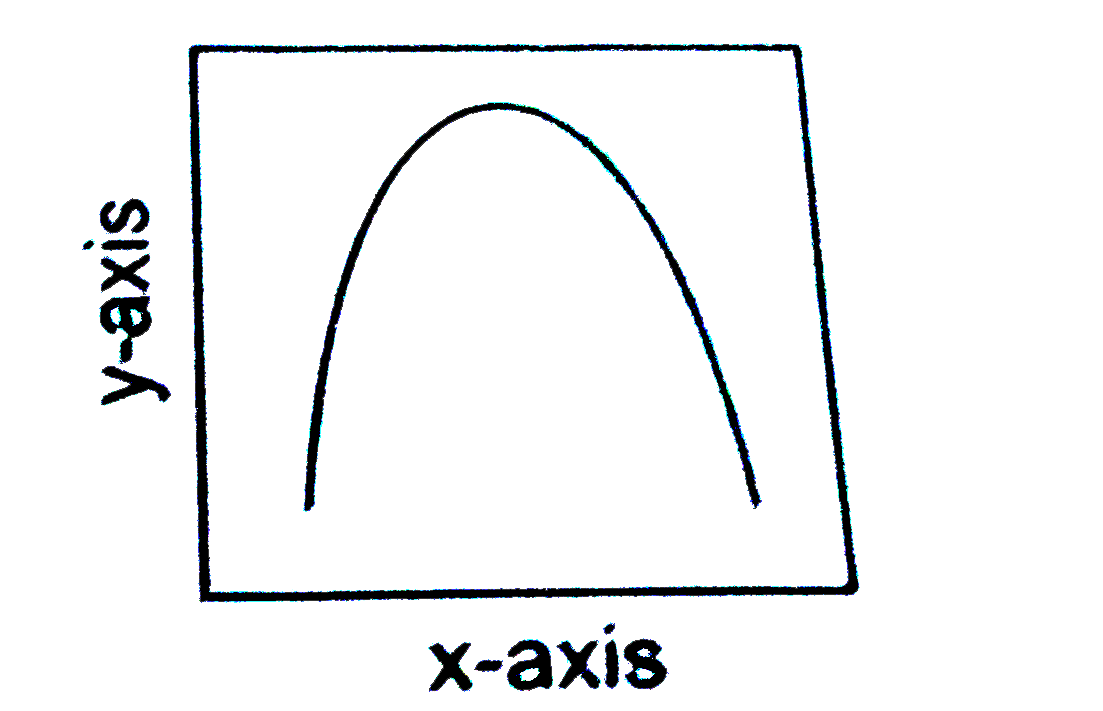
the curve given below shows wnzymatic acitvity with relation to three conditions (pH , temperature and substrate concentration ).

what do the two axes ( x and y) represent ?

A

Enzymatic acticity , temperature

B

Enzymatic activity ,pH

C

Temperature enzye activity

D

Substrate concentration enzymatic activity

Text Solution

Verified by Experts

The correct Answer is:

C
Promotional Banner

Topper's Solved these Questions

  • BIOMOLECULES

    CENGAGE BIOLOGY ENGLISH|Exercise ASSERTION-REASONING QUESTIONS|18 Videos
  • ANIMAL KINGDOM

    CENGAGE BIOLOGY ENGLISH|Exercise Archives|34 Videos
  • BREATHING AND EXCHANGE OF GASES

    CENGAGE BIOLOGY ENGLISH|Exercise Archives|15 Videos

Similar Questions

Explore conceptually related problems

The curve given below show enzymatic activity with relation to three conditions (pH, temperature and substrate concentration) What do the two axises (x and y) represent

The curve given below show enzymatic activity with relation to three conditions (pH, temperature and substrate concentration) What do the two axises (x and y) represent

The given curve shows enzymatic activity with relation to three conditions (pH, temperature & substrate concentration) What do the two axes (x & y) represent?

The Given figure shows three velocity-substrate concentration curves of an enzyme reaction. What do the curves X Y and Z depict respectively ?

Figure given below shows three velocity-substrate concentration curves for an enzyme reaxtion. What do the curves for an enzyme reaction. What do the curves depict

The table given below shows the position of element U, V, X, Y and Z What type of compound is formed by U and X.

What does the graph indicate ? The graph given below shows the effect of substrate concentration on the rate of reaction of the enzyme green- gram-phos-phatase.

(a) The graph given below represents the organisms response to temperature as an environmental condition. (i) Which one of the two lines represents conformers and why ? (ii) What does the other line in the graph represent and why ? (b) Mention the different adaptations the parasites have evolved with, to be able to successfully complete their life cycles in their hosts.

Figure below shows the wave y=Asin (omegat-kx) at any instant travelling in the +ve x-direction. What is the slope of the curve at B?

CENGAGE BIOLOGY ENGLISH-BIOMOLECULES-ARCHIVES
  1. Three of the following statements about enzyme are correct and ...

    Text Solution

    |

  2. Figure 9.37 shows the conversion of a substrate into product by an...

    Text Solution

    |

  3. the curve given below shows wnzymatic acitvity with relation ...

    Text Solution

    |

  4. Which one fo the following structural formulae of two orgainc compo...

    Text Solution

    |

  5. Given below is the diagrammatic representation of one of the categorie...

    Text Solution

    |

  6. Which one out of A- D given below correctly repesents the structura...

    Text Solution

    |

  7. which one is the most abundent protein in the animal world ?

    Text Solution

    |

  8. Which one of the following biomolecules is correclty characterised...

    Text Solution

    |

  9. A phosphoglyceride is always made up of

    Text Solution

    |

  10. The essential chemical components of many coenzymes are

    Text Solution

    |

  11. Transition state structure of the substrate fomed during an enzy...

    Text Solution

    |

  12. The most abundant intracellular cation is :

    Text Solution

    |

  13. Macro molecule chitin is

    Text Solution

    |

  14. Which one of the following is a non-reducing carbohydrates ?

    Text Solution

    |

  15. Select the option whih is not correct with respect the enzyme act...

    Text Solution

    |

  16. Which one of the following statements in incorrect?

    Text Solution

    |

  17. The chitinous exoskeleton of arthopod is formed by the polymerizatio...

    Text Solution

    |

  18. which one of the following statements is wrong?

    Text Solution

    |

  19. A typical fat molecule is made up of

    Text Solution

    |

  20. A non-proteinaceous enzyme is

    Text Solution

    |
