Home
Class 12
PHYSICS
Figure shows three arrangements of an el...

Figure shows three arrangements of an electrons e and two protons p(where Dgtd)
(a) Rank the arrangement according to the magnitude of the net electrostatic force on the electron due to the protons placing the largest first.

(b) In situation (c), is the angle between the net force on the electrons and the line labeled horiontal less than or more than `45^(@)`?

Text Solution

Verified by Experts


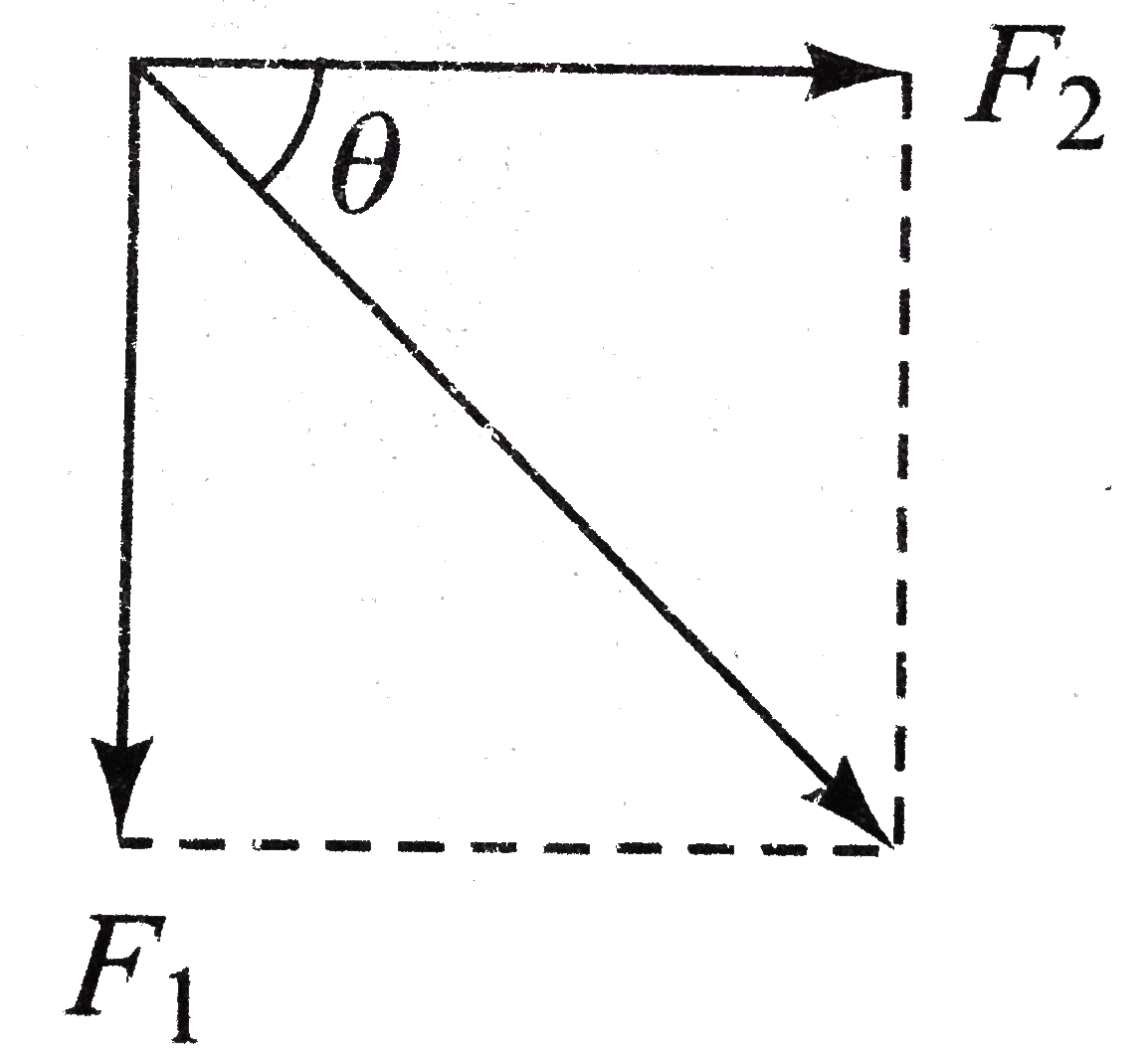
(a) It is clear from the diagram that
`F_(a)gtF_(c)gtF_(b)`
(b) Since `F_(1)gtF_(2), tan theta =F_(1)/F_(2)` or `thetagt45^(@)`.
Promotional Banner

Topper's Solved these Questions

  • COULOMB LAW AND ELECTRIC FIELD

    CENGAGE PHYSICS ENGLISH|Exercise Subjective Type|15 Videos
  • COULOMB LAW AND ELECTRIC FIELD

    CENGAGE PHYSICS ENGLISH|Exercise Subjective|32 Videos
  • COULOMB LAW AND ELECTRIC FIELD

    CENGAGE PHYSICS ENGLISH|Exercise Solved examples|10 Videos
  • CENGAGE PHYSICS DPP

    CENGAGE PHYSICS ENGLISH|Exercise subjective type|51 Videos
  • ELECTRIC CURRENT & CIRCUITS

    CENGAGE PHYSICS ENGLISH|Exercise Kirchhoff s law and simple circuits|15 Videos

Similar Questions

Explore conceptually related problems

The diagram shows the arrangement of three small uniformally charged spheres, A,B and C . The arrow indicate the direction of the electrostatic forces acting between the spheres (for example, the left arrow on sphere A indicates the electronstatic force on sphere A due to sphere B ). At least two of the spheres are positively charged. Which sphere, if any, could be negatively charged?

Figure (a) shows an arrangement of three charged particles separted by distance d. Particles A and C are fixed on the x-axis, but particle B can be moved along a circle centered on particle A. During the movement, a radial line between A and B makes an angle theta relative to the positive direction of the x-axis (Fig. b). The curves in Fig. c give, for two situations, the magnitude F_("net") of the net electrostatic force on particle A due to the other particles. That net force if given as a function of angle theta and as a multiple of a basic amount F_(0) . For example on curve 1, at theta=180^(@) we see that F_("net")=2F_(0) . (a) For the situation corresponding to curve 1, what is the ratio of the charge of particle C to that of particle B (including sign)? (b) For the situation corresponding to curve 2, what is that ratio?

Mu on (mu^(-)) is a negatively charged (|q|=|e|) particle with a mas m_(mu)=200 m_(e ) where m_(e ) is the mass of the electron and e is the electronic charge . If mu^(-) is bound to a proton to from a hgydrogen like atom identify the correct statements (A) Radius of the muonic orbit is 200 times smaller than that of the electron (B) The speed of the mu^(-) in the n^(th) orbit is 1/200 times that of the electron in the n^(th) orbit (c )The ionizaion energy of muonic atom is 200 times more than that of an hydrogen atom (D) The momentum of the muon in the m^(th) orbit is 200 times more than that of the electron

The Bohr moden does not apply when more than one electron orbit the nucleues because it does not account for the electrostatic force that the electron exert on one another.For instance , an electrically neutral lithium atom (Li) contains three electrons in orbit around a nucleus that includes three protons (Z = 3) , and Bohr's model can be used for the doubly charged positive ion of lithium (Li^(2)^(+)) that results when two electrons are removed from the neutral atom, leaving only one electron to orbit the nucleus . Obtain the ionization energy that is needed to remove the remaining electron from (Li^(2)^(+))

At time t_(1) , an electron is sent along the positive direction of x-axis through both an electric field and a magnetic field, with directed parallel to the y-axis Graph gives the y-component E_(max) of the net force on the electron due to the two fields, as a function of th eelectron's speed V at time t_(1) . Assuming B_(x) = 0 , find magnitude of electric field in mN//C and find z component of magnetic field also (Use e = 1.6 xx 10^(-19) C )

Given are four arrangements of three fixed electric charges. In each arrangement, a point labeled P is also identified. A test charge +q is placed at P. All of the charges are of the same magnitude Q, but they can be either positive or negative as indicated. The charged and point P all lie on a straight line. the distances between adjacent items, either between two charges or between a charge and point P, are all the same. I. o+,o+,o+,underset (P)(*) , II. o+,o+,overset(P)(*),- III. o+,o+,-, overset(P)(*) , IV. o+, - , o+, overset(P)(*) . Correct order of choices in a decreasing order of magnitude of force on P is

A current i, indicated by the crosses in figure, is established in a strip of copper of height h and width w. A uniform field of magnetic induction B is applied at right angle to the strip. (a) Calculate the drift velocity v_d of the electrons. (b) What are the magnitude and direction of the magnetic force F acting on the electrons? (c) What should the magnitude and direction of a homogeneous electric field E be in order to counterbalance the effect of mangetic field? (d) Calculate voltage V necessary between two sides of the conductor in order to creat this field E Between which sides of the conductor would this voltage have to be applied? (e) If no electric field is applied from the outside, the electrons will be pushed somewhat to one side and therefore will give rise to a uniform electric field E_H across the conductor until the forces of this electrostatic field E_H balance the magnetic forces encountered in part (b). What will be the magnitude and direction of field E_H ? Assume that n, the number of conductor electrons per unit volume is 1.1xx10^(29) m^-3, h = 0.02 m, w= 0.1 cm, i = 50 A, and B=2 T.

Fig. shows some of the electric field lines due to three point charges arranged along the vertical axis. All three charges have the same magnitude. (a) What are the signs of each of the three charges? Explain your reasoning. (b) At what points(s) is the magnitude of the electric field the smallest? Explain your reasoning. Explain how the fields produced by each individual point charge combine to give a small net field at this point or points. (c ) Two point charges q and -q are placed at a distance d apart. What are the points at which the resultant electric field is parallel to the line joining the two charge? .

Coulomb's law for electrostatic force between two point charges and Newton's law for gravitational force between two stationary point masses, both have inverse square dependence on the distance between the charges // masees (a) compare the strength of these forces by determining the ratio of their maagnitudes (i) for an electron and as proton (ii) for two protons (b) estimate the accelerations for election and proton due to electrical force of their mutal attraction when they are 1 A apart.

Suppose the charge of a proton and an electron differ slightely. One of them is -e , the other is (e+Deltae) . If the net of electrostatic force and gravitational force between two hydrogen atoms placed at a distance d (much greater than atomic size) apart is zero. Then Deltae is of the order of [Given mass of hydrogen m_(h)=1.67xx10^(-27)kg ]

CENGAGE PHYSICS ENGLISH-COULOMB LAW AND ELECTRIC FIELD-Exercises
  1. Does an electric ccharge experience a force due to the field produced ...

    Text Solution

    |

  2. Two negative charges of a unit magnitude and a positive charge q are p...

    Text Solution

    |

  3. Figure shows three arrangements of an electrons e and two protons p(wh...

    Text Solution

    |

  4. Figure shows two charge particles on an axis. The charges are free to ...

    Text Solution

    |

  5. In fig. a central particle of charge -q is surrounded by two circular ...

    Text Solution

    |

  6. Figure shows four situations in which particles of charge +q or -q are...

    Text Solution

    |

  7. The force between two point electric charges kept at a distance d apar...

    Text Solution

    |

  8. Two small balls having equal positive charge Q (coulumb) on each suspe...

    Text Solution

    |

  9. Suppose we have a large number of identical particles, very small in s...

    Text Solution

    |

  10. The electrostatics force of repulsion between two positively charged i...

    Text Solution

    |

  11. Two fixed point charges +4e and +e units are separated by a distance a...

    Text Solution

    |

  12. Two insulated identically sized charged copper spheres A and B have ...

    Text Solution

    |

  13. Two small balls having equal positive charge Q (coulumb) on each suspe...

    Text Solution

    |

  14. Find the force on a charge q(1)(=20 mu C) due to the charge of q(2)(=1...

    Text Solution

    |

  15. Two particles A and B having charges 8.0 xx 10 ^(-6) C and -2.0 xx 1...

    Text Solution

    |

  16. A particle of mass m carrying a charge -q(1) starts moving around a fi...

    Text Solution

    |

  17. A particle with positive charge Q is held fixed at the origen. A secon...

    Text Solution

    |

  18. Fig. shows some of the electric field lines due to three point charges...

    Text Solution

    |

  19. Two point charge Q and 4Q are fixed at a distance of 12cm from each ot...

    Text Solution

    |

  20. Is an electric field of the type shown by the electric lines in fig. p...

    Text Solution

    |