Home
Class 12
PHYSICS
Four identical metallic plates (1,2,3, a...

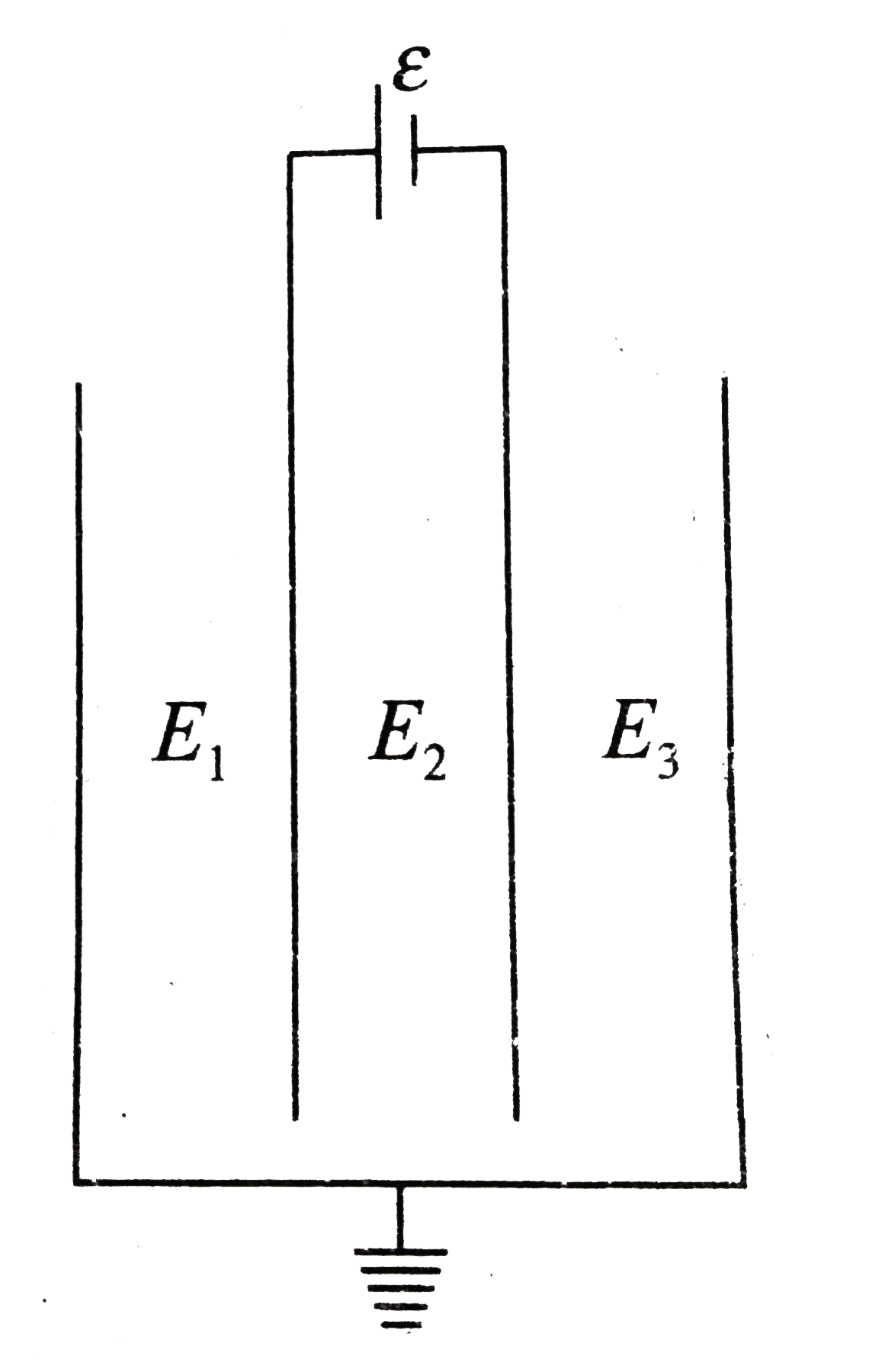
Four identical metallic plates (1,2,3, and 4) are arranged in air at same distance d from each other with their outer plates being connected together and earthed. If the plates 2 and 3 are connected with a cell of constant emf E, then ratio of electric fields between the plate is

A

`E_1:E_2:E_3 = 2/3 :1:2/3`

B

`E_1:E_2:E_3 = 1/2 : 1: 1/2`

C

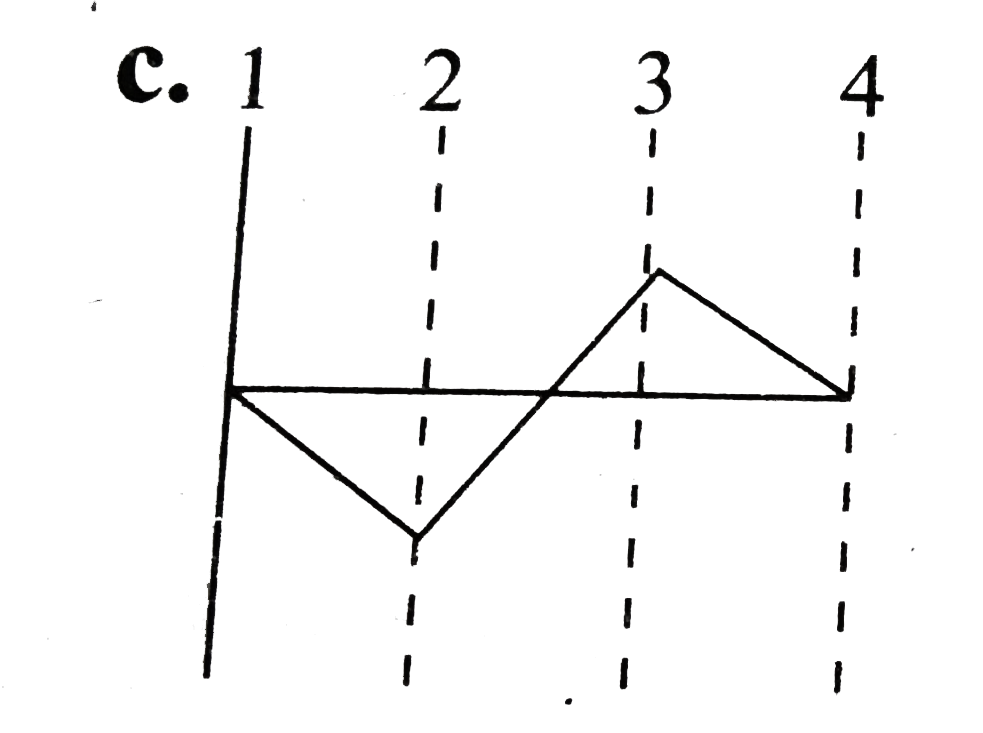
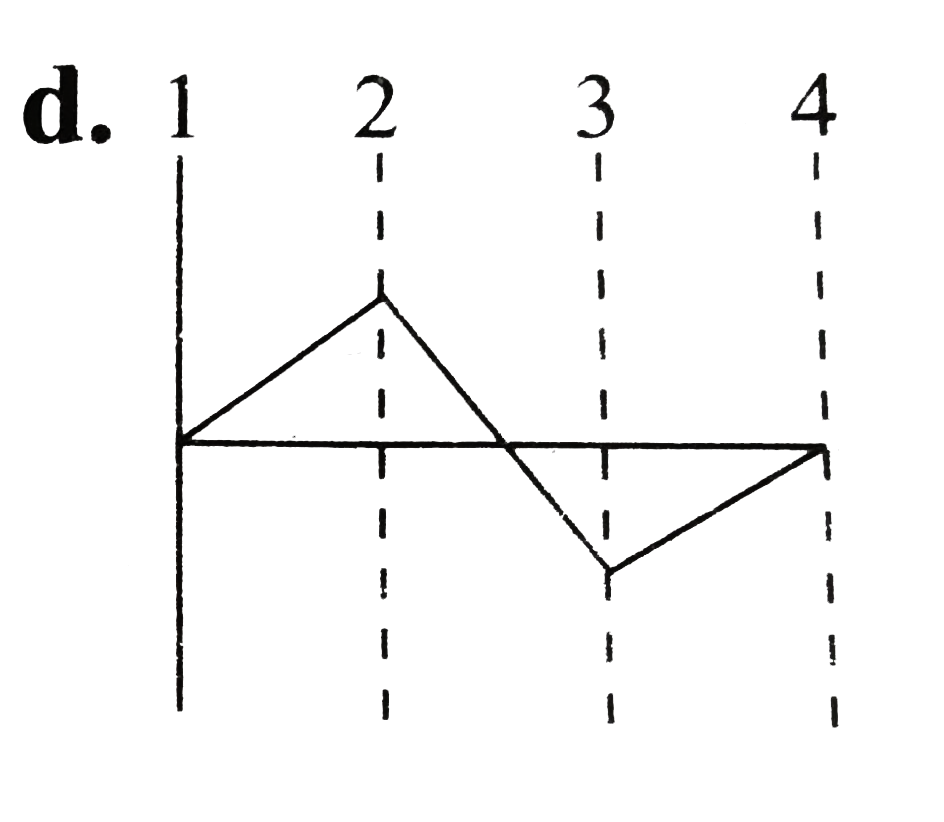
and variation of electric potential will be

D

Text Solution

Verified by Experts

The correct Answer is:
B, D

b.,d.
Plate `2` acquires a net positive charge and `3` acquires net negatie charge.
Due to induction, plate `1` acqurires negative charge and plate `4` positive charge. `1` and `4` are equipotential (since they are joined).
Due to symmetry
`V_(1-2)=V_(3-4)`
and `V_(2-3)=2V_(2-1)=2V_(4-3)`
because charge capacitor `2-3` is double.
Electric field `=("potential")/(d)`
`E_(1):E_(2):E_(3)=1:2:1=(1)/(2):1:(1)/(2)`
and form plate `1` to `4`
potential first increases, then decreases, and again increases. Since we are going first in direction opposite of `E` and then in directon of `E`.
Promotional Banner

Similar Questions

Explore conceptually related problems

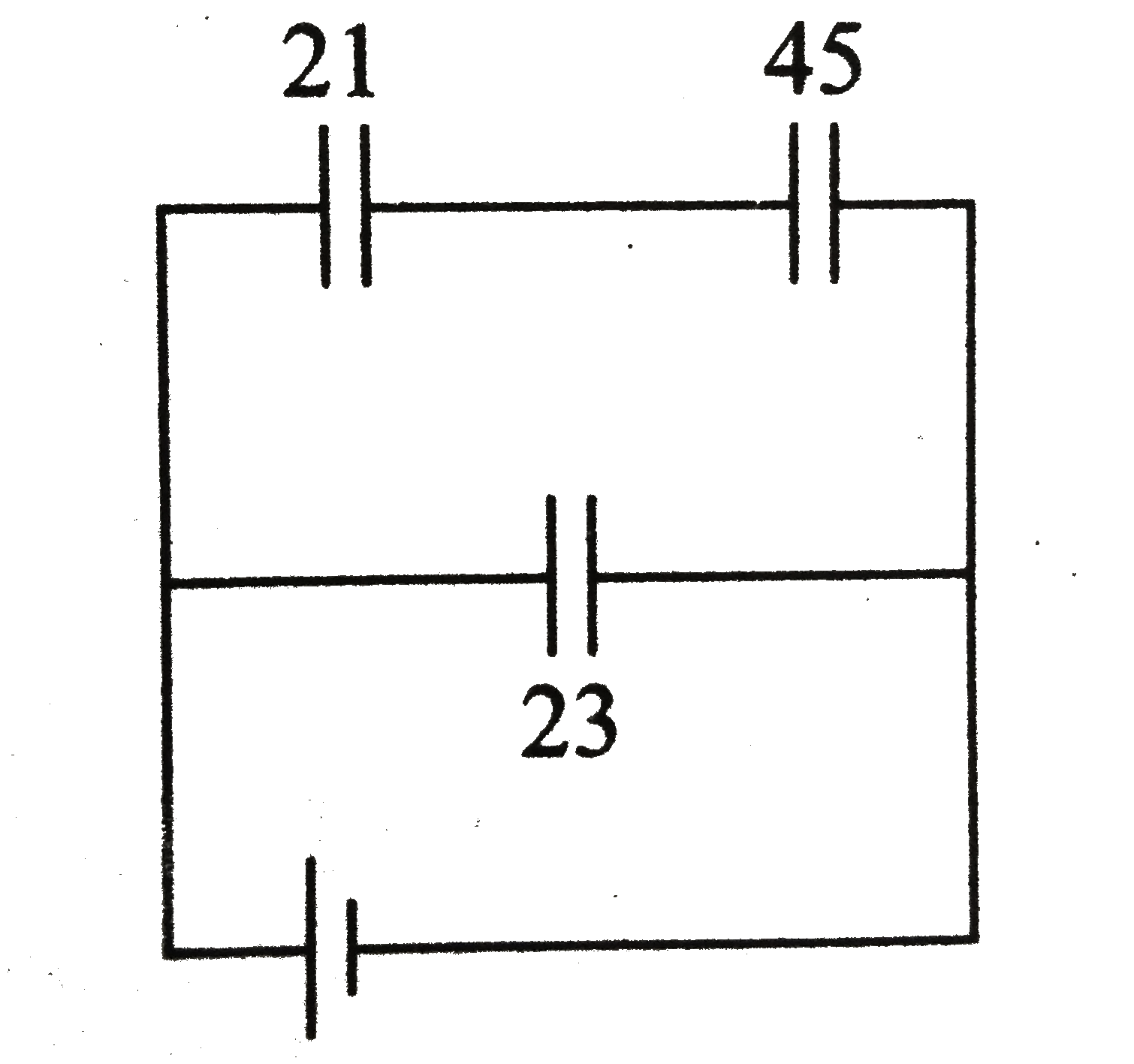
Identical metal plates are located in air at equal distance d from one another. The area of each plate is equl to A Evaluate the capacitance of the system between P and Q if the plates are interconnected as shown in. .

Four metallic plates each with a surface area A of one side and placed at a distance d from each other. the plates are connected as shown in the fig. Then the capacitance of the system between a and b is -

Four metallic plates, each with a surface area of one side A, are placed at a distance d form each other. The alternating plates are connected to points A and B as shown in the figure. Then the capacitance of the system is:

Four identical plates 1, 2, 3 and 4 are placed parallel to each other at equal distance as shown in the figure. Plates 1 and 4 are joined together and the space between 2 and 3 is filled with a dielectric of dielectric constant k = 2. The capacitance of the system between 1 and 3 & 2 and 4 are C_1 and C_2 respectively . The ratio C_1/C_2 is

Four metallic plates each with a surface area of one side A are placed at a distance d from each other as shown. Then, the capacitance of the system between X and Y is

Four initially uncharaged thin, large, plane idential metallic plates A,B,C and D are arranged parallel to each other as shown. Now plates A,B,C and D are given charges Q,2Q,3Q and 4Q respectively. Plates A and D are connected by a mtallic wire while plates B and C connected by other metallic wire then after Electrostatic equilibrium is reached. Total charge on plates after earthing plates A and B will be

Four initially uncharaged thin, large, plane idential metallic plates A,B,C and D are arranged parallel to each other as shown. Now plates A,B,C and D are given charges Q,2Q,3Q and 4Q respectively. Plates A and D are connected by a mtallic wire while plates B and C connected by other metallic wire then after Electrostatic equilibrium is reached. Charge on left surface of plate B wll be

Three identical metal plates of area 'A' are at distance d_1 & d_2 from each other. Metal plate A is uncharged, while plate B & C have respectively charge+q & - q . If metal plates A &C are connected by switch K through a consumer of unknown resistance. What energy dose the. Consumer give out to its surrounding ? Assume d_1 = d_2= d

Four identical metal plates are placed in air parallel to each other with distances d from one another. The area of each plate is equal to A. The arrangement is shown in the figure. Find the capacitance of the system between plates P and R.

Five identical conducting plates, 1, 2,3,4 and 5 are fixed parallel pltes equidistant from each other (see figure). A conductor connects plates 2 and 5 while another conductor joins 1 and 3. The junction of 1 and 3 and the plate 4 are connected to a source of constant emf V_0 . Find (a) the effective capacity of the system between the terminals of source. (b) the charges on the plates 3 and 5. Given, d = distance between any two successive plates and A = area of either face of each plate.

