Home
Class 12
PHYSICS
An ammeter A of finite resistance, and a...

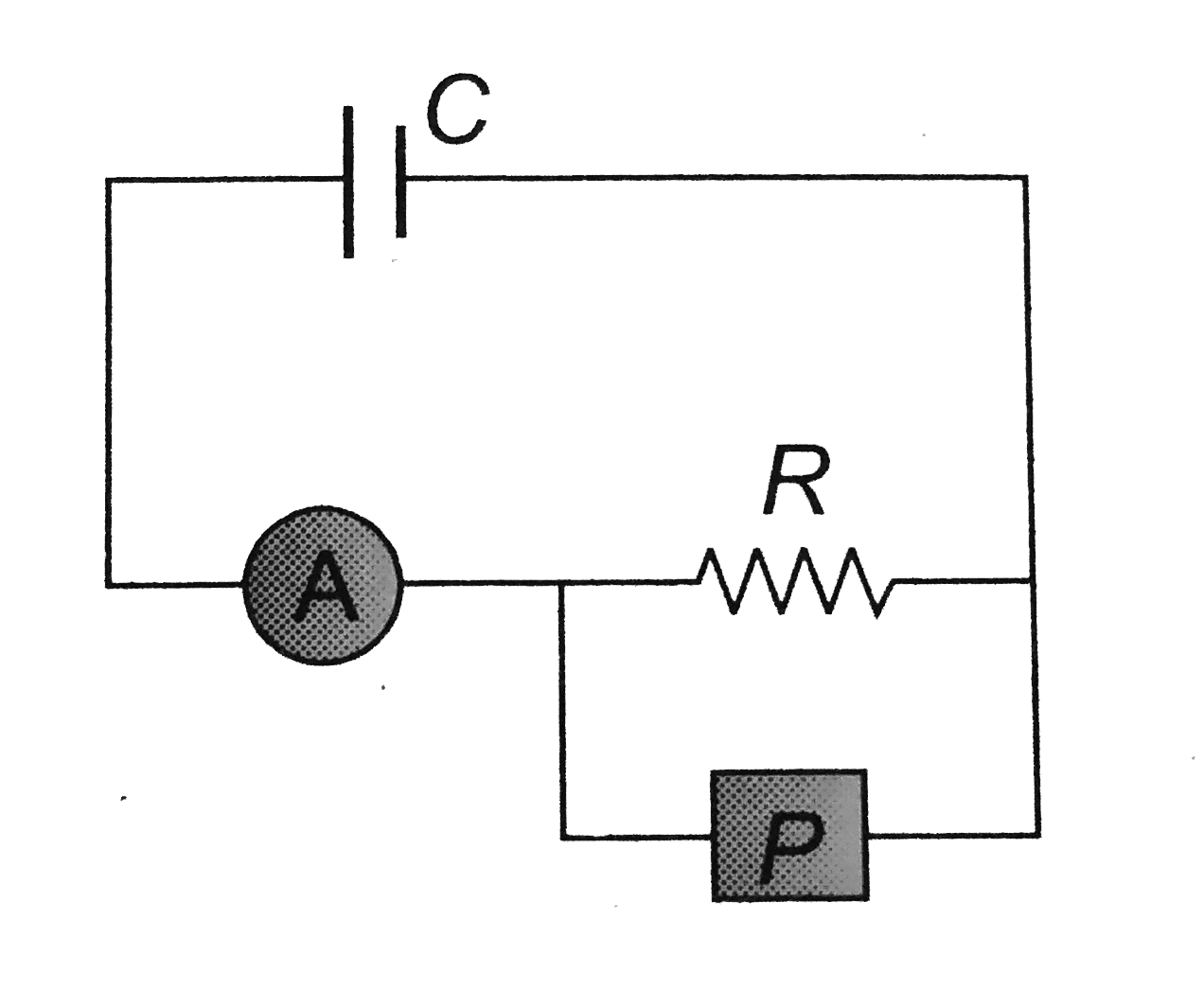
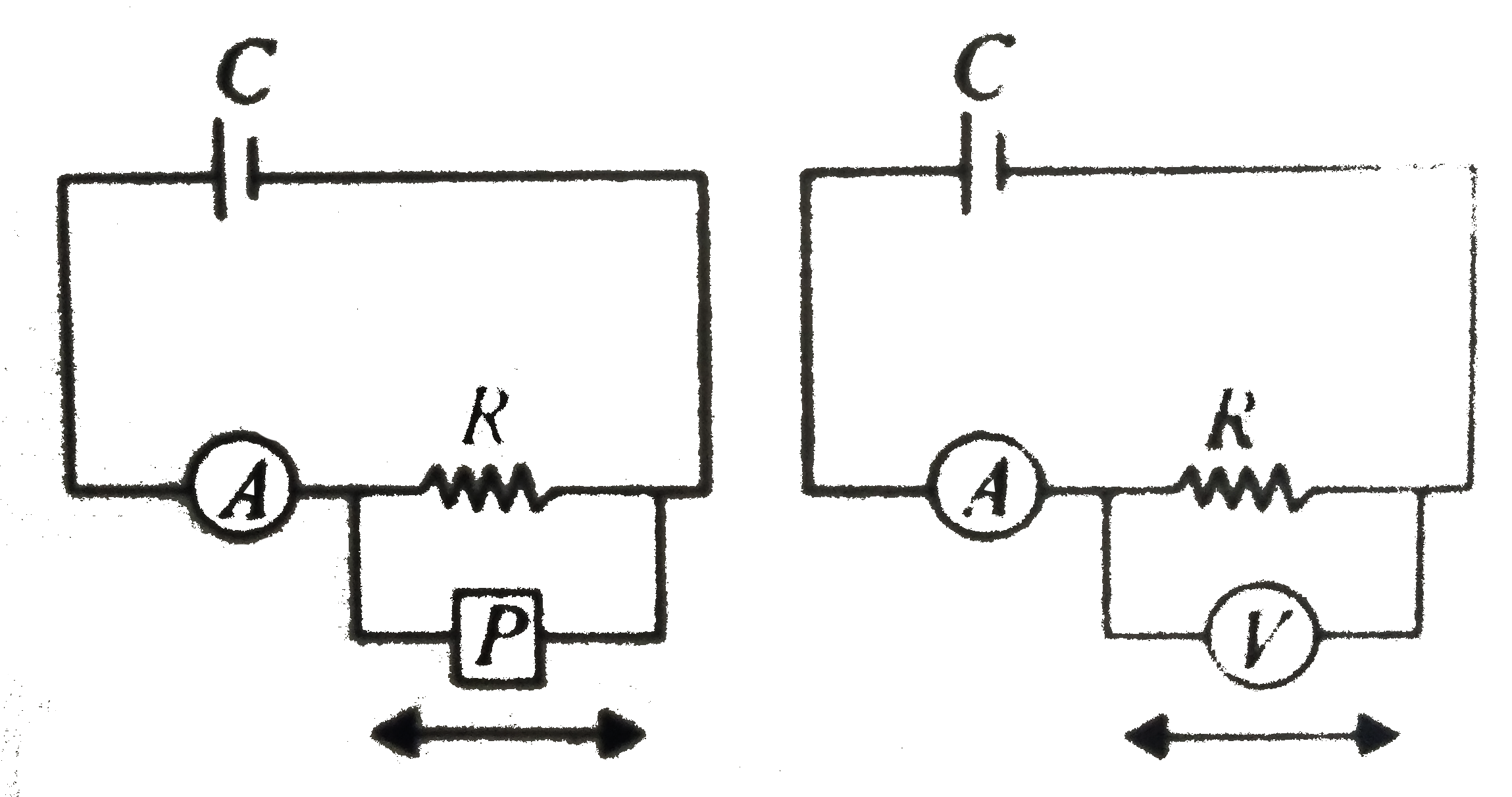
An ammeter `A` of finite resistance, and a resistor `R` are joined in series to an ideal cell `C`. A potentiometer `P` is joined in parallel to `R`. The ammeter reading is `I_(0)` and the potentiometer reading is `V_(0)`. `P` is now replaced by a voltmeter of finite resistance. The ammeter reading now is `I` and the voltmeter reading is `V`.

A

`I gt I_0, V < V_0`

B

`I gt I_0, V gt V_0`

C

`I = I_1, V lt V_0`

D

`I lt I_0, V gt V_0`

Text Solution

Verified by Experts

The correct Answer is:
A

a. Effective resistance of R and V is less than effective resistance of R and P, hence pd across voltmeter (or R) is less than previous value
,
Also overall resistance decreases, so overall current increases,
hence reading of ammeter increases.
Promotional Banner

Similar Questions

Explore conceptually related problems

An ammeter, voltmeter and a resistor are connected in series to a cell and the readings are noted as I and V. If another resistor R is connected in parallel with a voltmeter, then

The ammeter A reads 2A and the voltmeter V reads 20V, the value of resistance R is (Assuming finite resistance's of ammeter and voltmeter)

An ammeter and a voltmeter are joined in series to a cell. Their readings are A and V respectively. If a resistance is now joining parallel with the voltmeter. Then

An ammeter and a voltmeter are joined in sereis to a cell. Their readings are A and V respectively. If a resistance is now joinding parallel with the voltmeter. Then

An ideal ammeter (zero resistance) and an ideal voltmeter (infinite resistance) are connect as shows in Fig. 6.47 . The ammeter and the voltmeter readings are

A voltmeter and an ammeter are connected in series to an ideal cell of emf E . The voltmeter reading is V , and the ammeter readings is I . Then (i) V lt E (ii) the voltmeter resistance is V// I (iii) the potential difference across the ammeter is E - V (iv) Voltmeter resistance + ammeter resistance = E//I Correct statements are

An ammeter and a voltmeter are connected in series to an ideal battery of emf E. If the ammeter reads I and voltmeter reading V, then

An ammeter A, a voltmeter V and a resistance R are connected as shown in the figure. If the voltmeter reading is 1.6V and the ammeter reading is 0.4 A, then R is

In the circuit shown the resistance of voltmeter is 10000 ohm and that of ammeter is 20 ohm . The ammeter reading is 0.10 amp and voltmeter reading is 12 volts. Then R is equal to

An ammeter and a voltmeter are connected in series to a battery with an emf xi = 6.0 V . When a certain resistance is connected in parallel with the voltmeter, the readings of the latter decreases eta = 2.0 times, whereas the readings of the ammeter increase the same number of times, Find the voltmeter readings after the connection of the resistance.

