Home
Class 12
PHYSICS
The potential difference between A and B...

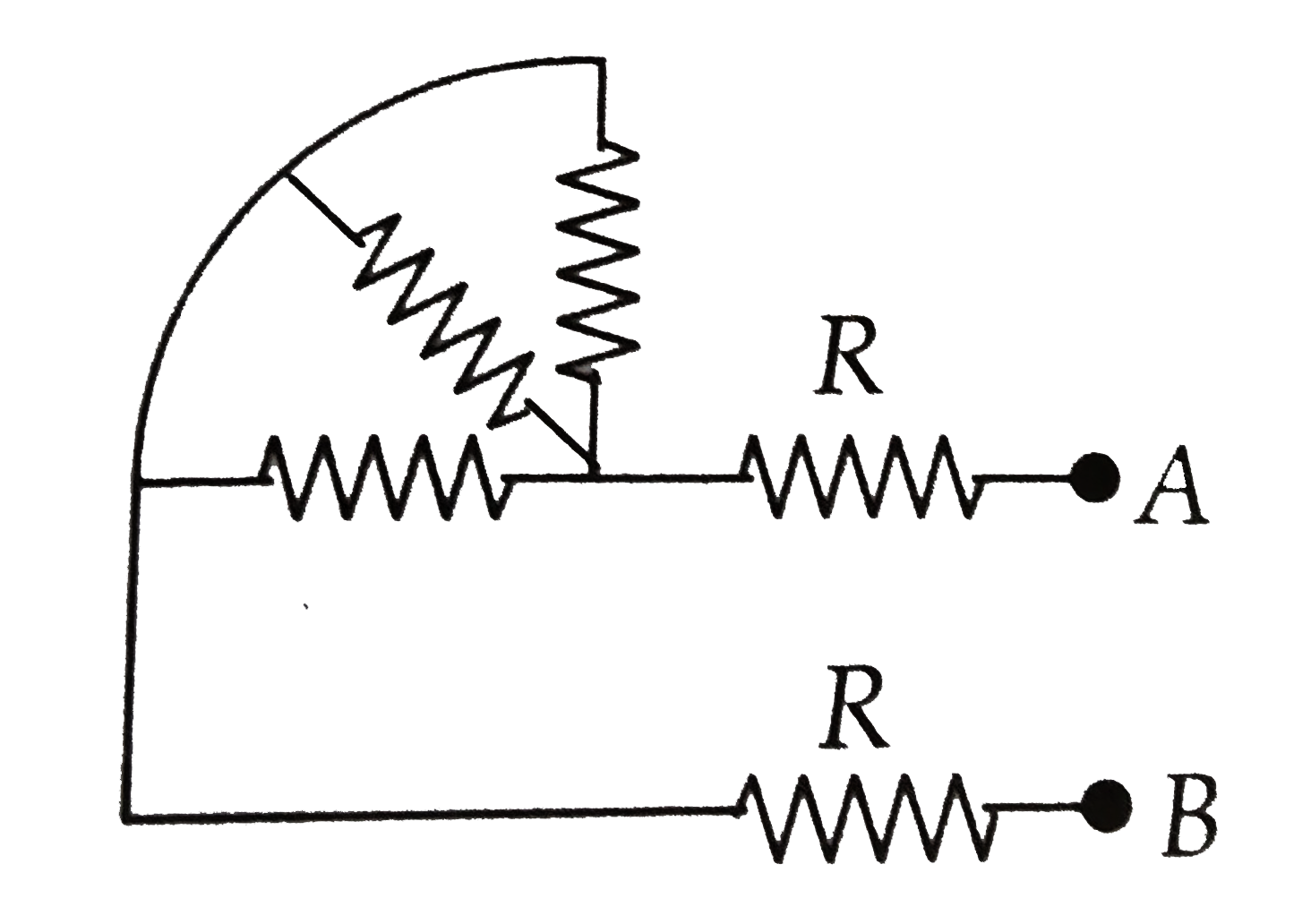
The potential difference between A and B is V. The values of some resistances are shown. The other resistance are equal in values. What should be the value of each of these resistances so that current in circuit is `V//3R`.

A

`R//3`

B

R

C

`R//6`

D

3R

Text Solution

Verified by Experts

The correct Answer is:
D

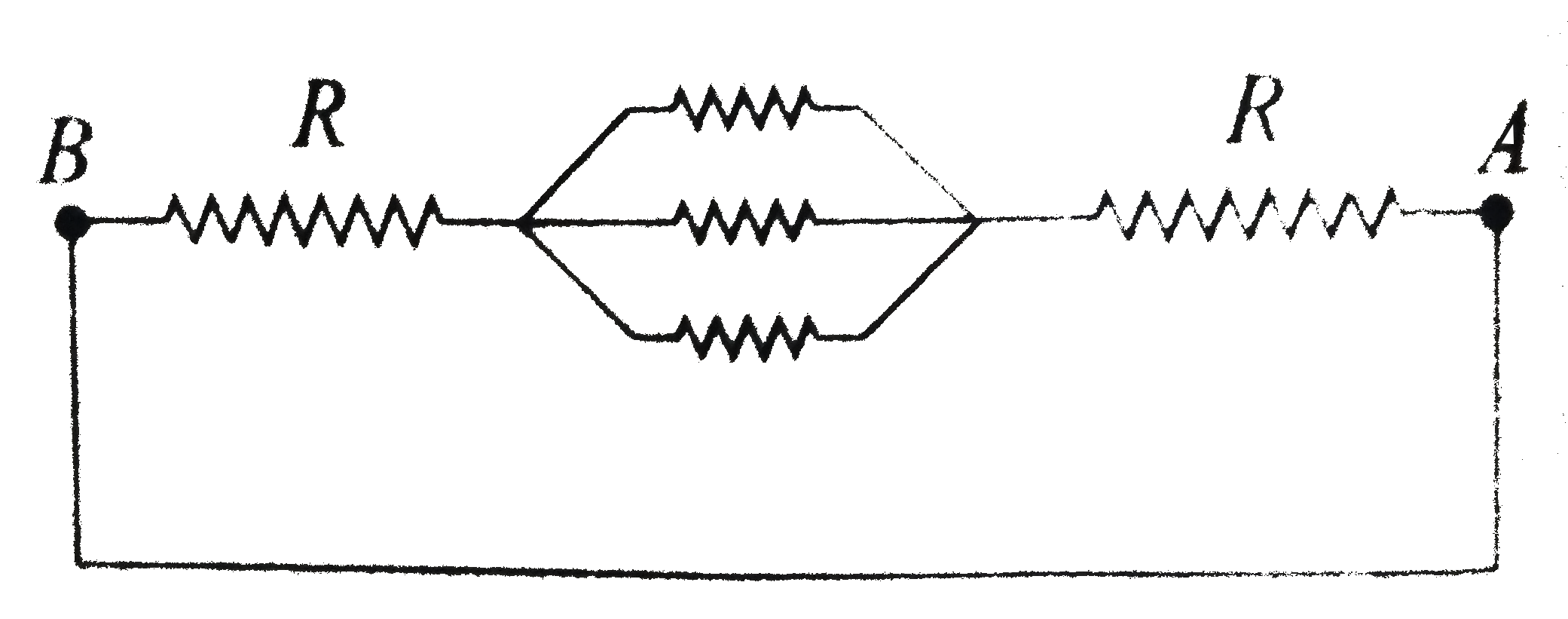
d. `R_(eq) = V/I = (V xx 3R)/V = 3R`
Hence equivalent resistance of three parallel resistances should
be `3R - 2R = R`
`1/R = 1/x + 1/x + 1/x`
or `x/3 = R or x = 3R`
Promotional Banner

Similar Questions

Explore conceptually related problems

In the given circuit, if potential difference between points A and B is 4V. Then, resistance X is

If the potential difference between A and D is V, what will be potential difference between F and C. each of the resistance is R.

The current enters at A and leaves at F. The values of some resistance are shown. What should be the value of resistance AB so that no current will flow through CB?

Give, potential difference V = (8 + 0.5) V and current I = (2 + 0.2) A. The value of resistance R is

The current I through a rod of a certain metallic oxide is given by I = 0.2 V^(1//2) , where V is the potential difference cross it. The rod is connected in series with a resistance to a 6 volt battery of negligible internal resistance. What value should the series resistance have so that : A) the current in the circuit is 0.4 A B) the power dissipated in the rod is twice that dissipated in the resistance.

Find equivalent resistance between points A and B in the circuit shown. All resistances are equal to R .

In the circuit shown some potential difference is applied between A and B. The equivalent resistance between A and B is R. Then

In the circuit shown in figure the total resistance between points A and B is R_0 . The value of resistance R is

In the circuit shown in fig. some potential difference is applied between A and B. The equivalent resistance between A and B is R.

In the given circuit, if the potential difference across the internal resistance r_1 is equal to E, then the resistance R is equal to:

