Text Solution
Verified by Experts



Topper's Solved these Questions
GEOMETRICAL OPTICS
CENGAGE PHYSICS ENGLISH|Exercise Exercise1.2|20 VideosGEOMETRICAL OPTICS
CENGAGE PHYSICS ENGLISH|Exercise Exercise1.3|25 VideosGEOMETRICAL OPTICS
CENGAGE PHYSICS ENGLISH|Exercise Solved Examples|15 VideosELECTRON,PHONTS,PHOTOELECTRIC EFFECT & X-RAYS
CENGAGE PHYSICS ENGLISH|Exercise dpp 3.3|15 VideosHEATING EFFECT OF CURRENT
CENGAGE PHYSICS ENGLISH|Exercise Thermal Power in Resistance Connected in Circuit|27 Videos
Similar Questions
Explore conceptually related problems
CENGAGE PHYSICS ENGLISH-GEOMETRICAL OPTICS-Exercise1.1
- Two plane mirrors, M(1) and M(2) are inclined at angle theta as shown ...
Text Solution
|
- Can we project the image formed by a plane mirror on to a screen? Give...
Text Solution
|
- Real object means that the object is actually present at the point whe...
Text Solution
|
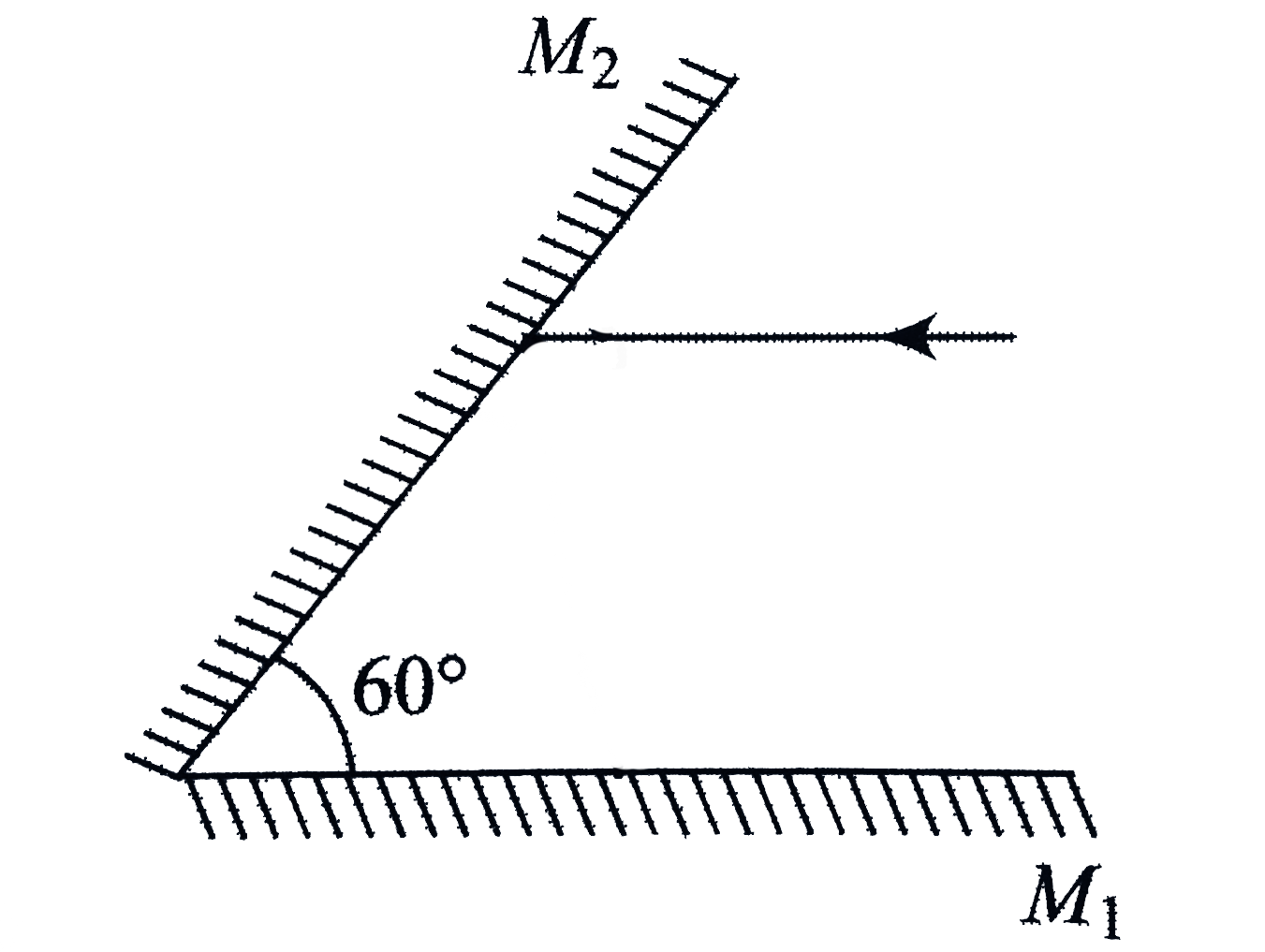
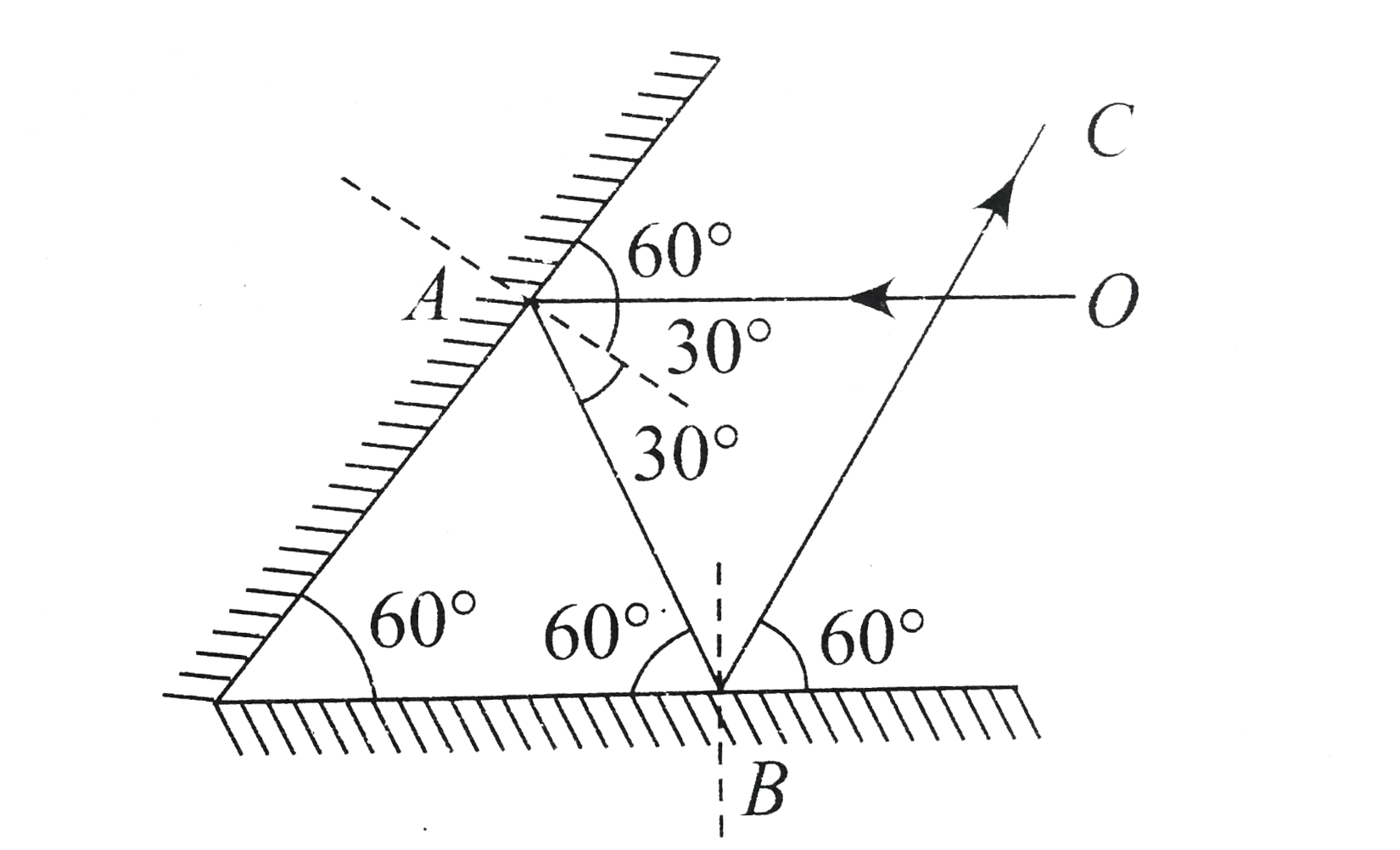
- Two plane mirrors are inclined at an angle of 60^@ as shown in Figure....
Text Solution
|
- Figure shows two rays A and B beig reflected by a mirror and going as ...
Text Solution
|
- Two plane mirrors are placed parallel to each other. The distance betw...
Text Solution
|
- A ray of light travels from a light source S to an observer after refl...
Text Solution
|
- Determine image location for the object in Figure.
Text Solution
|
- Find the region on Y-axis in which reflected rays are present. Object ...
Text Solution
|
- An object moves with 5ms^(-1) toward right while the mirror moves wit...
Text Solution
|
- There is a point object and a plane mirror. If the mirror is moved by ...
Text Solution
|
- A man is standing at distance x from a plane mirror in front of him. H...
Text Solution
|
- Find the velocity of the image when the object and mirror both are mov...
Text Solution
|
- In Figure. , a plane mirror is moving with a uniform speed of 5ms^(-1)...
Text Solution
|