Home
Class 12
PHYSICS
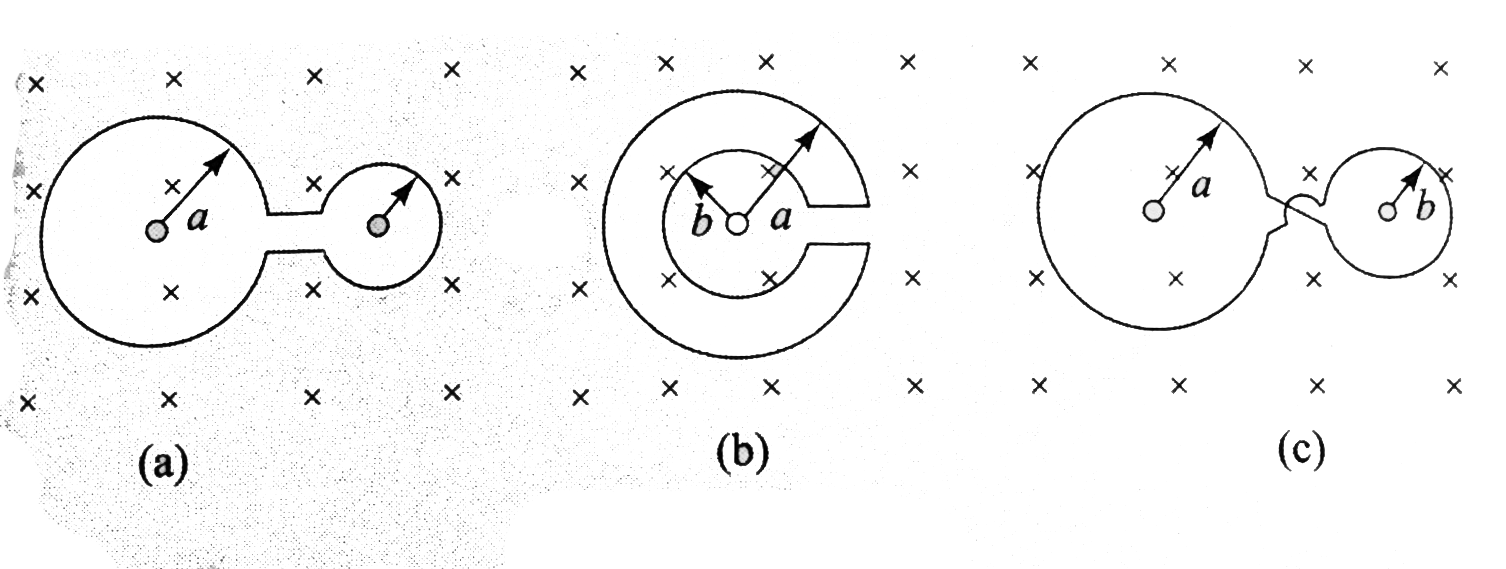
Figure 3.15(a) shown two circular rings ...

Figure 3.15(a) shown two circular rings of radii `a` and `b` `(a gt b)` joined together with wires of negligible resistance. Figure 3.15(b) shown thew pattern obtained by folding the small loop in the plane of the large loop.
(a)
The pattern shown in Fig.3.15( c ) is obtained by twisting the small loop of Fig.3.15(a) through `180^(@)`.
All the three arrangement are placed in a uniform time varying magnetic field `dB//dt = k`, perpendicular to the plane of the loops. if the resistance per unit length of the wire is `lambda`, then determine the induced current in each case.

Text Solution

Verified by Experts
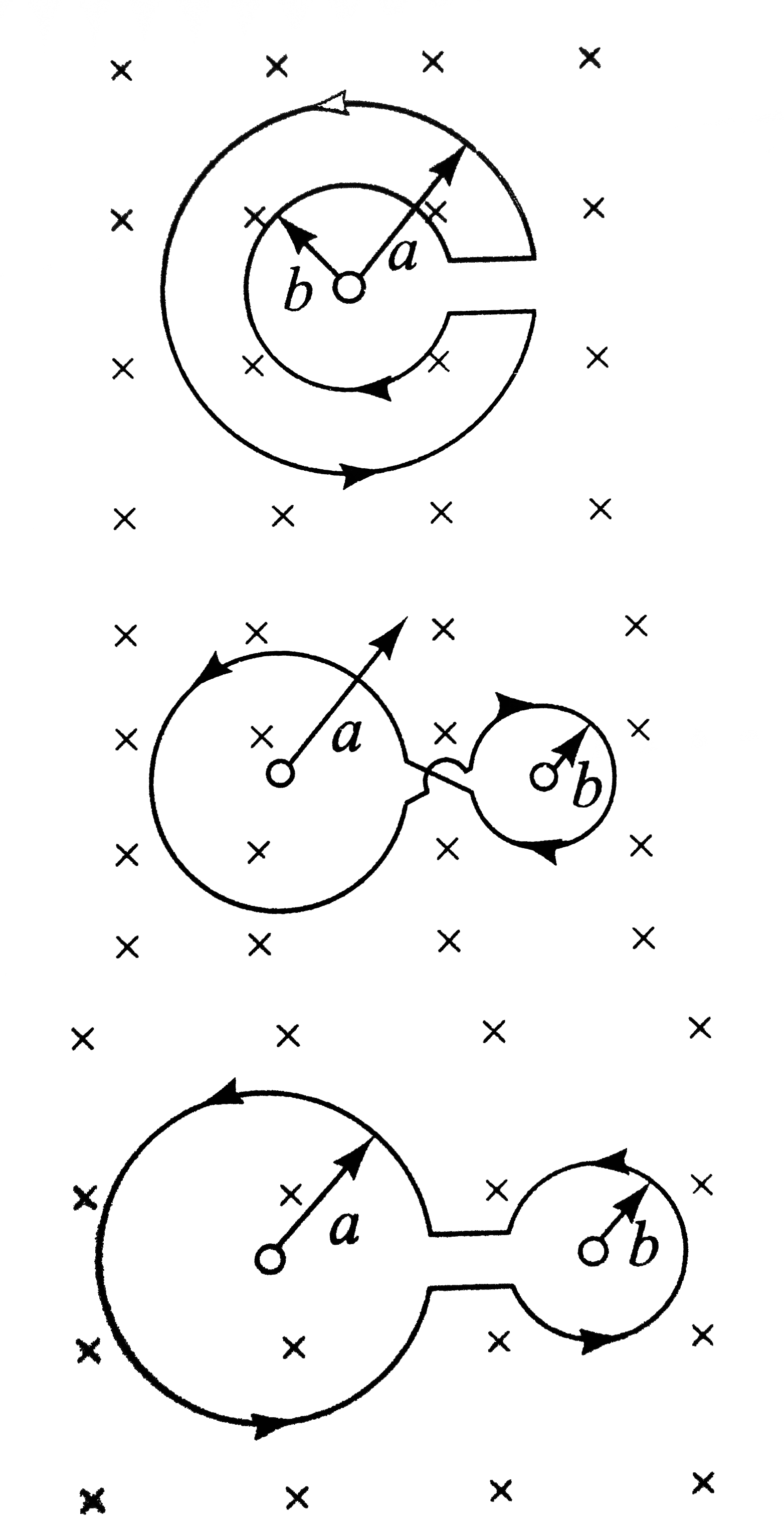
(a) `phi_(B) = pi(a^(2) + b^(2))B`
`epsilon = (dphi)/(dt) = pi(a^(2) + b^(2)) xx (dB)/(dt) = pi(a^(2) + b^(2))k`
Induced current, `I = (epsilon)/(R ) = (pi(a^(2) + b^(2))k)/( lambda[2lambda(a + b)]) = (k(a^(2) + b^(2)))/(2lambda(a + b))`
(b) `phi_(B) = pia^(2)B - pib^(2)B = piB(a^(2) - b^(2))`
`epsilon = (dphi_(B))/(dt) = (pidB)/(dt) xx (a^(2) - b^(2)) = pik(a^(2) - b^(2))`
Induced current, `I = (epsilon)/(R ) = (pik(a^(2) - b^(2)))/(2pilambda(a + b)) = (k(a - b))/(2lambda)`


( c) Here induced emf in both loops will oppose each other, hence effective flux is given by
`Phi_(B) = pia^(2)B - pib^(2)B = piB(a^(2) - b^(2))`
`rarr` `epsilon = (dPhi_(B))/(dt) = pik(a^(2) - b^(2))`
induced current, `I = (epsilon)/(R) = (k(a - b))/(2lambda)`
Promotional Banner

Topper's Solved these Questions

  • ELECTROMAGNETIC INDUCTION

    CENGAGE PHYSICS ENGLISH|Exercise Solved Example|5 Videos
  • ELECTROMAGNETIC INDUCTION

    CENGAGE PHYSICS ENGLISH|Exercise Exercise 3.1|15 Videos
  • ELECTRICAL MEASURING INSTRUMENTS

    CENGAGE PHYSICS ENGLISH|Exercise M.C.Q|2 Videos
  • ELECTRON,PHONTS,PHOTOELECTRIC EFFECT & X-RAYS

    CENGAGE PHYSICS ENGLISH|Exercise dpp 3.3|15 Videos

Similar Questions

Explore conceptually related problems

The figure shows two circular rings of radii a and b (a gt b) made of a wire whose resistance is lamda per unit length All the three arrangemetns are placed in a uniform time varying magnetic field (dB)/(dt)= k , perpendicular to the plane of the loops. Determine the current induced in each case.

Figure shows two circular rings of radii a & b (a gt b) joined together by wire of negligible resistance. If the arrangement is placed in a time varying magnetic field, (dB)/(dt)=k and if the resistance per unit length of wire is lambda , then induced current is

A circular loop of wire is carring a current i (as shown in the figure). On applying a uniform magnetic field inward perpendicular to the plane of the loop, the loop

A loop shown in the figure is immersed in the varying magnetic field B=B_0t , directed into the page. If the total resistance of the loop is R , then the direction and magnitude of induced current in the inner circle is

A closed loop with the geometry shown in Fig. 3.9 is placed in a uniform magnetic field direction into the plane of the paper. If the magnetic field decreases with time, determine the direction of the induced emf in this loop.

A conducting loop (as shown) has total resistance R. A uniform magnetic field B=gammat is applied perpendicular to plane of the loop where gamma is a constant and t is time. The induced current flowing through loop is

Find the magnetic field at the centre of the circular loop shown in figure.

A conducting loop (as shown) has total resistance R. A uniform magnetic field B = gamma t is applied perpendicular to plane of the loop where gamma is constant and t is time. The induced current flowing through loop is

A loop PQR carries a current i = 2A as shown in the figure. A uniform magnetic field B = 2T exists in space parallel to the plane of the loop . The magnetic torque on the loop is

In a closed loop, which has some inductance but negligible resistance, uniform but time varying magentic field is applied directed into the plane of the loop. Variation of field with time is shown in Fig. Initially current in loop was zero. Then .

