Home
Class 12
PHYSICS
in fig. The four rods have lambda resist...

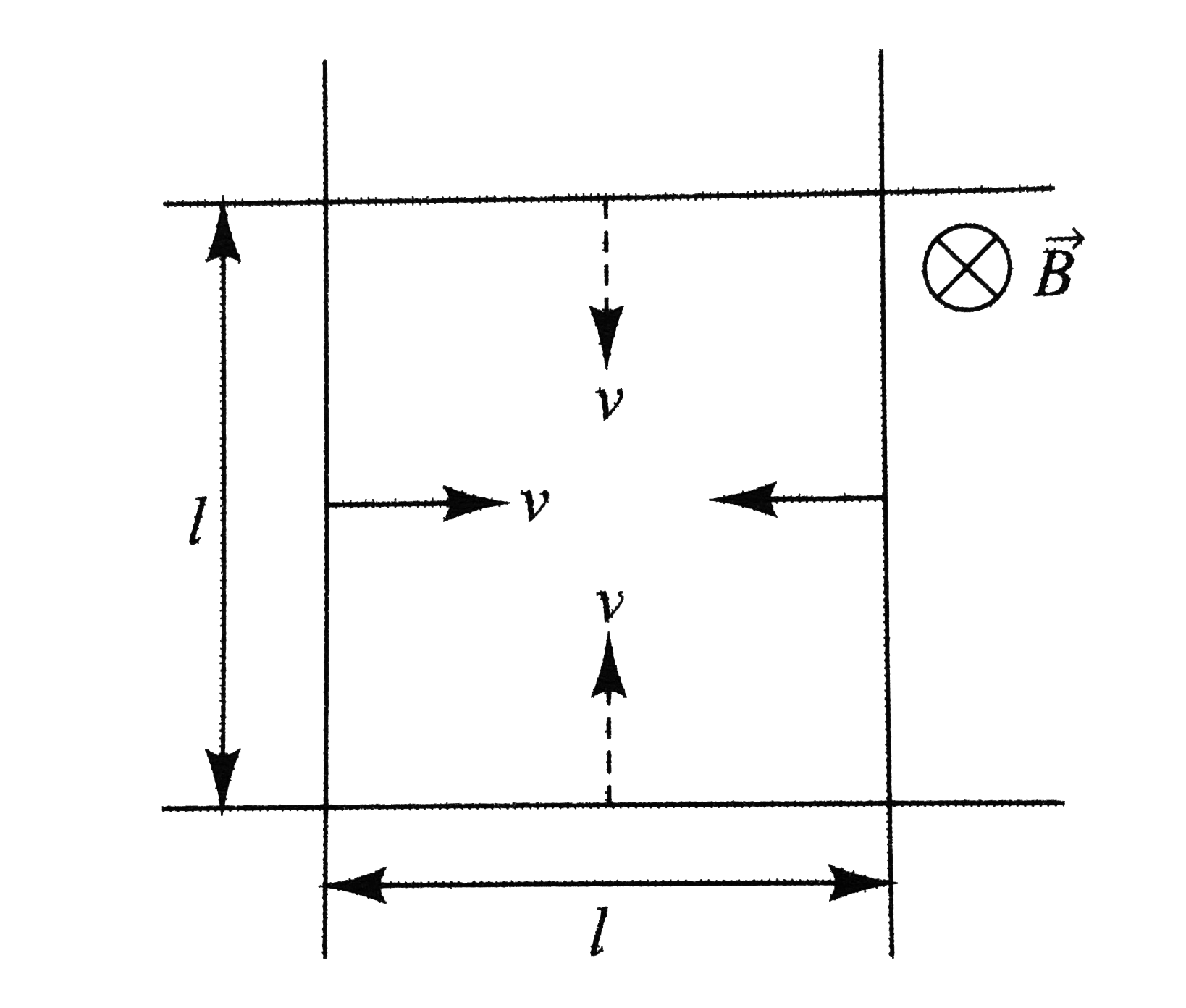
in fig. The four rods have `lambda` resistance per unit length. The arrengement is kept in a magnetic field of constant magnitude `B` and directed perpendicular to the plane of the figure and directing in ward. Initially, the sides as shown form a square. Now each wire starts moving with constant velocity `v` toward the opposite wire.
Find as a function of time:
(a) induced emf in the circuit.
(b) induced current in the circuit with direction.
( c ) force required on each wire to keep its velocity consatnt.
(d) total power required to maintain constant velocity.
(e) thermal power developed in the circuit.

Text Solution

Verified by Experts
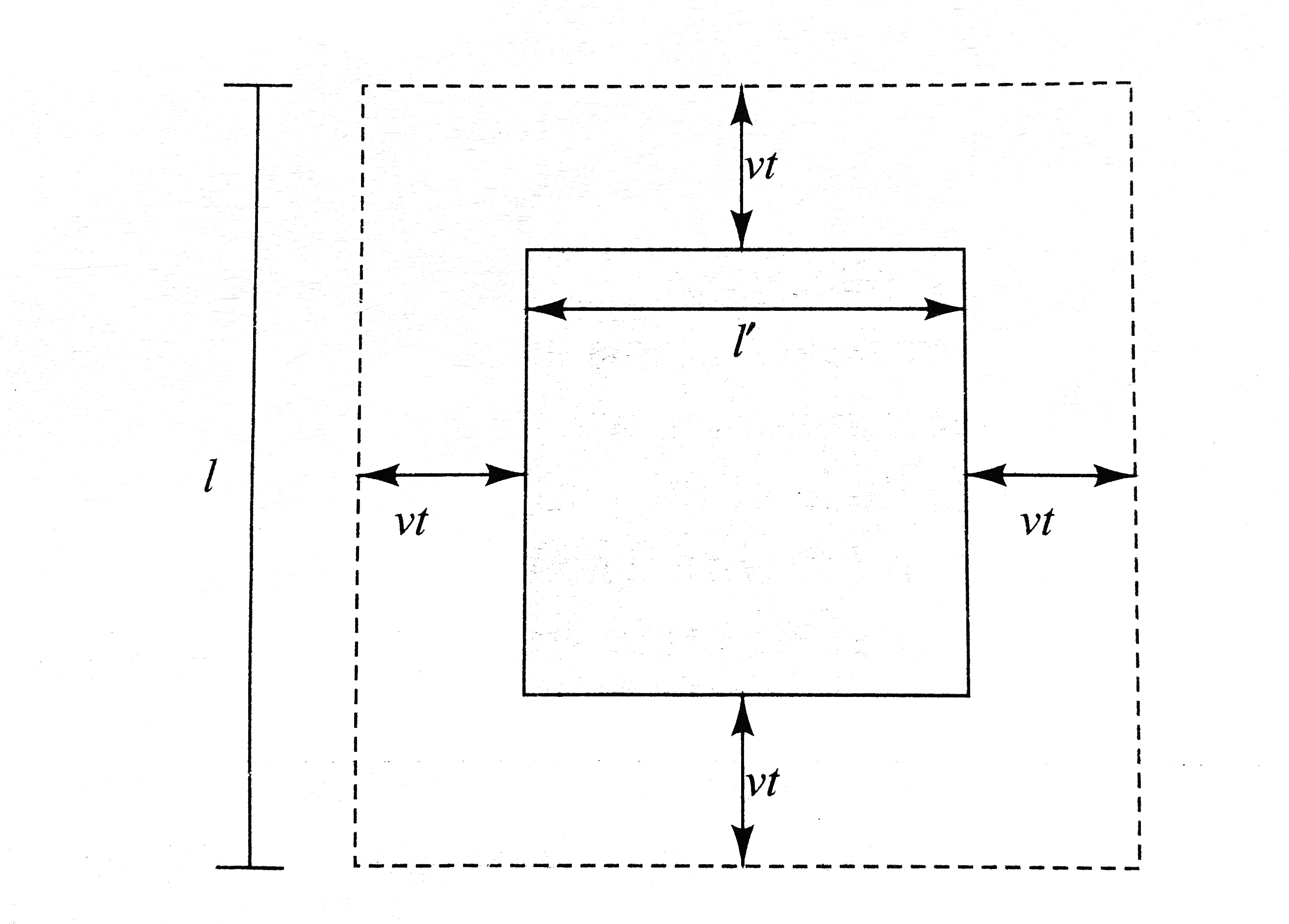
(a) `E_(net) = 4Bl'v`

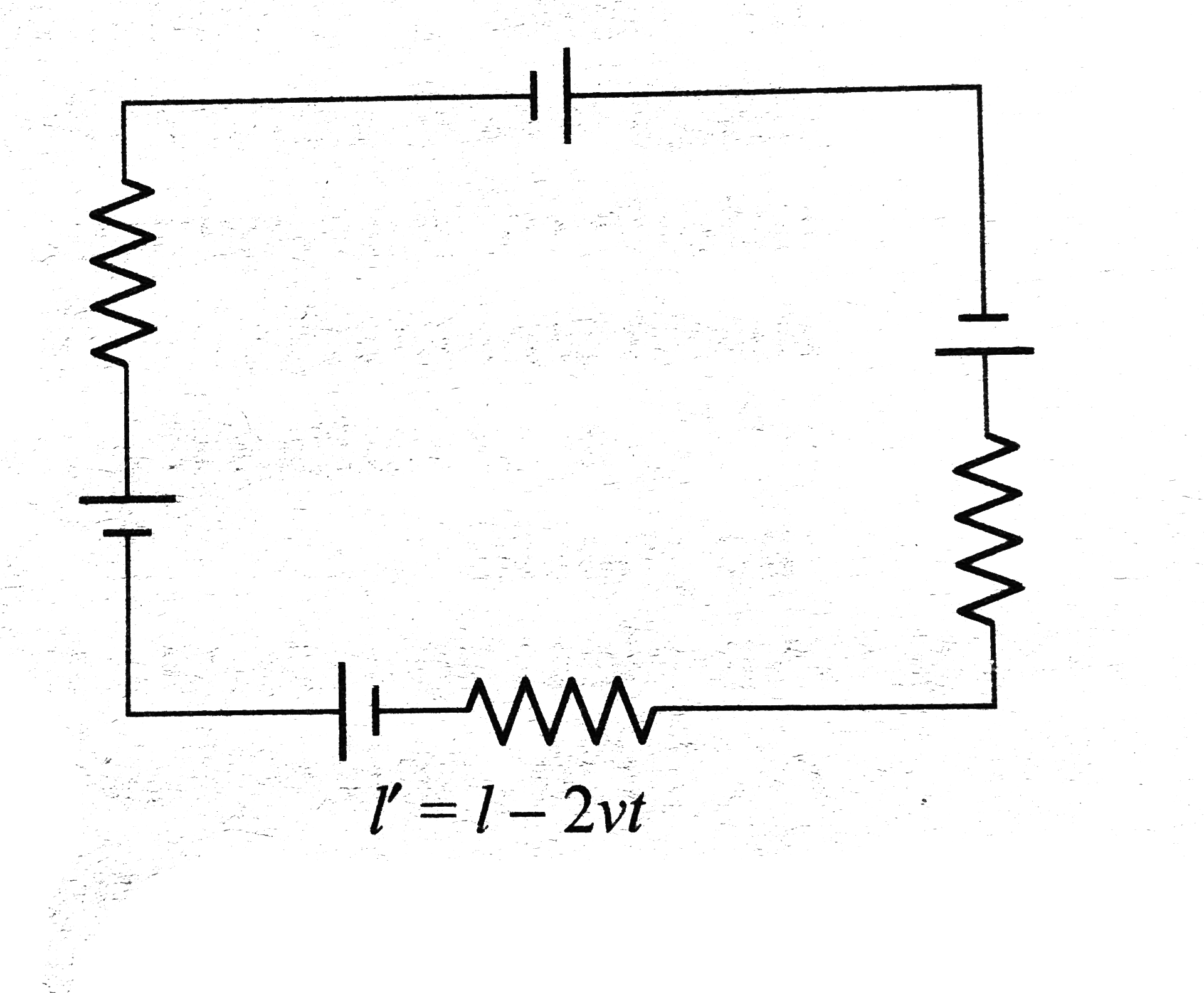
Equivalent circuit:
`:.` `E_(net) = 4B(l - 2vt)v`
`E_(net) = 4Bv(l - 2vt)`
(b) `I = (E_(net)) = (4r) = (4Bl'v)/(4lambdal')` `rarr` `I = (Bv)/(lambda)`
( c) Force required on each wire `= Il'B`
`Force = (B^(2)v)/(lambda)(l - 2vt)`
(d) Total power required to maintain constant velocity
`= 4Fv = (4B^(2)v^(2))/(lambda)(l - 2vt)`
(e) Thermal power developed in the circuit
`= 4I^(2)r = 4I^(2)lambda(l - 2vt) = 4(B^(2)v^(2))/(lambda^(2))lambda(l - 2vt)`
Thermal power `= (4B^(2)v^(2))/(lambda)(l - 2vt)`
Promotional Banner

Topper's Solved these Questions

  • ELECTROMAGNETIC INDUCTION

    CENGAGE PHYSICS ENGLISH|Exercise Exercise 3.1|15 Videos
  • ELECTROMAGNETIC INDUCTION

    CENGAGE PHYSICS ENGLISH|Exercise Exercise 3.2|27 Videos
  • ELECTROMAGNETIC INDUCTION

    CENGAGE PHYSICS ENGLISH|Exercise compression type|7 Videos
  • ELECTRICAL MEASURING INSTRUMENTS

    CENGAGE PHYSICS ENGLISH|Exercise M.C.Q|2 Videos
  • ELECTRON,PHONTS,PHOTOELECTRIC EFFECT & X-RAYS

    CENGAGE PHYSICS ENGLISH|Exercise dpp 3.3|15 Videos

Similar Questions

Explore conceptually related problems

In the figure shown the four rods have lambda resistance per unit length. The arrangement is kept in a magnetic filed of constant magnitude B and directed perpendicular to the plane of the figure and direction inwards. Intially the sides as shown from a square. Now each wire starts moving with constant velocity v towards opposite wire. Find as a function of time: (a) induced emf in the circuit (b) induced current in the circuit with direction

In the figure shown the four rods have lambda resistance per unit length . The arrangement is kept in a magnetic field of constant magnitude B and directed perpendicular to the plane of the figure and direction inwards . Initially the sides as shown form a square . Now each wire starts moving with constant velocity v towards opposite wire . Find as a function of time . Induced current in the circuit with direction

In the figure shown the four rods have lambda resistance per unit length . The arrangement is kept in a magnetic field of constant magnitude B and directed perpendicular to the plane of the figure and direction inwards . Initially the sides as shown form a square . Now each wire starts moving with constant velocity v towards opposite wire . Find as a function of time . Thermal power developed in the circuit.

In the figure shown the four rods have lambda resistance per unit length . The arrangement is kept in a magnetic field of constant magnitude B and directed perpendicular to the plane of the figure and direction inwards . Initially the sides as shown form a square . Now each wire starts moving with constant velocity v towards opposite wire . Find as a function of time . Total power required to maintain constant velocity .

In the figure shown the four rods have lambda resistance per unit length . The arrangement is kept in a magnetic field of constant magnitude B and directed perpendicular to the plane of the figure and direction inwards . Initially the sides as shown form a square . Now each wire starts moving with constant velocity v towards opposite wire . Find as a function of time . Force required on each wire to keep its velocity constant .

Figure shows a wire sliding on two parallel, conducting rails placed at a separation L . A magnetic field B exists in a direction perpendicular to the plane of the rails. What force is necessary to keep the wire moving at a constant velocity V ?

Find the emf induced in the coil shown in figure.The magnetic field is perpendicular to the plane of the coil and is constant.

A vertical rod of length l is moved with constant velocity v towards east. The vertical component of earth magnetic field is B and angle of dip is theta . The induced e.m.f. in the rod is

A rod PQ is connected to the capacitor plates. The rod is placed in a magnetic field (B) directed downwards perpendicular to the plane of the paper. If the rod is pulled out of magnetic field with velocity vec(v) as shown in Figure.

Figure shows an irregular shaped wire AB moving with velocity v, as shown. Find the emf induced in the wire