
Home
Class 11
CHEMISTRY
Which of the following arrangements of e...

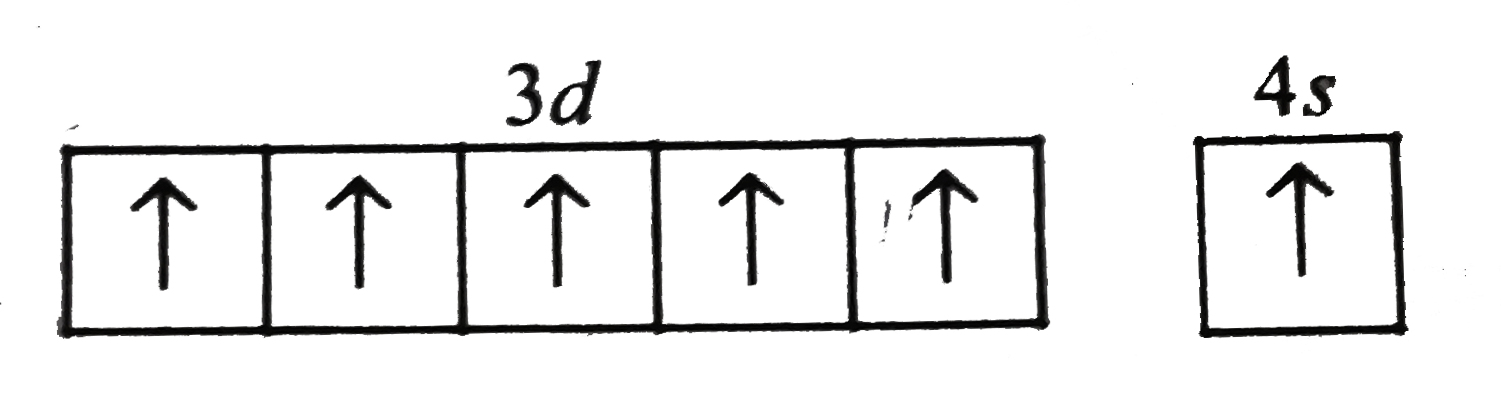
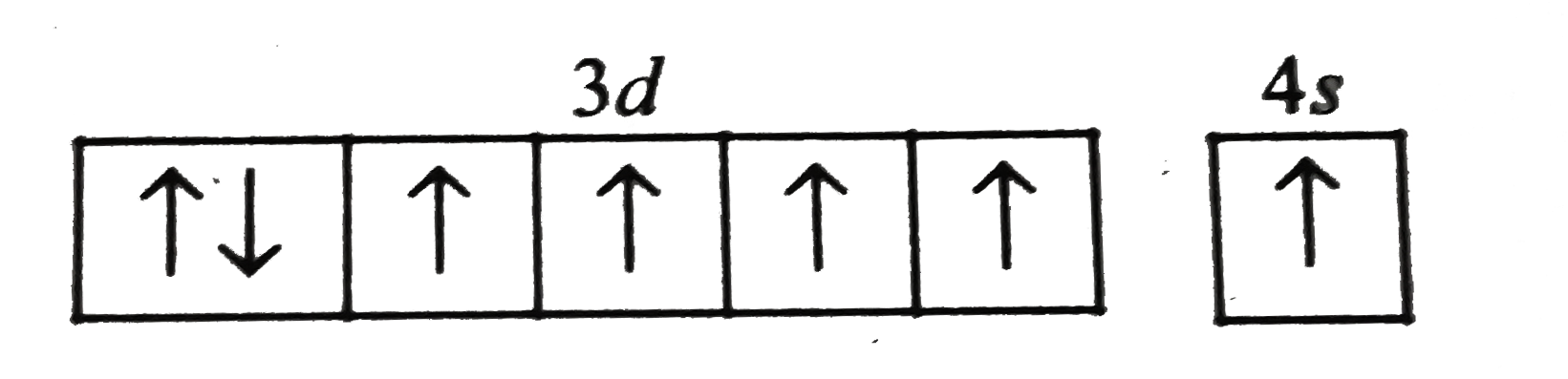
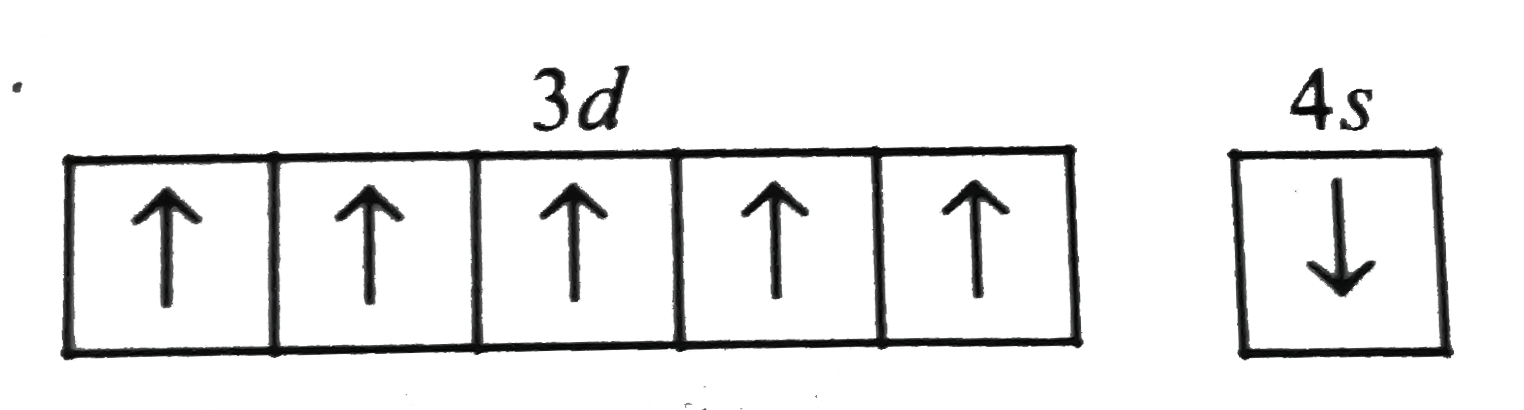
Which of the following arrangements of electron is mostly likely to the stable ?

A

B

C

D

Text Solution

AI Generated Solution

The correct Answer is:

To determine which arrangement of electrons is most likely to be stable, we need to analyze the stability based on the energy of the electrons and the principles governing electron configurations. Here’s a step-by-step solution: ### Step 1: Understand Electron Stability - Stability of electron arrangements is related to the energy levels of the electrons. Lower energy configurations are generally more stable. ### Step 2: Analyze Electron Repulsion - High electron repulsion leads to higher energy and thus lower stability. Therefore, configurations that minimize repulsion will be more stable. ### Step 3: Evaluate the Given Options 1. **Option 1**: Electrons with the same spin and symmetrically arranged. - This arrangement has high energy due to the same spin electrons being in close proximity, leading to increased repulsion. Thus, this option is likely unstable. 2. **Option 2**: 3d^6 and 4s^1. - This violates the Aufbau principle, which states that electrons fill lower energy orbitals before higher ones. Therefore, this arrangement is not valid and is unstable. 3. **Option 3**: 3d^6 with different spins. - While this arrangement has different spins, it still does not minimize repulsion effectively. The presence of same spin electrons in the 4s orbital can lead to instability. Thus, this option is also not the most stable. 4. **Option 4**: Two electrons with the same spin in the same orbital. - According to Pauli's Exclusion Principle, no two electrons can have the same spin in the same orbital. This arrangement is not valid and therefore unstable. ### Step 4: Identify the Most Stable Arrangement - After evaluating all options, it appears that none of the arrangements provided are stable. However, if we assume the question intended to provide a valid arrangement, the one that minimizes electron repulsion and adheres to the principles of electron configuration would be the most stable. ### Conclusion - Based on the analysis, the arrangement that would be the most stable is one that adheres to the Aufbau principle, minimizes electron repulsion, and follows Pauli's Exclusion Principle. If we had to select from the options given, we would conclude that none are stable, but the arrangement that follows the rules best would be the most stable.
Promotional Banner

Topper's Solved these Questions

  • ATOMIC STRUCTURE

    CENGAGE CHEMISTRY ENGLISH|Exercise Exercises Assertion And Reason|21 Videos
  • ATOMIC STRUCTURE

    CENGAGE CHEMISTRY ENGLISH|Exercise Exercises Integer|11 Videos
  • ATOMIC STRUCTURE

    CENGAGE CHEMISTRY ENGLISH|Exercise Exercises Multiple Correct|45 Videos
  • APPENDIX - INORGANIC VOLUME 1

    CENGAGE CHEMISTRY ENGLISH|Exercise chapter-7 Single correct answer|1 Videos
  • CHEMICAL BONDING AND MOLECULAR STRUCTURE

    CENGAGE CHEMISTRY ENGLISH|Exercise Archives Subjective|15 Videos

Similar Questions

Explore conceptually related problems

Which of the following carbanion is most stable ?

Which of the following alkenes is most stable?

Which of the following species is not stable?

Which of the following is most stable ?

Which of the following alkene is more stable than

Which of the following carbocations would not likely rearrange to more stable carbocation ?

CENGAGE CHEMISTRY ENGLISH-ATOMIC STRUCTURE-Exercises Single Correct
  1. The ratio of kinetic energy to the total energy of an electron in a Bo...

    Text Solution

    |

  2. The ratio of potential energy and total energy of an electron in a Boh...

    Text Solution

    |

  3. Which of the following arrangements of electron is mostly likely to th...

    Text Solution

    |

  4. The velocity of electron moving in 3rd orbit of He^(+) is v. The veloc...

    Text Solution

    |

  5. The energy of an electron in the first Bohr orbit of H atom is -13.6 e...

    Text Solution

    |

  6. The spectral line obtained when an electron jumps from n = 6 to n = 2 ...

    Text Solution

    |

  7. Which of the following species will produce the shortest wavelength fo...

    Text Solution

    |

  8. The ionisation potential of hydrogen atom is 13.6 eV The energy requir...

    Text Solution

    |

  9. If the wavelength of the first line of the Blamer series of hydrogen a...

    Text Solution

    |

  10. The energy of an electron in the first Bohr orbit of H atom is -13.6 e...

    Text Solution

    |

  11. The ground state electronic configeration of nitrogen atom can be re...

    Text Solution

    |

  12. The electronic configuration of an element is 1s^(2)2s^(2)2p^(6)3s^(2)...

    Text Solution

    |

  13. The de Broglie wavelength associated with a ball of mass 200 g and mov...

    Text Solution

    |

  14. Rutherford's experiment , which established the nuclear model of atom...

    Text Solution

    |

  15. Amongst the following elements (whose electronic configuration an gi...

    Text Solution

    |

  16. The correct state electronic configuration of chromium atom is

    Text Solution

    |

  17. The correct set of quantum numbers for the unpaired electron of chlori...

    Text Solution

    |

  18. The orbital diagram in which the Aufbau principle is violated is

    Text Solution

    |

  19. The first loinsatisation in electron volts of nitrogen and oxygen ato...

    Text Solution

    |

  20. Atomic radii of fluorine and neon in Angstrom units are respectively g...

    Text Solution

    |
