Home
Class 11
CHEMISTRY
An alkane (A) having a molecular mass of...

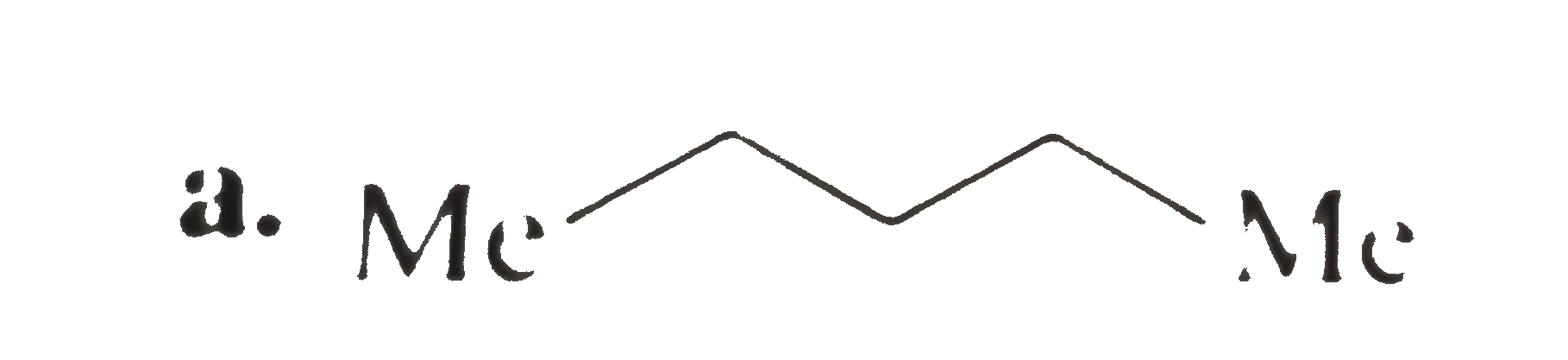
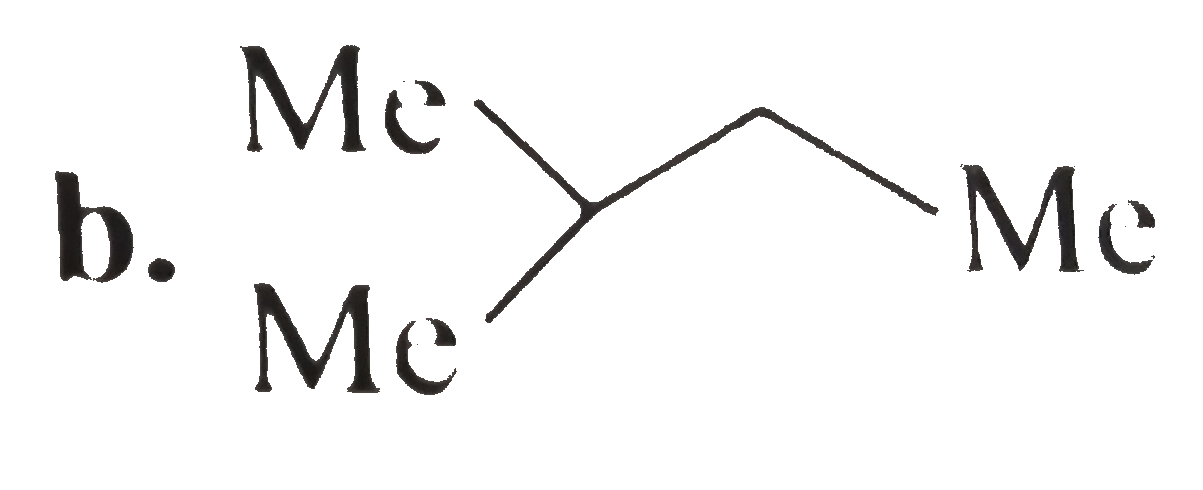
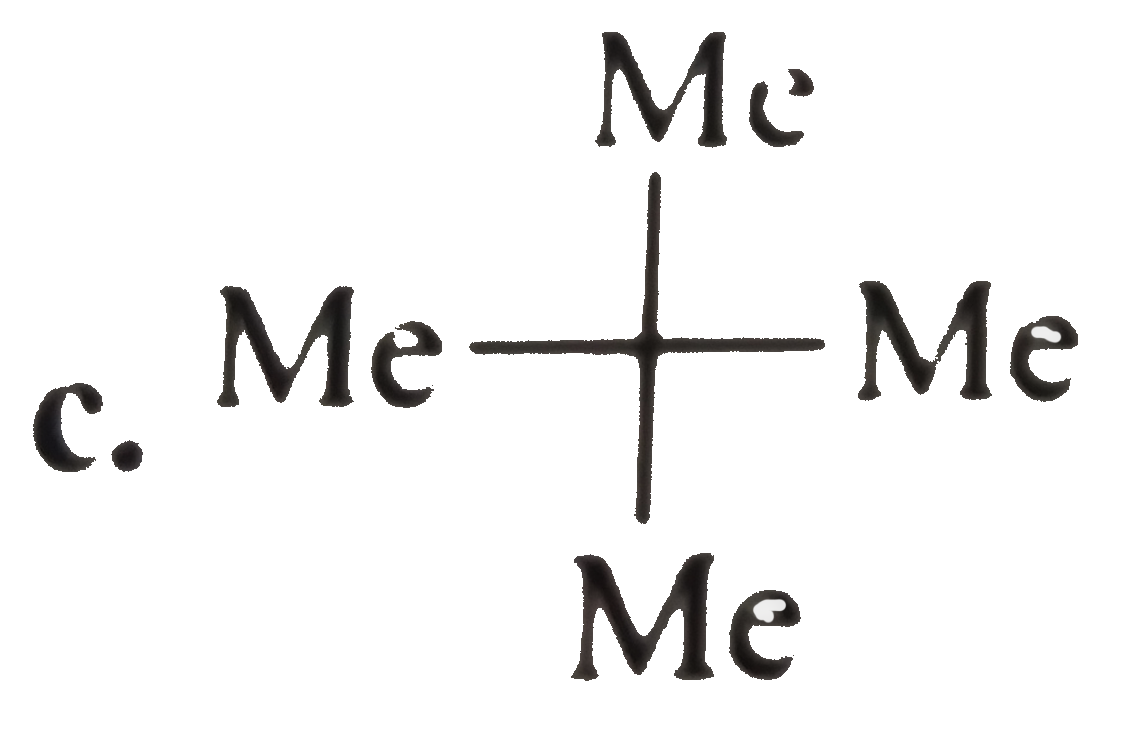
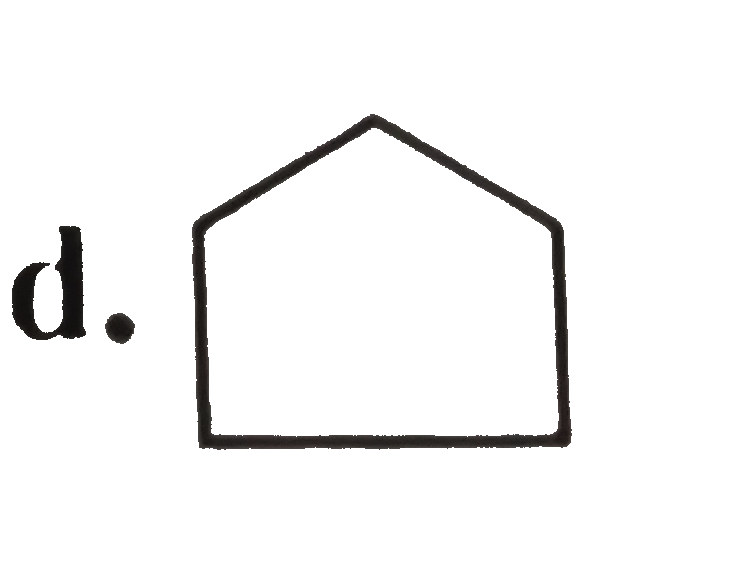
An alkane `(A)` having a molecular mass of 72 produces one monochlorination product. Compound `(A)` is:

A

B

C

D

Text Solution

AI Generated Solution

The correct Answer is:

To solve the problem of identifying the alkane `(A)` with a molecular mass of 72 that produces only one monochlorination product, we can follow these steps: ### Step 1: Determine the molecular formula of the alkane The general molecular formula for alkanes is given by: \[ C_nH_{2n+2} \] Where \( n \) is the number of carbon atoms. ### Step 2: Set up the equation based on the molecular mass The molecular mass of carbon (C) is 12 g/mol and that of hydrogen (H) is 1 g/mol. Therefore, the molecular mass of the alkane can be expressed as: \[ \text{Molecular mass} = 12n + (2n + 2) \] Given that the molecular mass is 72, we can set up the equation: \[ 12n + 2n + 2 = 72 \] This simplifies to: \[ 14n + 2 = 72 \] ### Step 3: Solve for \( n \) Subtract 2 from both sides: \[ 14n = 70 \] Now divide by 14: \[ n = 5 \] ### Step 4: Write the molecular formula Using the value of \( n \): \[ \text{Molecular formula} = C_5H_{2(5)+2} = C_5H_{12} \] ### Step 5: Identify possible structural isomers The alkane with the formula \( C_5H_{12} \) can exist in several structural forms (isomers). The possible isomers are: 1. Pentane (n-pentane) 2. Isopentane (2-methylbutane) 3. Neopentane (2,2-dimethylpropane) ### Step 6: Analyze monochlorination products Monochlorination of these isomers will yield different products: - **n-Pentane**: Can produce 3 different monochlorination products. - **Isopentane**: Can produce 4 different monochlorination products. - **Neopentane**: All hydrogen atoms are equivalent, leading to only 1 unique monochlorination product. ### Conclusion Since we need an alkane that produces only one monochlorination product, the compound `(A)` must be **neopentane (2,2-dimethylpropane)**. ### Final Answer Compound `(A)` is **neopentane (C5H12)**. ---

To solve the problem of identifying the alkane `(A)` with a molecular mass of 72 that produces only one monochlorination product, we can follow these steps: ### Step 1: Determine the molecular formula of the alkane The general molecular formula for alkanes is given by: \[ C_nH_{2n+2} \] Where \( n \) is the number of carbon atoms. ### Step 2: Set up the equation based on the molecular mass ...
Promotional Banner

Topper's Solved these Questions

  • CLASSIFICATION AND NOMENCLATURE OF ORGANIC COMPOUNDS

    CENGAGE CHEMISTRY ENGLISH|Exercise Assertion-Reasoning Type|5 Videos
  • CLASSIFICATION AND NOMENCLATURE OF ORGANIC COMPOUNDS

    CENGAGE CHEMISTRY ENGLISH|Exercise Fill in the Blanks Type|5 Videos
  • CLASSIFICATION AND NOMENCLATURE OF ORGANIC COMPOUNDS

    CENGAGE CHEMISTRY ENGLISH|Exercise Multiple corrcct Answers Types|11 Videos
  • CHEMICAL EQUILIBRIUM

    CENGAGE CHEMISTRY ENGLISH|Exercise Subjective type|1 Videos
  • GENERAL ORGANIC CHEMISTRY

    CENGAGE CHEMISTRY ENGLISH|Exercise Analytical and Descriptive|1 Videos

Similar Questions

Explore conceptually related problems

Lipids have a molecular mass of :

A compound (A) with molecular formula C_(5) H_(10) gives one monochlorination product. Compound (A) is:

An alkane by molecular weight 72 upon chlorination gives one monochlorination product. The alkane is

An alkane of molecular weight 86 g/mol on monochlorination gives two products. The alkane is

Write the IUPAC name of the compound (A) which is a 2-methy1 branched alkane having a molecular mass of 254. This compound is a sex-attractant and is isolated from female tiger moths.

There are six isomeric alkenes (A, B, C, D, E, and F) that require 1 mol of H_(2) per mole of alkene for hydrogenation and give the same product (G) on hydrogenation. G is an alkane having the lowest molecular mass and is optically active. Write the structure of compounds from A to G.

Which alkane, having a molecular weight of 86 , will form only two monobromo alkanes?

Which of the folloiwng alkanes will give more than one monochloro product?

An organic compound with molecular formula C_6 H_(12) upon ozonolysis gives only acetone as the product. The compound is :

Give the structure of an optically active alkene (A) having the lowest molecular mass, which on catalytic hydrogenation gives an optically inactive compound (B) .
