Home
Class 11
CHEMISTRY
Which group is always taken as a substit...

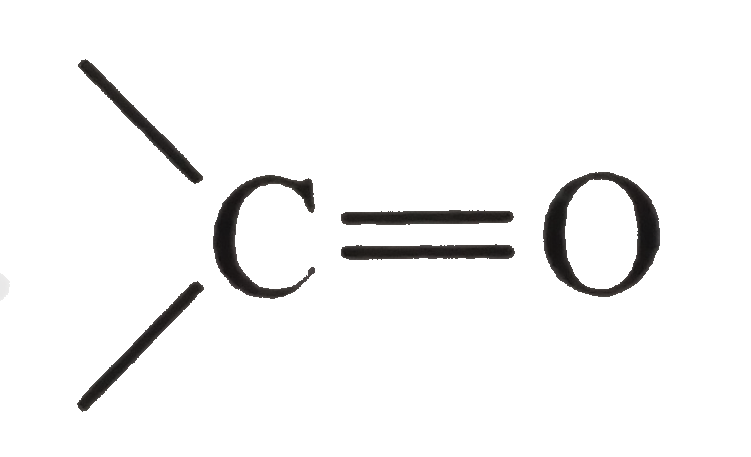
Which group is always taken as a substituent in the `IUPAC` system of nomenclauture ?

A

`-NO_(2)`

B

`- C -= N`

C

D

`-NH_(2)`

Text Solution

Verified by Experts

The correct Answer is:

A

Self-explanatory.
Promotional Banner

Topper's Solved these Questions

  • CLASSIFICATION AND NOMENCLATURE OF ORGANIC COMPOUNDS

    CENGAGE CHEMISTRY ENGLISH|Exercise Assertion-Reasoning Type|5 Videos
  • CLASSIFICATION AND NOMENCLATURE OF ORGANIC COMPOUNDS

    CENGAGE CHEMISTRY ENGLISH|Exercise Fill in the Blanks Type|5 Videos
  • CLASSIFICATION AND NOMENCLATURE OF ORGANIC COMPOUNDS

    CENGAGE CHEMISTRY ENGLISH|Exercise Multiple corrcct Answers Types|11 Videos
  • CHEMICAL EQUILIBRIUM

    CENGAGE CHEMISTRY ENGLISH|Exercise Subjective type|1 Videos
  • GENERAL ORGANIC CHEMISTRY

    CENGAGE CHEMISTRY ENGLISH|Exercise Analytical and Descriptive|1 Videos

Similar Questions

Explore conceptually related problems

The correct decreasing order of priority for the functional groups of organic compounds in the IUPAC system of nomenclature is

The correct decreasing order of priority for the functional groups of organic compounds in the IUPAC system of nomenclature is

The correct decreasing order of priority for the functional groups of organic compounds in the IUPAC system of nomenclature is

IUPAC name of neopentyl group is :

Which nomenclature is not according to IUPAC system?

The resonance effect is defined as 'the polarity produced in the molecule by the interaction of two pi -bonds or between a pi -bond and lone pair of electrons present on an adjacentatom.' The effect is transmitted through the chain. In positive resonance effect, the transfer of electrons is away from an atom or substituent group attached to the conjugated system. This electron displacement makes certain positions in the molecule of high electron densities. In negative resonance effect, the transfer of electrons is towards the atom or substituent group attached to the conjugated system. What is the IUPAC name for :

The resonance effect is defined as 'the polarity produced in the molecule by the interaction of two pi -bonds or between a pi -bond and lone pair of electrons present on an adjacentatom.' The effect is transmitted through the chain. In positive resonance effect, the transfer of electrons is away from an atom or substituent group attached to the conjugated system. This electron displacement makes certain positions in the molecule of high electron densities. In negative resonance effect, the transfer of electrons is towards the atom or substituent group attached to the conjugated system. Which of the following does not show resonance effect ?

The resonance effect is defined as 'the polarity produced in the molecule by the interaction of two pi -bonds or between a pi -bond and lone pair of electrons present on an adjacentatom.' The effect is transmitted through the chain. In positive resonance effect, the transfer of electrons is away from an atom or substituent group attached to the conjugated system. This electron displacement makes certain positions in the molecule of high electron densities. In negative resonance effect, the transfer of electrons is towards the atom or substituent group attached to the conjugated system. Which of the following shows +M effect ?

The resonance effect is defined as 'the polarity produced in the molecule by the interaction of two pi -bonds or between a pi -bond and lone pair of electrons present on an adjacentatom.' The effect is transmitted through the chain. In positive resonance effect, the transfer of electrons is away from an atom or substituent group attached to the conjugated system. This electron displacement makes certain positions in the molecule of high electron densities. In negative resonance effect, the transfer of electrons is towards the atom or substituent group attached to the conjugated system. Which of the following carboxylate ions is the most stable ?

The resonance effect is defined as 'the polarity produced in the molecule by the interaction of two pi -bonds or between a pi -bond and lone pair of electrons present on an adjacentatom.' The effect is transmitted through the chain. In positive resonance effect, the transfer of electrons is away from an atom or substituent group attached to the conjugated system. This electron displacement makes certain positions in the molecule of high electron densities. In negative resonance effect, the transfer of electrons is towards the atom or substituent group attached to the conjugated system. Which of the following intermediates is pyramidal in shape ?

CENGAGE CHEMISTRY ENGLISH-CLASSIFICATION AND NOMENCLATURE OF ORGANIC COMPOUNDS-Single correct Answer Type
  1. Which of the following structures represents cyclopenty1 methy1 carbin...

    Text Solution

    |

  2. The IUPAC name of acrolein is:

    Text Solution

    |

  3. The IUPAC name of the following compound is

    Text Solution

    |

  4. Which of the following is not the name of CH(3) NC?

    Text Solution

    |

  5. The IUPAC name of Ph-CN is :

    Text Solution

    |

  6. Give the IUPAC name of :

    Text Solution

    |

  7. Which of the following statements is wrong for homologous series?

    Text Solution

    |

  8. The alkane which has only 1^(@) H atoms is:

    Text Solution

    |

  9. Which group is always taken as a substituent in the IUPAC system of no...

    Text Solution

    |

  10. IUPAC name of (CH(3))(3)C-CH=CH(2) is

    Text Solution

    |

  11. Which of the following compounds is 2,2,3-trimethylhexane?

    Text Solution

    |

  12. The bond between carbon atom (1) and carbon atoms (2) in compound , N-...

    Text Solution

    |

  13. If two compounds have the same empirical formula but different molecul...

    Text Solution

    |

  14. The number of sigma-and pi-bond in 1-butene-3-yne is:

    Text Solution

    |

  15. Which of the following compounds has isopropyl group?

    Text Solution

    |

  16. The correct IUPAC name of the compound is:

    Text Solution

    |

  17. The hybridisation of C atoms in (C - C) single-bond of H - C -= C - CH...

    Text Solution

    |

  18. Which of the following represents the given sequence of hybridisation ...

    Text Solution

    |

  19. The IUPAC name of C(6) H(5) COC1 is :

    Text Solution

    |

  20. The IUPAC name of the following compound is

    Text Solution

    |
