Home
Class 11
CHEMISTRY
Describe the theory associated with the ...

Describe the theory associated with the radius of an atom as it
gains an electron

Text Solution

Verified by Experts

a. Gain of electron. When a neutral atom gains one electron to from an anion, its radius increase. Because the number of electrons in the anion increases while its nuclear charge remains the same as the parent atom. Since the same nuclear charge now attracts greater number of electons, therefore, force of attraction of the nucleus on the electrons of all the shells decreases (i.e. effective nuclear charge decreases) and hence the electron cloud expands. In other words, the distance between the centre of the nucleus and the last shelll that contains electrons increases thereby increasing the ionic radius, e.g.
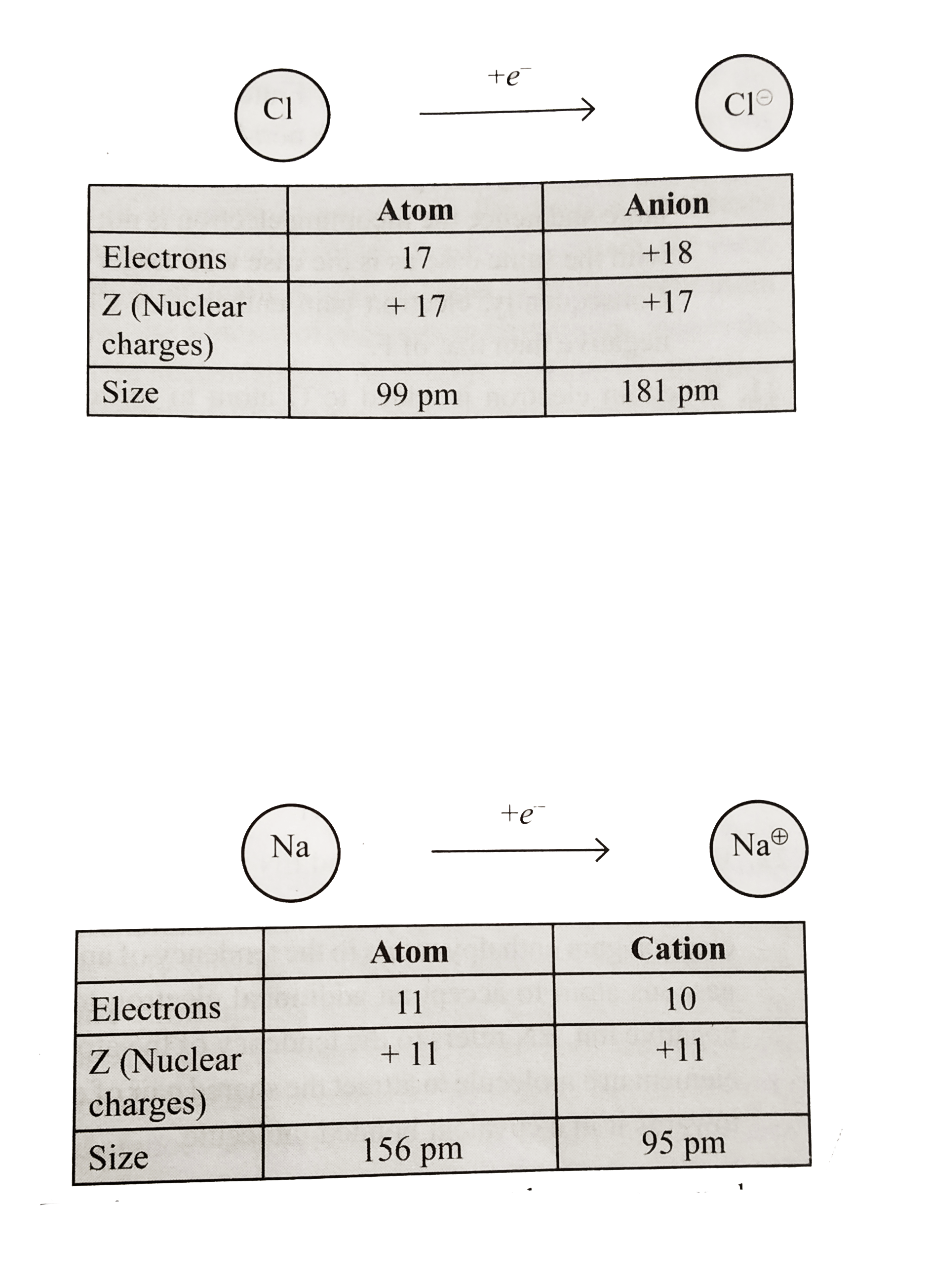
b. Loss of electrons. When a neutral atom loses one electron to form a cation, its atomic radius decreases. Because the number of electrons in the cation decreases while its nuclear charge remains the same as the parent atom. Since the same nuclear charge now attracts lesser number of electrons, therefore, the force of attraction of the nucleus on the electrons of all the shells increases (i.e. effective nuclear charges increase) and hence the size of cation decreases, e.g.

Promotional Banner

Topper's Solved these Questions

  • APPENDIX - INORGANIC VOLUME 1

    CENGAGE CHEMISTRY ENGLISH|Exercise Exercise very short|70 Videos
  • APPENDIX - INORGANIC VOLUME 1

    CENGAGE CHEMISTRY ENGLISH|Exercise Exercise Short|146 Videos
  • ALKYNES

    CENGAGE CHEMISTRY ENGLISH|Exercise Exercises (Archives - Analytical and Desriptive Type)|4 Videos
  • ATOMIC STRUCTURE

    CENGAGE CHEMISTRY ENGLISH|Exercise Concept Applicationexercise(4.3)|19 Videos

Similar Questions

Explore conceptually related problems

Describe the theory associated with the radius of an atom as it a. gains an electron b. loses an electron

Describe the theory associated with the radius of an atom as it loses an electron

Name the scientists associated with the Germ theory of disease

Describe the change of state using kinetic theory.

On the basis of Bohr.s theory, derive an expression for the radius of the n^(th) orbit of an electron of hydrogen atom.

Name the scientist associated with cohesion-tension theory

Describe the Operin-Haldane theory of the origin of life

An electron of charge e is moving in a circular orbit of radius r around a nucleus, at a frequency v. The magnetic moment associated with the orbital motion of the electron is

In hydrogen atom , the electron moves in an orbit of radius 0.5 Å , making 10^(16) cps . Calculate magnetic moment associated with the orbital motion of electron ?

When a particle as an electron exist in a box, three quantum numbers are necessary to describe the spatial distributioni fo electrons in atoms. The describe an electron in an atom completely, a fourth quantum number, m_(s) called the spin quantum number must be specified. This is because every electron has magnetic moment associated with it which is quantized in one of two possible orientations. Electrons having the same spin strongly repel each other and tend to occupy different region of space. This result of a fundamental law of nature is known as Pauli exclusion principle. The radius of which of the following orbit is same as that of the first Bohr's orbit of hydrogen atom?
