Home
Class 11
CHEMISTRY
Explain : (i) mu of NH3 gt NF3 (ii)m...

Explain :
(i) `mu of NH_3 gt NF_3`
(ii)`mu of CO_2` is zero, nut `mu of SO_2 ne 0`
(iv) Why the lone pair of `overline e^, s` has no effect on the `mu` of `PH_3`. The bond angle in `PH_3` is `92^@`.
(v) `mu of CH_2 C1_2 gt CH C1_3`.

Text Solution

Verified by Experts


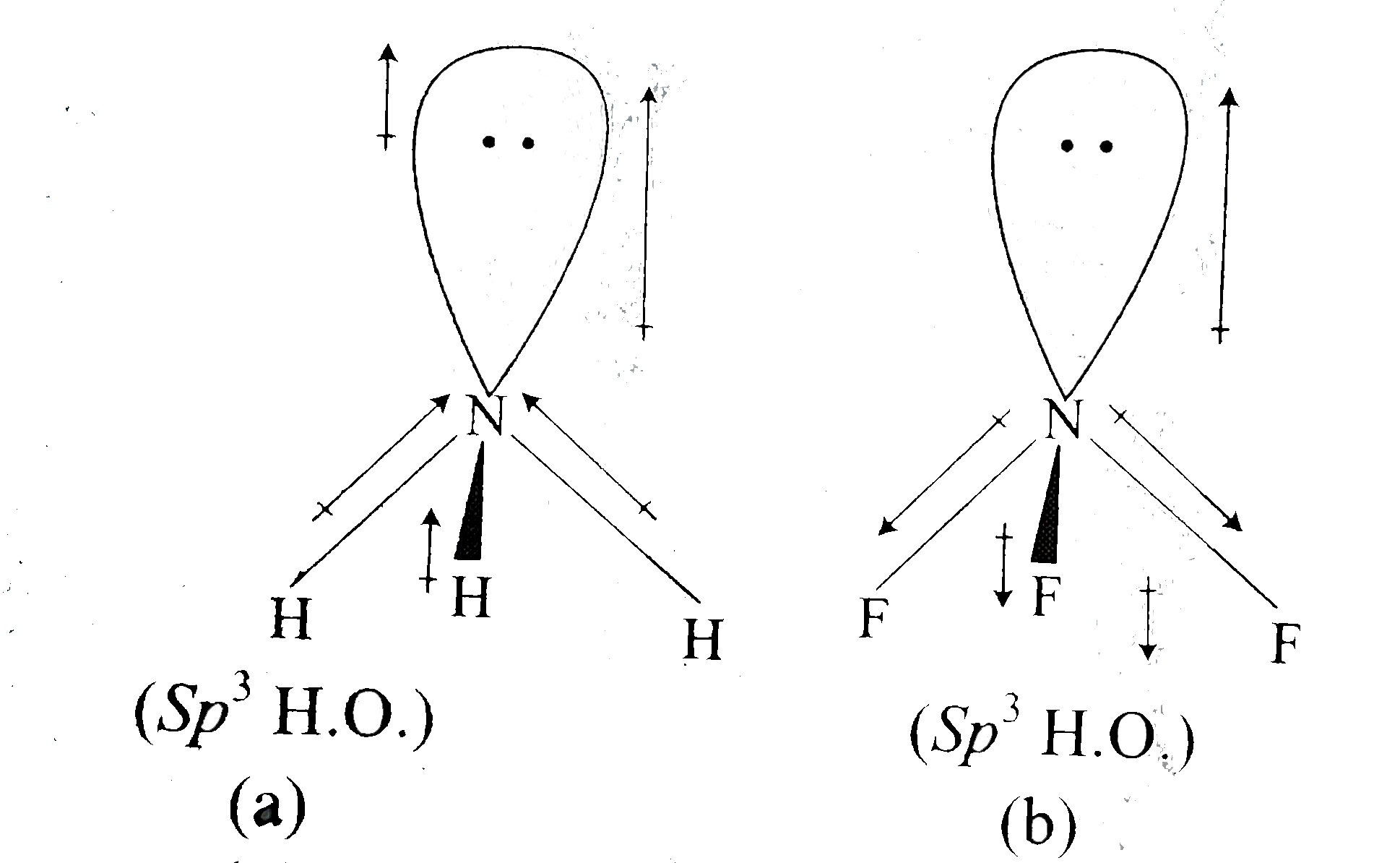
(Fig) Lone pair electrons :
(a) `NH_3` and
(b) `NF_3`
In `NH_3`, the net moment of `(N - N)` bonds and the contribution from the `LP overline e^, s` (lone pair `overline e^, s`) are in the same direction and are additive [Fig].The net moment of the `(N - F)` bonds opposes the dipole effect of the `LP overline e^,s` in `NH_3` and the resultant is less `mu`. So `mu` of `NH_3 gt NF_3`.
(ii) The electronegativities of halogens decrease form `F` to `I`, so `mu` of `HG gt HC1 gt HBr gt H1`. But `mu` of `CH_3 F` is smaller than `CH_3 C1` due to shorter `(C - F)` bond distance, although `EN` of `F` is greater than that of `C1`.
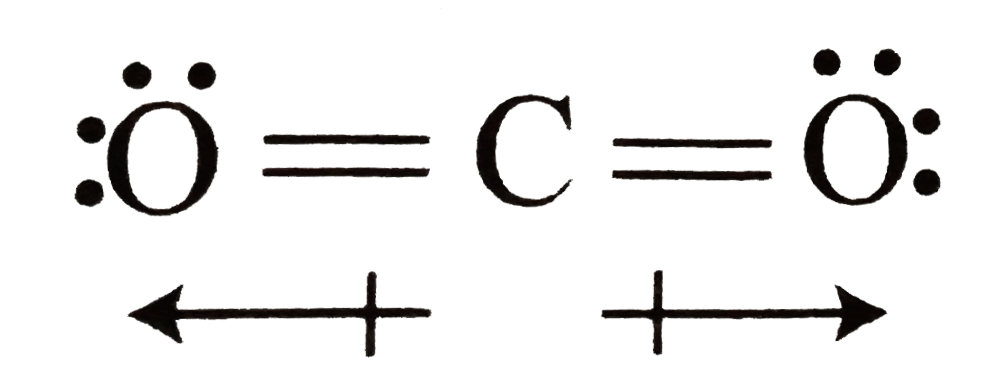
(iii) In `CO_2, C` is `sp` hybridised and linear. The bond moments of `(C - O)` are equal and in opposite directions and cancel each other. Hence, `mu` is zero.
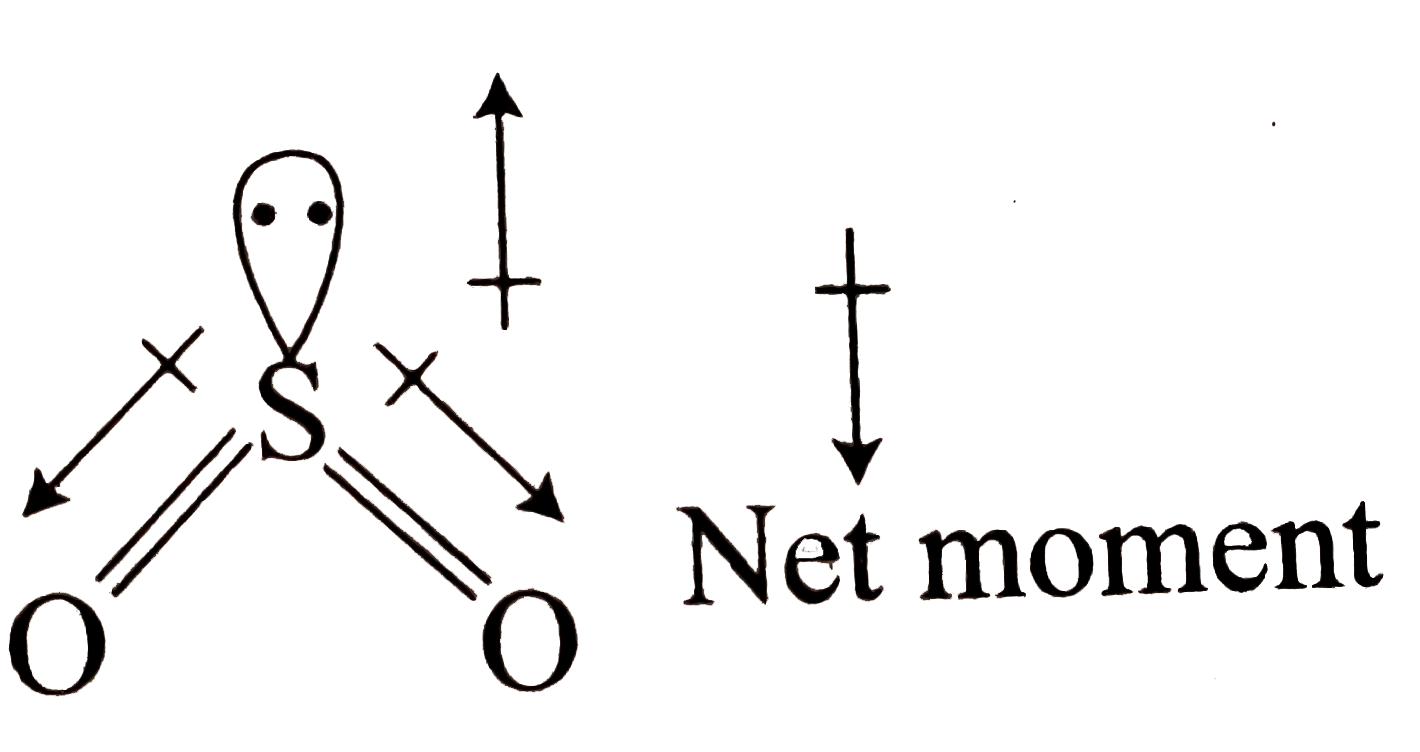
In `SO_2, S` is `sp^2` hybridised having one `LP overline e` one `S` atom. The `(O - S - O)` bond angle is nearly `120^@ , (S - O)` bond moment does not cancel and shown a net resultant `mu`.
(iv) The `92^@` bond angle suggests that `P` uses three `p` atomic orbitals in forming bonds with `H`, with one `LP overline e` in `3 s` atomic orbital, i.e., `P` in `PH_3` is `sp^2` hybridised (unlike `NH_3`, in which `N` is `sp^3` hybridised).
Therefore, due to the presence of `LP overline e^, s` in `3 s` atomic orbitial of `P`, which is spherical symmetrical, the polarity of the molecule is not affected. In order to affect the polarity of the molecule, `EN` of `P` and `H` are nearly same, so `PH_3` molecule is almost nonpolar.
(v)
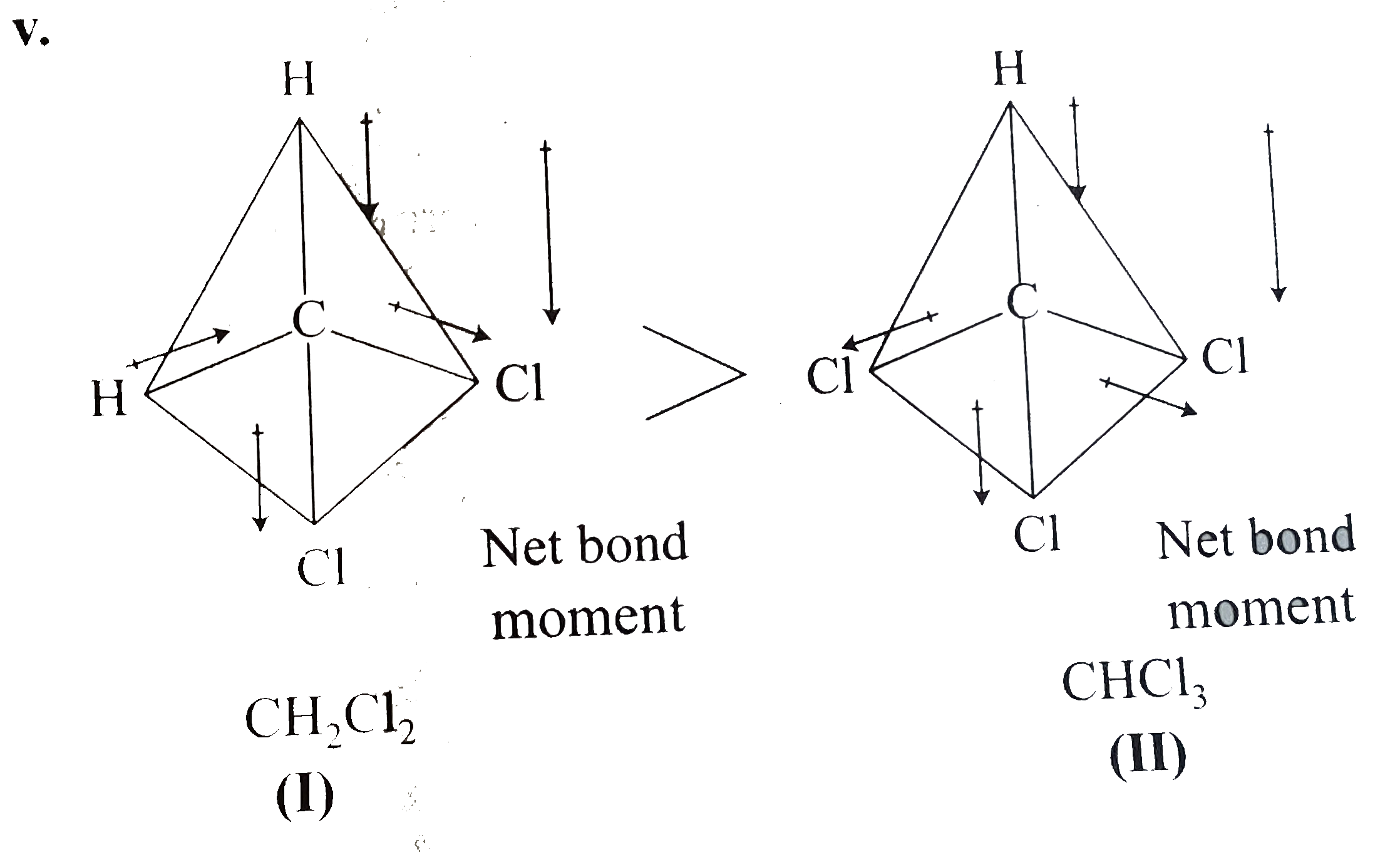
In (I), all bond moments are in the same direction, so they are additive and the net resultant `mu` is more than (II).
In (II), the bond moment of one of the `C1` atoms opposes the net moment of the other two, so the net resultant `mu` is less than that of (I).

Promotional Banner

Topper's Solved these Questions

  • GENERAL ORGANIC CHEMISTRY

    CENGAGE CHEMISTRY ENGLISH|Exercise Solved Example|18 Videos
  • GENERAL ORGANIC CHEMISTRY

    CENGAGE CHEMISTRY ENGLISH|Exercise Subjective|11 Videos
  • CLASSIFICATION AND NOMENCLATURE OF ORGANIC COMPOUNDS

    CENGAGE CHEMISTRY ENGLISH|Exercise Analytical and Descriptive Type|3 Videos
  • HYDROGEN, WATER AND HYDROGEN PEROXIDE

    CENGAGE CHEMISTRY ENGLISH|Exercise Subjective Archive (Subjective)|3 Videos

Similar Questions

Explore conceptually related problems

In the figure shown, mu_(1) gt mu_(2) gt mu_(3) . What are the limits of angle i so that it is neither get total internal reflection at AB nor at CD ?

Give the order of acidic character of the following : (i) (a) Ph_3 CH (b) Ph_2Ch_2 ( c) PhCH_3

In the circuit below C_(1) = 20 mu"F , " C_(2) = 40 mu F and C_(3) = 50 mu F . If no capacitor can sustain more than 50 V, then maximum potential difference between X and y is

In given circuit, ratio of charge on 2 mu F capacitor to the charge of 3 mu F capacitor will be

There are two charges +2mu C and -3mu C . The ratio of forces acting on them will be (1) 2:3 (2) 1:1 (3) 3:2 (4) 4:9

In the arrangement C_(1) = 10 mu, F C_(2)= 10 mu F and C_(3)= 20 mu F . What is the equivalent capacitance ( in mu F ) between points A and B ?

From the figure shown, establish a relation between mu_1,mu_2,and mu_3

Each myofibril has a diameter of (a) 1 to 2 mu m (b) 0.1 to 0.2 mu m (c) .001 to .002 mu m (d) None of the above

What is total modulation index when a carrier wave is modulated by a number of sine waves having modulation index mu_1, mu_2, mu_3, …….mu_n ?

Conversion of CH_3CHO " to " (CH_3)_2 C(OH)Ph
