Home
Class 11
CHEMISTRY
The leaving group is that functional gro...

The leaving group is that functional group which is ejected with `overline e^, s` of the `sigma` -bond in a reaction. Better the leaving group, faster is the reaction. The relative leaving ability of the leaving group `X` in `(R - X)` is increased by :
(i) The polarisability of `(R - X)` bond.
(ii) The stability of `X^(Ө)`.
(iii) The degree of stabilisation through solvation of `X`.
(iv) The strength of `(R - X)` bond.
The leaving group tendency is also called fugacity.
Which statement is correct ?

A

`EtO^(Ө)` is a strong base and therefore a good leaving group.

B

The amine group in `ArNH_2` is converted into a good leaving group be reacting `ArNH_2` with `NaNO_2 + HCl` at `0^@ C`.

C

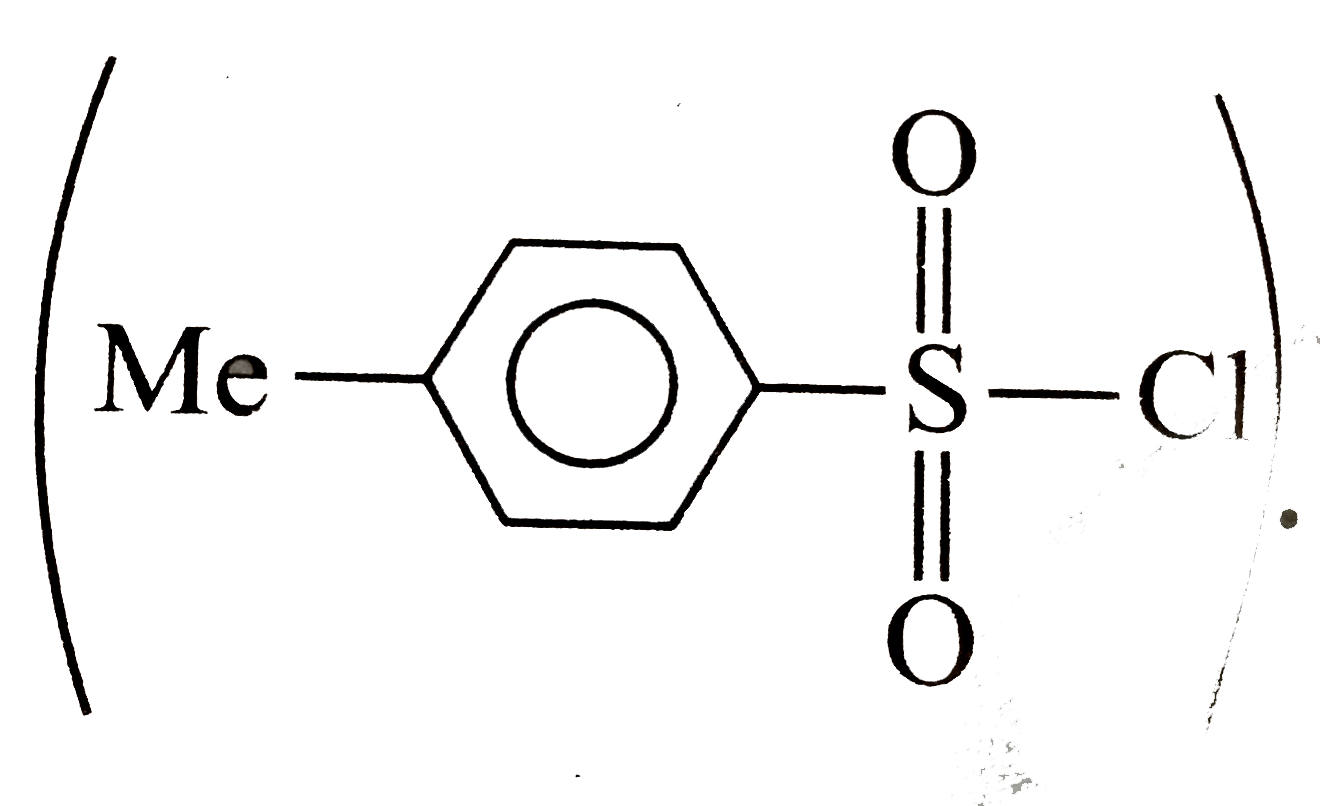
The `(OH)` group is converted into a good leaving group by reacting alcohols with `TsCl` (p-toluene sulphonyl chloride)

D

The amine group in `RNH_2` is converted into leaving group by reacting `RNH_2` with `NaNO_2 + HCl` at `0^@ C`.

Text Solution

AI Generated Solution

The correct Answer is:

To determine which statements regarding leaving groups are correct, we will analyze each statement one by one. ### Step-by-Step Solution: 1. **Statement A**: "Ethoxide ion is a strong base and therefore a strong leaving group." - **Analysis**: A good leaving group must be a weak base. Ethoxide ion (C2H5O-) is a strong base, which means it is not a good leaving group because it would tend to re-attack the substrate rather than leave. Therefore, this statement is **incorrect**. 2. **Statement B**: "The amine group in ArNH2 is converted into a good leaving group on reacting ArNH2 with NaNO2 at Cl at 0°C." - **Analysis**: When aniline (ArNH2) reacts with sodium nitrite (NaNO2) in the presence of hydrochloric acid at low temperatures, it forms diazonium chloride (ArN2+Cl-). The leaving group here is the nitrogen gas (N2), which is a very stable and weak base. Thus, this statement is **correct**. 3. **Statement C**: "The OH group is converted into a good leaving group by reacting alcohol with tosyl chloride." - **Analysis**: Alcohols (R-OH) are generally poor leaving groups. However, when they react with tosyl chloride (TsCl), they form tosylate (R-OTs), which is a much better leaving group. This is because the tosylate ion is more stable than the hydroxide ion. Therefore, this statement is **correct**. 4. **Statement D**: "The amine group in RNH2 is converted into a good leaving group by reacting amine with NaNO2 HCl at 0°C." - **Analysis**: Similar to statement B, the reaction of RNH2 with NaNO2 and HCl leads to the formation of a diazonium ion (RN2+). The leaving group here is again nitrogen gas (N2), which is stable and a good leaving group. Thus, this statement is **correct**. ### Conclusion: The correct statements are B, C, and D. Therefore, the answer is **BCD**.

To determine which statements regarding leaving groups are correct, we will analyze each statement one by one. ### Step-by-Step Solution: 1. **Statement A**: "Ethoxide ion is a strong base and therefore a strong leaving group." - **Analysis**: A good leaving group must be a weak base. Ethoxide ion (C2H5O-) is a strong base, which means it is not a good leaving group because it would tend to re-attack the substrate rather than leave. Therefore, this statement is **incorrect**. 2. **Statement B**: "The amine group in ArNH2 is converted into a good leaving group on reacting ArNH2 with NaNO2 at Cl at 0°C." ...
Promotional Banner

Topper's Solved these Questions

  • ORGANIC REACTION MECHANISM

    CENGAGE CHEMISTRY ENGLISH|Exercise Multiple Correct|30 Videos
  • ORGANIC REACTION MECHANISM

    CENGAGE CHEMISTRY ENGLISH|Exercise Single correct|43 Videos
  • ORGANIC REACTION MECHANISM

    CENGAGE CHEMISTRY ENGLISH|Exercise Subjective|19 Videos
  • NCERT BASED EXERCISE

    CENGAGE CHEMISTRY ENGLISH|Exercise Chemical Equilibrium|73 Videos
  • P-BLOCK GROUP 13 - BORON FAMILY

    CENGAGE CHEMISTRY ENGLISH|Exercise Exercise Archives (Subjecive)|9 Videos

Similar Questions

Explore conceptually related problems

The leaving group is that functional group which is ejected with overline e^, s of the sigma -bond in a reaction. Better the leaving group, faster is the reaction. The relative leaving ability of the leaving group X in (R - X) is increased by : (i) The polarisability of (R - X) bond. (ii) The stability of X^(Ө) . (iii) The degree of stabilisation through solvation of X . (iv) The strength of (R - X) bond. The leaving group tendency is also called fugacity. Which of the following undergoes SN reaction easily ?

The leaving group is that functional group which is ejected with overline e^, s of the sigma -bond in a reaction. Better the leaving group, faster is the reaction. The relative leaving ability of the leaving group X in (R - X) is increased by : (i) The polarisability of (R - X) bond. (ii) The stability of X^(Ө) . (iii) The degree of stabilisation through solvation of X . (iv) The strength of (R - X) bond. The leaving group tendency is also called fugacity. Which of the following is the wrong order of fugacity ?

The leaving group is that functional group which is ejected with overline e^, s of the sigma -bond in a reaction. Better the leaving group, faster is the reaction. The relative leaving ability of the leaving group X in (R - X) is increased by : (i) The polarisability of (R - X) bond. (ii) The stability of X^(Ө) . (iii) The degree of stabilisation through solvation of X . (iv) The strength of (R - X) bond. The leaving group tendency is also called fugacity. Which one of the followingd has the highest fugacity ?

The correct order of the ability of the leaving group is

The order of leaving group ability is :

During SN^1 reactions, the leaving group leaves the molecule before the incoming group is attached to the molecule.

Mention the functional group of amino acids involved in the formation of a peptide bond.

CENGAGE CHEMISTRY ENGLISH-ORGANIC REACTION MECHANISM-Comprehension
  1. The leaving group is that functional group which is ejected with overl...

    Text Solution

    |

  2. The leaving group is that functional group which is ejected with overl...

    Text Solution

    |

  3. The leaving group is that functional group which is ejected with overl...

    Text Solution

    |

  4. The leaving group is that functional group which is ejected with overl...

    Text Solution

    |

  5. Which of the following statements is wrong ?

    Text Solution

    |

  6. The rate of SN^2 reaction depends on the effectiveness of the nucleoph...

    Text Solution

    |

  7. The rate of SN^2 reaction depends on the effectiveness of the nucleoph...

    Text Solution

    |

  8. The rate of SN^2 reaction depends on the effectiveness of the nucleoph...

    Text Solution

    |

  9. Which statement is wrong in the formation of (B) from (A).

    Text Solution

    |

  10. Which is correct in the formation of (C) from (A) ?

    Text Solution

    |

  11. Which statement is wrong in the formation of (C) from (A) ?

    Text Solution

    |

  12. In elimination reaction, the major product is either Saytzeff (more-su...

    Text Solution

    |

  13. In elimination reaction, the major product is either Saytzeff (more-su...

    Text Solution

    |

  14. In elimination reaction, the major product is either Saytzeff (more-su...

    Text Solution

    |

  15. In elimination reaction, the major product is either Saytzeff (more-su...

    Text Solution

    |

  16. Consider the following reactions : Which of the following are ste...

    Text Solution

    |

  17. Consider the following reactions : Which of the following regiose...

    Text Solution

    |

  18. Consider the following reactions : Syn-addition takes place in :

    Text Solution

    |

  19. Consider the following reactions : Anti-addition takes place in :

    Text Solution

    |

  20. Consider the following reactions : Meso-butan-2,3-diol is formed ...

    Text Solution

    |
