Home
Class 11
CHEMISTRY
Which of the following is a non-aromatic...

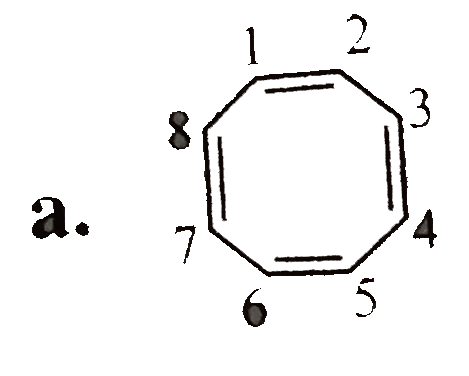
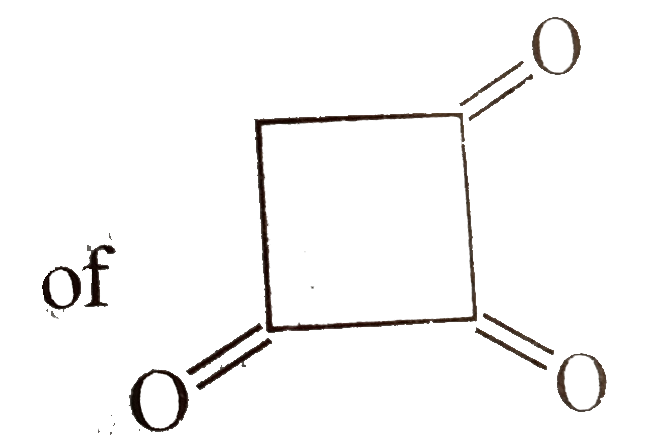
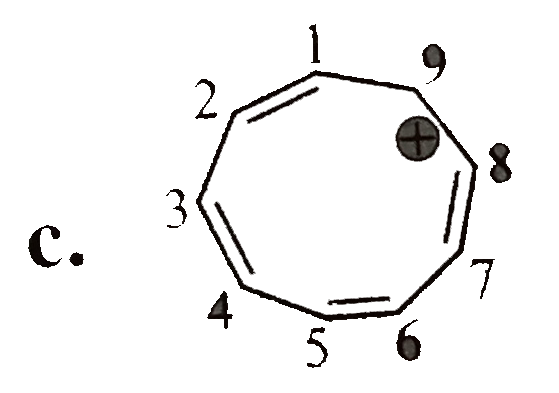
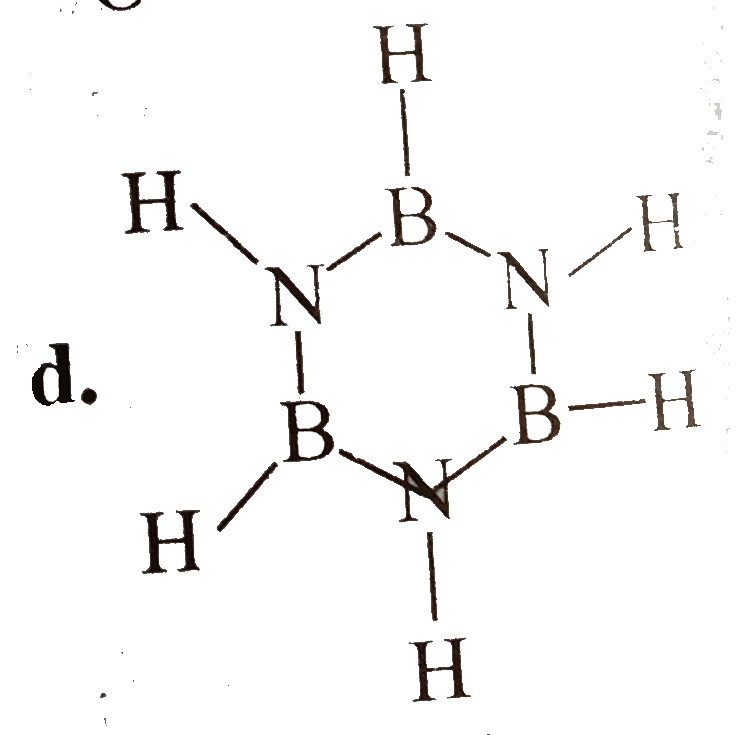
Which of the following is a non-aromatic compound ?

A

B

C

D

Text Solution

AI Generated Solution

The correct Answer is:

To determine which of the given compounds is non-aromatic, we will apply Huckel's rule of aromaticity. The key points to consider are: 1. The compound must be cyclic. 2. The compound must be planar. 3. The compound must have a conjugated system (alternating single and double bonds). 4. The compound must have an odd number of π (pi) electrons. Now, let's analyze each option step by step: ### Step 1: Analyze Option A - **Cyclic**: Yes, it is a cyclic compound. - **Planar**: No, it is non-planar. - **Conjugated**: Not applicable since it is non-planar. - **Conclusion**: Since it does not meet the planar requirement, **Option A is non-aromatic**. ### Step 2: Analyze Option B - **Cyclic**: Yes, it is a cyclic compound. - **Planar**: Yes, it is planar. - **Conjugated**: No, there is no conjugation in the ring. - **Conclusion**: Since it does not have a conjugated system, **Option B is also non-aromatic**. ### Step 3: Analyze Option C - **Cyclic**: Yes, it is a cyclic compound. - **Planar**: Yes, it is planar. - **Conjugated**: Yes, it has alternating double bonds. - **Pi Electrons**: It has an even number of π electrons (4). - **Conclusion**: Since it has an even number of π electrons, **Option C is anti-aromatic**. ### Step 4: Analyze Option D - **Cyclic**: Yes, it is a cyclic compound. - **Planar**: Yes, it is planar. - **Conjugated**: Yes, it has a conjugated system. - **Pi Electrons**: It has an odd number of π electrons (3). - **Conclusion**: Since it meets all the criteria for aromaticity, **Option D is aromatic**. ### Final Conclusion The non-aromatic compounds among the options are **Option A and Option B**. ---

To determine which of the given compounds is non-aromatic, we will apply Huckel's rule of aromaticity. The key points to consider are: 1. The compound must be cyclic. 2. The compound must be planar. 3. The compound must have a conjugated system (alternating single and double bonds). 4. The compound must have an odd number of π (pi) electrons. Now, let's analyze each option step by step: ...
Promotional Banner

Topper's Solved these Questions

  • ORGANIC REACTION MECHANISM

    CENGAGE CHEMISTRY ENGLISH|Exercise Assertion-Reasoning|12 Videos
  • ORGANIC REACTION MECHANISM

    CENGAGE CHEMISTRY ENGLISH|Exercise Archives|8 Videos
  • ORGANIC REACTION MECHANISM

    CENGAGE CHEMISTRY ENGLISH|Exercise Multiple Correct|30 Videos
  • NCERT BASED EXERCISE

    CENGAGE CHEMISTRY ENGLISH|Exercise Chemical Equilibrium|73 Videos
  • P-BLOCK GROUP 13 - BORON FAMILY

    CENGAGE CHEMISTRY ENGLISH|Exercise Exercise Archives (Subjecive)|9 Videos

Similar Questions

Explore conceptually related problems

Which of the following is/are aromatic compounds ?

Which of the following is not aromatic?

Non-aromatic compound is

Which of the following is aromatic amine?

Which of the following is aromatic ?

Which of the following is aromatic ?

which of the following is aromatic AA?

CENGAGE CHEMISTRY ENGLISH-ORGANIC REACTION MECHANISM-Single correct
  1. The decresing order of reactivity towards SE (substitution by electrop...

    Text Solution

    |

  2. Which of the following is a free radical susbtitution reaction ?

    Text Solution

    |

  3. Reagent I and II, respectively, are :

    Text Solution

    |

  4. Which product is racemic in the above reaction ?

    Text Solution

    |

  5. Consider the following reactions.

    Text Solution

    |

  6. Which of the following is a non-aromatic compound ?

    Text Solution

    |

  7. The decreasing order of reactivity towards ArSN reaction of the follow...

    Text Solution

    |

  8. Consider the following reaction : The product is :

    Text Solution

    |

  9. Refer to Q.No. 38 and find out which of the following statements is w...

    Text Solution

    |

  10. Which of the following is not a rearrangement reaction ?

    Text Solution

    |

  11. Arrange the following in the reactions order of NA (nucleophilic addit...

    Text Solution

    |

  12. Arrange the following in the decreasing order of nucleophilic acyl sub...

    Text Solution

    |

  13. Which of the following reactions will not give Hofmann alkene ?

    Text Solution

    |

  14. Which of the following is the best method for the preparation of compo...

    Text Solution

    |

  15. Which statement is correct about the above reaction ?

    Text Solution

    |

  16. An alkyl halide of formula C6 H13 Br on treatment with potassium t-but...

    Text Solution

    |

  17. (A) and (B) are :

    Text Solution

    |

  18. Which of the following reactions would give trans-alkene ? .

    Text Solution

    |

  19. Which of the following reactions is Hofmann elimination ? .

    Text Solution

    |

  20. Draw the structure of the following compounds: cyclopropane.

    Text Solution

    |
