Home
Class 11
CHEMISTRY
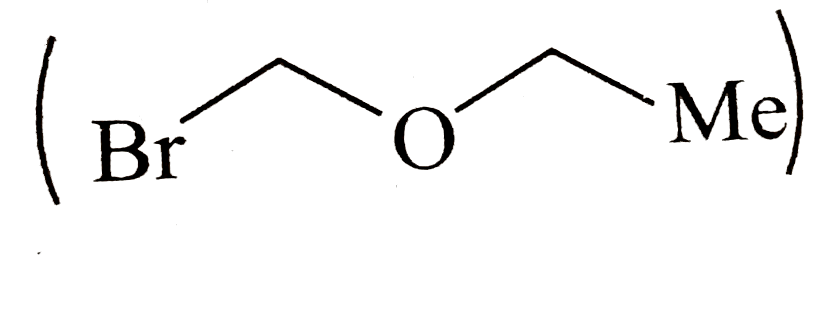
Rate of ethanolysis of 1^@ halide by SN...

Rate of ethanolysis of `1^@` halide by `SN^1` machanism is fast.
Carocation is stabilised by resonance.

A

If both `(A)` and `(R )` are true, but `( R)` is the correct explanation of `(A)`

B

If both `(A)` and `( R)` are true, but `(R )` is not the correct explanation of `(A)`.

C

If `(A)` is true but `( R)` is false.

D

If `(A)` is false but `( R)` is true.

Text Solution

Verified by Experts

The correct Answer is:

A
Promotional Banner

Topper's Solved these Questions

  • ORGANIC REACTION MECHANISM

    CENGAGE CHEMISTRY ENGLISH|Exercise Archives|8 Videos
  • ORGANIC REACTION MECHANISM

    CENGAGE CHEMISTRY ENGLISH|Exercise True/False|2 Videos
  • ORGANIC REACTION MECHANISM

    CENGAGE CHEMISTRY ENGLISH|Exercise Single correct|43 Videos
  • NCERT BASED EXERCISE

    CENGAGE CHEMISTRY ENGLISH|Exercise Chemical Equilibrium|73 Videos
  • P-BLOCK GROUP 13 - BORON FAMILY

    CENGAGE CHEMISTRY ENGLISH|Exercise Exercise Archives (Subjecive)|9 Videos

Similar Questions

Explore conceptually related problems

1^@ allylic halides are more reactive than 1^@ RX in SN^1 reaction. Allylic carbocation intermediate is stabilished by resonance.

Which one hydrolyses at a faster rate by SN^1 mechanism ? .

The order of reactivity of halides towards S_(N) 1 mechanism is

SN^(1) reaction is feasable in-

Show how will you synthesie: i. 1-Phenylethanol form a suitable alkene. ii. Cyclohexylmethanol using an alkyl halide by SN^(2) reaction. iii. Pentan-1-ol using a suitable alkyl halide.

SN^(2) reaction is a bimolecular reaction which takes places by the formation of T.S. Veolcity of the reaction depends on the concentration of the substrate as well as the nucleophile. The reaction is favoureed by strong Nu^(o-) and in the presence of polar aprotic sovlent, optically active halides give. Walken inversion by SN^(2) mechanism. The presence of hero group (atom) at beta-C atom, unsaturation at beta-C and (-overset(O)overset(||)(C)-) group at alpha-C atomn favor SN^(2) mechanism. Allyl halides and benzyl halides give SN^(1) and SN^(2) reactions. Allyl halides alos give SN^(2) mechanism EDG at ortho- and para- postions in benzyl halides favors SN^(1) mechanism, wheras EWG favors SN^(2) mechanism. Which of the following will give SN^(1) reaction?

SN^(2) reaction is a bimolecular reaction which takes places by the formation of T.S. Veolcity of the reaction depends on the concentration of the substrate as well as the nucleophile. The reaction is favoureed by strong Nu^(o-) and in the presence of polar aprotic sovlent, optically active halides give. Walken inversion by SN^(2) mechanism. The presence of hero group (atom) at beta-C atom, unsaturation at beta-C and (-overset(O)overset(||)(C)-) group at alpha-C atomn favor SN^(2) mechanism. Allyl halides and benzyl halides give SN^(1) and SN^(2) reactions. Allyl halides alos give SN^(2) mechanism EDG at ortho- and para- postions in benzyl halides favors SN^(1) mechanism, wheras EWG favors SN^(2) mechanism. Which of the following will give SN^(2) mechanism?

SN^(2) reaction is a bimolecular reaction which takes places by the formation of T.S. Veolcity of the reaction depends on the concentration of the substrate as well as the nucleophile. The reaction is favoureed by strong Nu^(o-) and in the presence of polar aprotic sovlent, optically active halides give. Walden inversion by SN^(2) mechanism. The presence of hetro group (atom) at beta-C atom, unsaturation at beta-C and (-overset(O)overset(||)(C)-) group at alpha-C atomn favor SN^(2) mechanism. Allyl halides and benzyl halides give SN^(1) and SN^(2) reactions. Allyl halides alos give SN^(2) mechanism EDG at ortho- and para- postions in benzyl halides favors SN^(1) mechanism, wheras EWG favors SN^(2) mechanism. Which of the following will gives SN^(2) mechanism gt

SN^(2) reaction is a bimolecular reaction which takes places by the formation of T.S. Veolcity of the reaction depends on the concentration of the substrate as well as the nucleophile. The reaction is favoureed by strong Nu^(o-) and in the presence of polar aprotic sovlent, optically active halides give. Walken inversion by SN^(2) mechanism. The presence of hero group (atom) at beta-C atom, unsaturation at beta-C and (-overset(O)overset(||)(C)-) group at alpha-C atomn favor SN^(2) mechanism. Allyl halides and benzyl halides give SN^(1) and SN^(2) reactions. Allyl halides alos give SN^(2) mechanism EDG at ortho- and para- postions in benzyl halides favors SN^(1) mechanism, wheras EWG favors SN^(2) mechanism. Which of the following will give Walden inversion ?

Read the given passage and answer the questions number 1 to 5 that follow: The substitution reaction of alkyl halide mainly occurs by S_N 1 and S_N 2 mechanism. Whatever mechanism alkyl halides follow for the substitution reaction to occur, the polarity of the carbon halogen bond is responsible for these substitution reactions. The rate of S_N 1 reactions are governed by the stability of carbocation whereas for S_N 2 reactions steric factor is the deciding factor. If the starting material is a chiral compound, we may end up with an inverted product or racemic mixture depending upon the type of mechanism followed by alkyl halide. Cleavage of ethers with HI also governed by steric factor and stability of carbocation, which indicates that in organic chemistry, these two major factors help us in deciding the kind of product formed 1. Predict the stereochemistry of the product formed if an optically active alkyl halide undergoes substitution reaction by S_N 1 mechanism. 2. Name the instrument used for measuring the angle by which the plane polarised light is rotated. 3. Predict the major product formed when 2-Bromopentane reacts with alcoholic KOH. 4. Give one use of CHI_3 5. Write the structures of the products formed when anisole is treated with HI.
