Home
Class 11
CHEMISTRY
4-Methyl benzene sulphoic acid reacts wi...

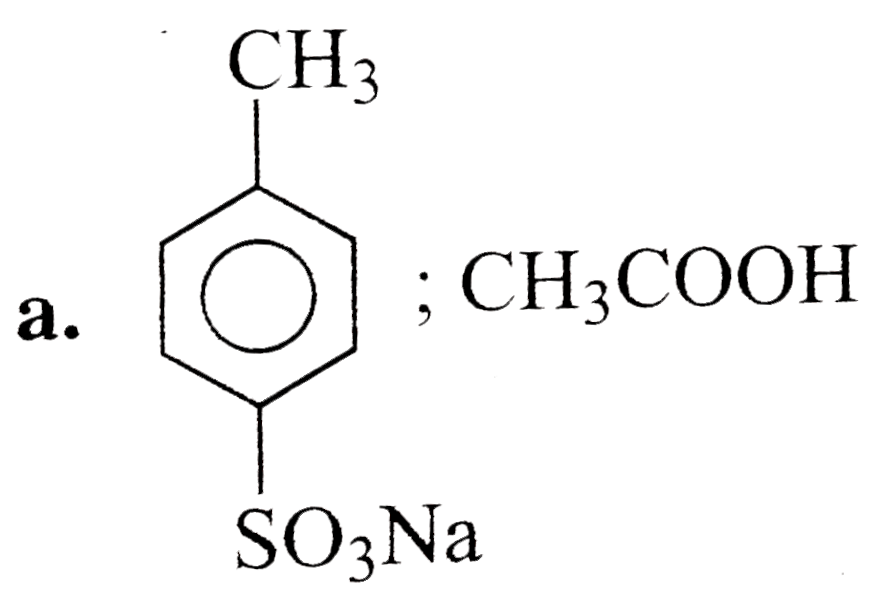
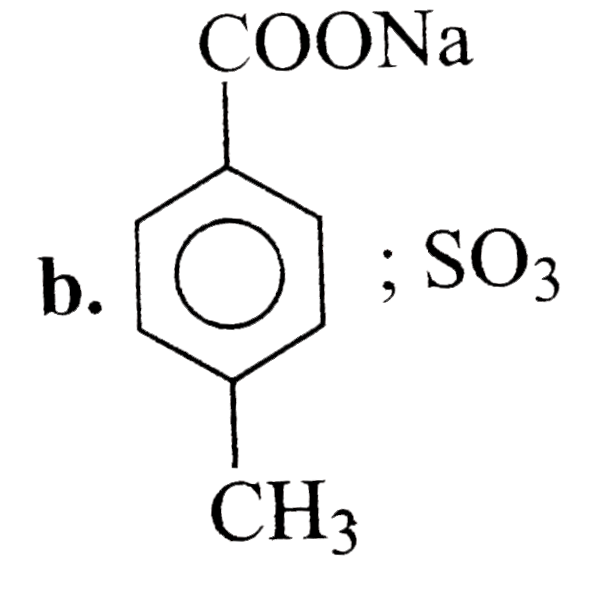
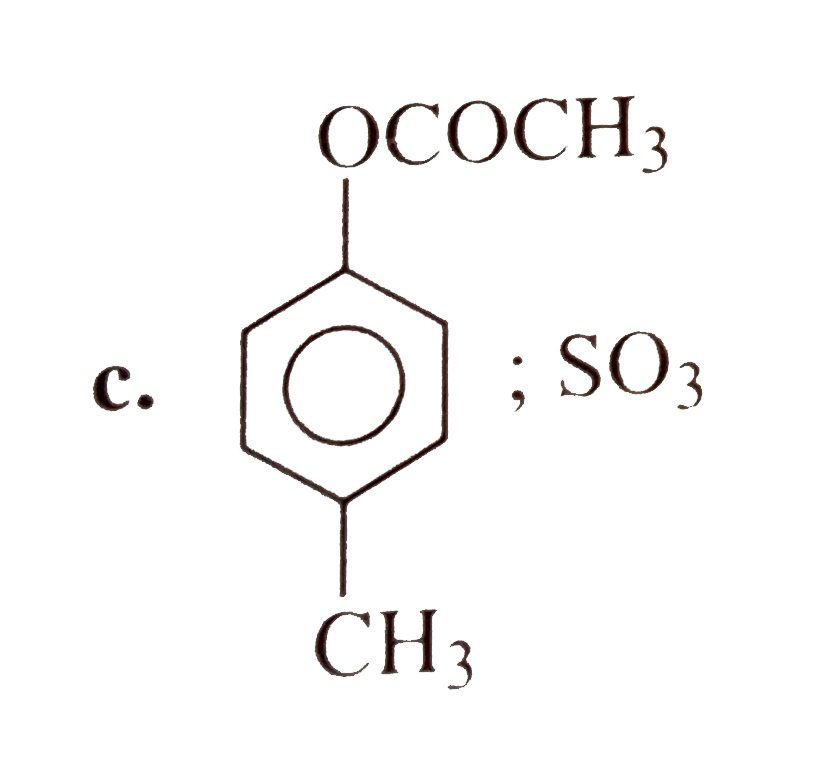
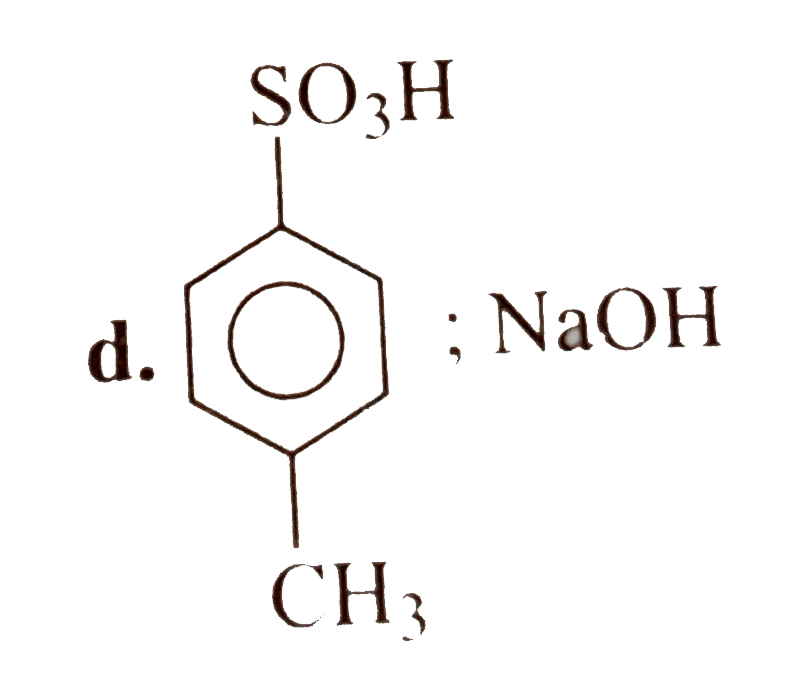
4-Methyl benzene sulphoic acid reacts with sodium acetate to give :

A

B

C

D

Text Solution

AI Generated Solution

The correct Answer is:

To solve the problem of what 4-methylbenzene sulfonic acid reacts with sodium acetate to give, we can follow these steps: ### Step-by-Step Solution: 1. **Identify the Reactants**: - The first reactant is 4-methylbenzene sulfonic acid, which has the structure: - A benzene ring with a methyl group (–CH3) at the para position and a sulfonic acid group (–SO3H) attached. - The second reactant is sodium acetate (CH3COONa), which consists of an acetate ion (CH3COO-) and sodium ion (Na+). 2. **Understand the Reaction Type**: - The reaction between a sulfonic acid and a sodium salt (like sodium acetate) typically leads to the formation of a sulfonate salt and an acid. - In this case, the sulfonic acid will react with the acetate ion. 3. **Write the Reaction**: - The reaction can be represented as: \[ \text{4-methylbenzene sulfonic acid} + \text{sodium acetate} \rightarrow \text{4-methylbenzene sulfonate} + \text{acetic acid} \] - The products formed are: - 4-methylbenzene sulfonate (C6H4(CH3)(SO3Na)) - Acetic acid (CH3COOH) 4. **Final Product Identification**: - The final products of the reaction are 4-methylbenzene sulfonate and acetic acid. - The sulfonate salt retains the structure of the original sulfonic acid but replaces the hydrogen of the sulfonic acid group with sodium. 5. **Conclusion**: - The correct answer to the question is that 4-methylbenzene sulfonic acid reacts with sodium acetate to give 4-methylbenzene sulfonate and acetic acid.

To solve the problem of what 4-methylbenzene sulfonic acid reacts with sodium acetate to give, we can follow these steps: ### Step-by-Step Solution: 1. **Identify the Reactants**: - The first reactant is 4-methylbenzene sulfonic acid, which has the structure: - A benzene ring with a methyl group (–CH3) at the para position and a sulfonic acid group (–SO3H) attached. - The second reactant is sodium acetate (CH3COONa), which consists of an acetate ion (CH3COO-) and sodium ion (Na+). ...
Promotional Banner

Topper's Solved these Questions

  • ORGANIC REACTION MECHANISM

    CENGAGE CHEMISTRY ENGLISH|Exercise True/False|2 Videos
  • ORGANIC REACTION MECHANISM

    CENGAGE CHEMISTRY ENGLISH|Exercise Analytical and Descriptive|6 Videos
  • ORGANIC REACTION MECHANISM

    CENGAGE CHEMISTRY ENGLISH|Exercise Assertion-Reasoning|12 Videos
  • NCERT BASED EXERCISE

    CENGAGE CHEMISTRY ENGLISH|Exercise Chemical Equilibrium|73 Videos
  • P-BLOCK GROUP 13 - BORON FAMILY

    CENGAGE CHEMISTRY ENGLISH|Exercise Exercise Archives (Subjecive)|9 Videos

Similar Questions

Explore conceptually related problems

Ethanol reacts with acetic anhydride to give :

Sodium salt of acetic acid reacts with ethyl iodide to give

When acetic acid reacts with ketene , product formed is :

What happens when: Sodium sulphide reacts with lead acetate.

23 g of sodium will react with methyl alchol to give :

How does acetic acid react with: Ammonia?

What happens when: Sodium sulphate reacts with lead acetate.

Sodium benzene sulphonate reacts with NaOH and then on acidic hydrolysis, it gives:

To a solution containing equimolar mixture of sodium acetate and acetic acid, some more amount of sodium acetate solution is adde. The pH of mixture solution.
