Home
Class 11
CHEMISTRY
Which of the statements are WRONG about ...

Which of the statements are WRONG about the nucleophilic addition reaction of alkenes and alkynes?

A

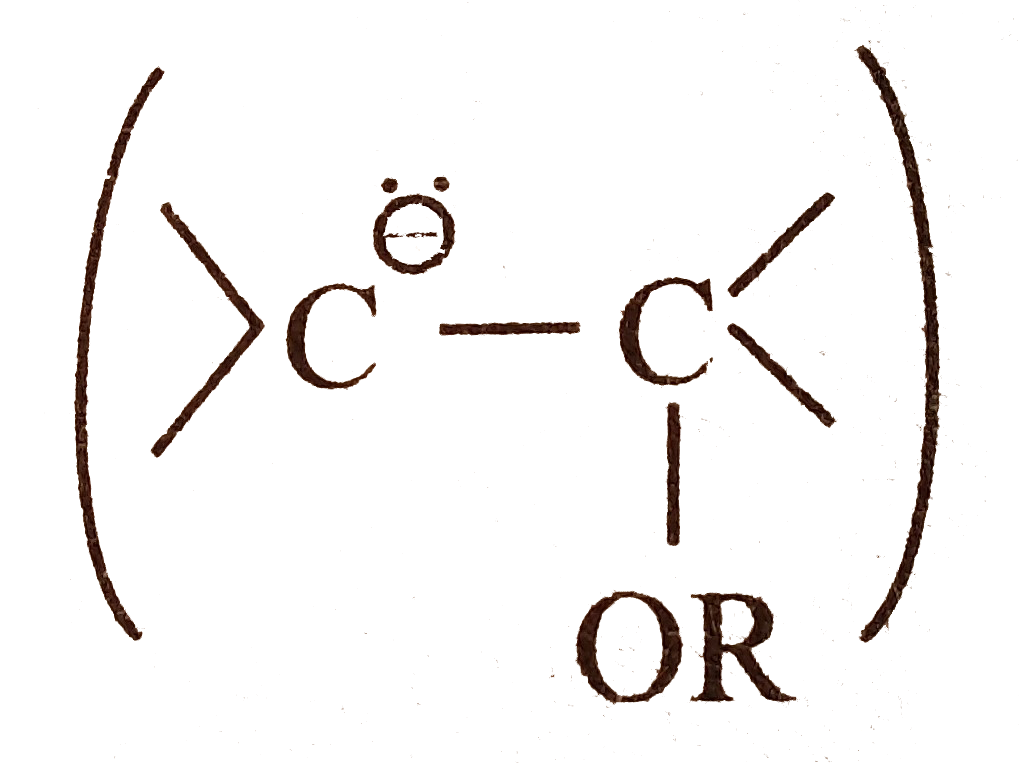
Addition of nucleophile `(Roverset(Ө)O)` to alkene gives an alkyl carbanion whose negative charge is on the `sp^3`-hydridised C atom.

B

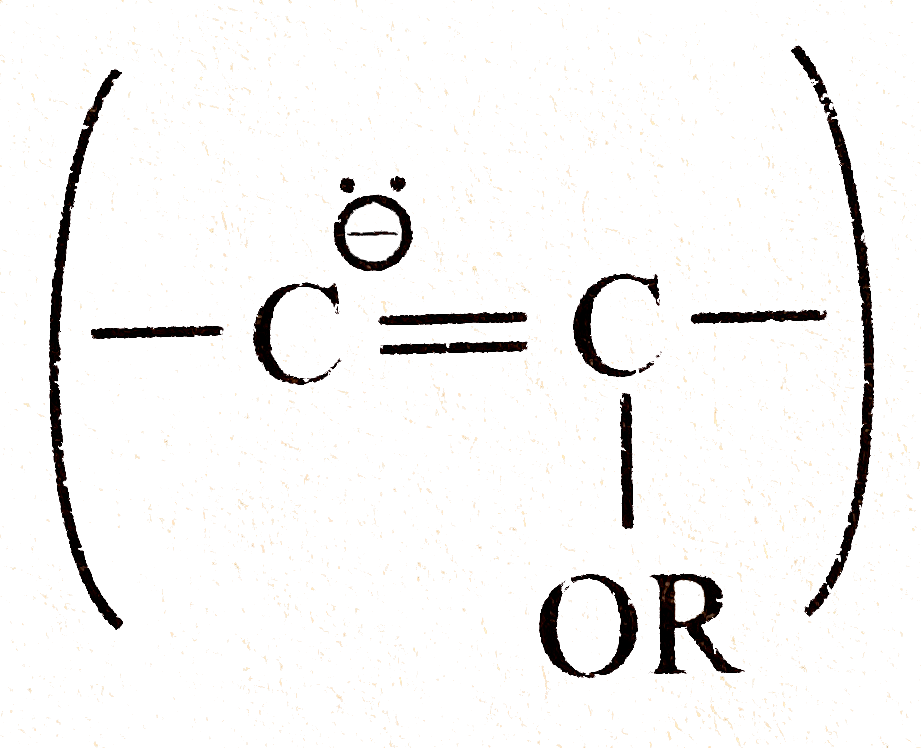
Addition of nucleophile `(Roverset(Ө)O)` ot an alkyne gives a vinyl carbanion whose negative charge is on the `sp^2`-hybridised C atom. Due to more s character, it is readily formed and more stable than alkyl carbanion formed with alkenes. So alkynes are more reactive than alkenes towards NA reaction.

C

Strong electron-withdrawing inductive effect `(-I)` further stabilises both vinyl and alkyl carbanion.

D

Strong electron-donating inductive effect `(+I)` further stabilises both vinyl and alkyl carbanion.

Text Solution

AI Generated Solution

The correct Answer is:

To determine which statements are wrong about the nucleophilic addition reaction of alkenes and alkynes, we will analyze the properties and behavior of these compounds during the reaction. ### Step-by-Step Solution: 1. **Understanding Nucleophilic Addition:** - Nucleophilic addition involves the attack of a nucleophile (like RO⁻) on a carbon atom of a double or triple bond (alkene or alkyne). - The reaction leads to the formation of a carbon ion intermediate. **Hint:** Remember that nucleophiles are electron-rich species that seek positive centers. 2. **Formation of Carbon Ions:** - In the case of an **alkene**, the nucleophile attacks an sp³ hybridized carbon atom, resulting in a carbon ion with a negative charge on the sp³ carbon. - In the case of an **alkyne**, the nucleophile attacks an sp² hybridized carbon atom, leading to a carbon ion with a negative charge on the sp² carbon. **Hint:** Identify the hybridization of the carbon atom involved in the reaction to understand the stability of the resulting carbon ion. 3. **Stability of Carbon Ions:** - The carbon ion formed from an alkyne (vinyl carbon ion) is more stable than that formed from an alkene (alkyl carbon ion) because sp² hybridized carbons have more s-character, making them more electronegative and stabilizing the negative charge. **Hint:** Recall that the greater the s-character, the more stable the carbon ion due to increased electronegativity. 4. **Reactivity Comparison:** - Alkynes are more reactive than alkenes in nucleophilic addition reactions due to the stability of the carbon ion formed from alkynes. - Conversely, in electrophilic addition reactions, alkenes are more reactive than alkynes. **Hint:** Differentiate between nucleophilic and electrophilic addition reactions when considering reactivity. 5. **Effect of Inductive Effects:** - A strong electron-withdrawing group (−I effect) stabilizes the carbon ion by decreasing charge density, while a strong electron-donating group (+I effect) destabilizes it by increasing charge density. **Hint:** Remember that the nature of substituents on the carbon chain can significantly influence the stability of intermediates. 6. **Analyzing Statements:** - **Statement A:** "Addition of a nucleophile to an alkene gives an alkyl carbon ion whose negative charge is on the sp³ hybridized C atom." - This is correct. - **Statement B:** "Addition of a nucleophile on the alkyne gives the vinyl carbon ion whose negative charge is on the sp² hybridized carbon atom due to more s-character it is readily formed and hence is more stable than alkyl carbon ion formed with the alkenes." - This is correct. - **Statement C:** "Alkynes are more reactive than alkenes towards nucleophilic addition reactions." - This is correct. - **Statement D:** "Strong electron donating inductive effect further stabilizes both vinyl and alkyl carbon." - This is wrong; strong electron donating groups destabilize the carbon ions. ### Conclusion: The wrong statement about the nucleophilic addition reaction of alkenes and alkynes is **Statement D**.
Promotional Banner

Topper's Solved these Questions

  • ALKYNES

    CENGAGE CHEMISTRY ENGLISH|Exercise Exercises (Single Correct Answers Type)|30 Videos
  • ALKYNES

    CENGAGE CHEMISTRY ENGLISH|Exercise Exercises (Archives - Single Correct Answer Type)|6 Videos
  • ALKYNES

    CENGAGE CHEMISTRY ENGLISH|Exercise Exercises (Linked Comprehension Type)|51 Videos
  • ALKENES AND ALKADIENES

    CENGAGE CHEMISTRY ENGLISH|Exercise Single correct Answer|14 Videos
  • APPENDIX - INORGANIC VOLUME 1

    CENGAGE CHEMISTRY ENGLISH|Exercise chapter-7 Single correct answer|1 Videos

Similar Questions

Explore conceptually related problems

Which gives nucleophilic addition reaction?

Describe the oxidation reactions of alkenes and alkynes.

Give nucleophilic addition reaction of acetaldehyde with HCN

Nucleophilic addition reaction will be most favoured in

Which of the statement about breeding is wrong

Give nucleophilic addition reaction of acetaldehyde with Grignard's reagents

Give nucleophilic addition reaction of acetaldehyde with NaHCO_(3)

Which of the statements are correct about the reactivities of alkene, alkynes, and arenes?

Give nucleophilic addition reaction of acetaldehyde with Ethyl alcohol

What type of addition reactions do alkenes usually undergo ?

CENGAGE CHEMISTRY ENGLISH-ALKYNES-Exercises (Multiple Correct Answers Type)
  1. Which statement(s) is/are WRONG?

    Text Solution

    |

  2. Which of the statements are correct about the reactivities of alkene, ...

    Text Solution

    |

  3. Which of the statements are WRONG about the nucleophilic addition reac...

    Text Solution

    |

  4. In the following sequence of reactions, Which of the statements a...

    Text Solution

    |

  5. Acetylene is thermodynamically unstable and readily explodes, therefor...

    Text Solution

    |

  6. Which of the statements are correct for alkyne with molecular formul...

    Text Solution

    |

  7. For the conversion of alkyne to cis-alkene, H2+ Lindlar's catalyst is ...

    Text Solution

    |

  8. i. Me--=-Hunderset((ii)H2O2//overset(Ө)OH)overset((i) Sia2BH)rarrA i...

    Text Solution

    |

  9. Which of the following statements are correct?

    Text Solution

    |

  10. Which of the following statement(s) is/are correct:

    Text Solution

    |

  11. Compound (B) is same when (A) is:

    Text Solution

    |

  12. Which of the statements are correct? R--=-R^'underset(+EtOH)overset(...

    Text Solution

    |

  13. Which of the statements are correct? R--=-Runderset(Catalyst)overset...

    Text Solution

    |

  14. Hydroboration oxidation and acid hydration will yield the same produ...

    Text Solution

    |

  15. C4H6underset(1 mol)overset(H2+Pt)rarrC4H8overset(O3//H2O)rarr Acedic a...

    Text Solution

    |

  16. All reagents, [Cu(NH3)2]^(o+), [Ag(NH3)2]^(o+), CH3MgBr, and NaNH2 r...

    Text Solution

    |

  17. Compound (A) does not react with Tollens or Grignard reagent, but afte...

    Text Solution

    |

  18. Compound (A) reacts with [Cu(NH3)2]^(+) and Tollens reagent, but after...

    Text Solution

    |

  19. Which of the statements are correct?

    Text Solution

    |

  20. Reagents used in conversion from (A) to (B) are:

    Text Solution

    |