Home
Class 12
CHEMISTRY
Explain why organocopper and organocadmi...

Explain why organocopper and organocadmium reagents react with less reactive acid chlorides even though they do not reacts with more reactive ketones.

Text Solution

Verified by Experts
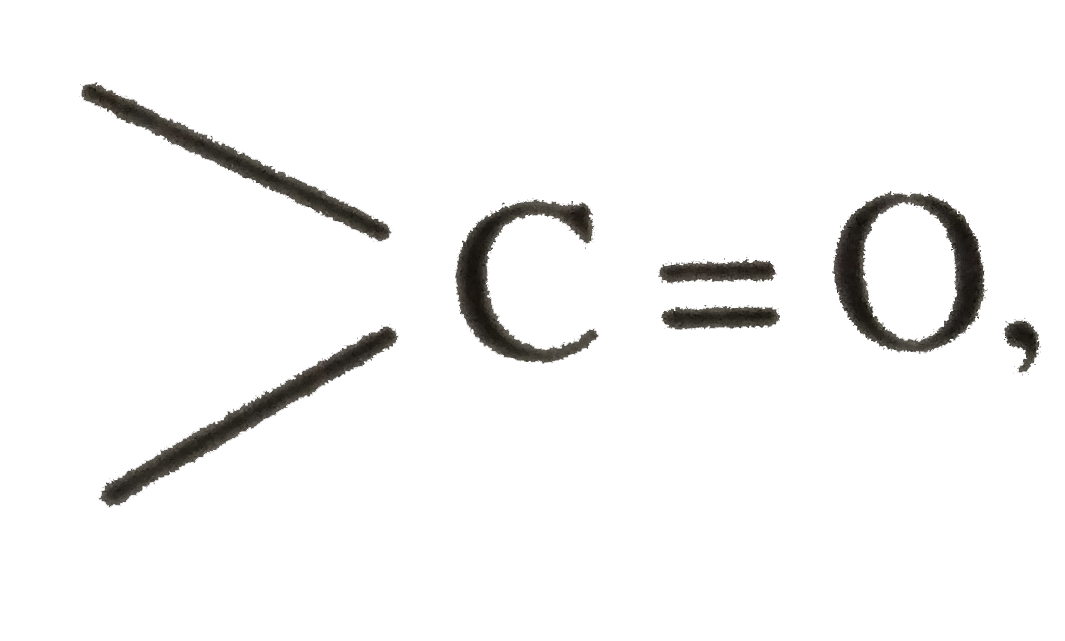
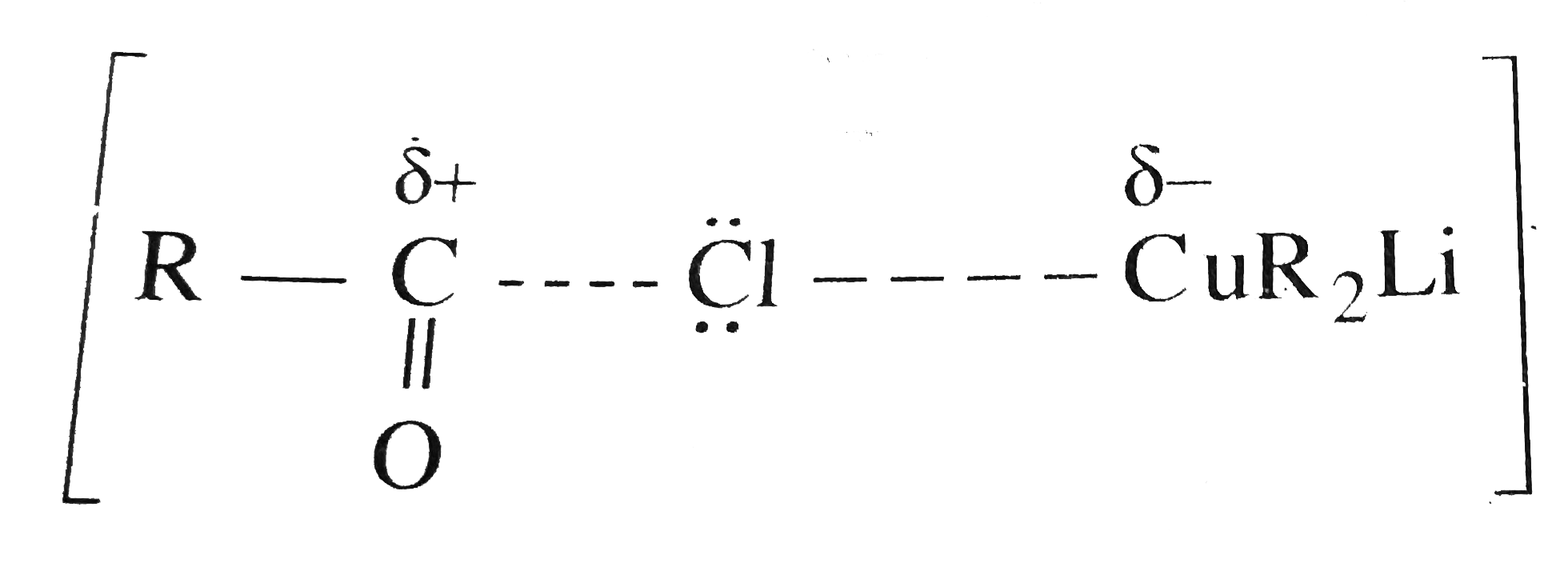
`R_2 CuLi`(and `Ar_2 CuLi`) and `R_2 Cd` and `Ar_2 Cd` do not react by the typical nucleophilic addition `(NA)` reaction of an forming an acylium-like ion with greater `+ delta` charge on the carbon. This strong electrophilic ion can form a bond even with the weak nucleophlic `R` of `R_2 CuLi` or `R_2 Cd`.
b
Promotional Banner

Topper's Solved these Questions

  • GRIGNARD REAGENTS AND ORGANOMETALLIC REAGENTS

    CENGAGE CHEMISTRY ENGLISH|Exercise Solved Examples|15 Videos
  • GRIGNARD REAGENTS AND ORGANOMETALLIC REAGENTS

    CENGAGE CHEMISTRY ENGLISH|Exercise Exercises (Subjective )|17 Videos
  • GENERAL PRINCIPLES AND PROCESS OF ISOLATION OF ELEMENTS

    CENGAGE CHEMISTRY ENGLISH|Exercise Archives (Subjective)|14 Videos
  • NCERT BASED EXERCISE

    CENGAGE CHEMISTRY ENGLISH|Exercise Nuclear Chemistry (NCERT Exercise)|29 Videos

Similar Questions

Explore conceptually related problems

Explain why: Interhalogen compounds are more reactive than the related elemental halogens.

Which gas is produced when less reactive metals like Mg and Fe react with steam?

Why tertiary amines do not react with acid chlorides and acid anhydrides?

Assertion: Both grignard reagent and dialkyl cadmium react with acid chlorides to form tert-alcohols. Reason: Grignard reagents are as reactive as dialkyl cadmium.

Why is Grignard reagent not successful in the preparation of ketones from acid chlorides?

Explain why interhalogen compounds are more reactive than their constituent elements.

Explain, why is sodium less reactive than potassium ?

Statement-I: Ketones are less reactive than aldehydes. Because Statement-II: Ketones do not give Schiff's test.

Explain as to why haloarenes are much less reactive than halo-alkanes towards nucleophilic substitution reactions.

Zinc liberates hydrogen gas when reacted with dilute hydrochloric acid, whereas copper does not. Explain, why?

