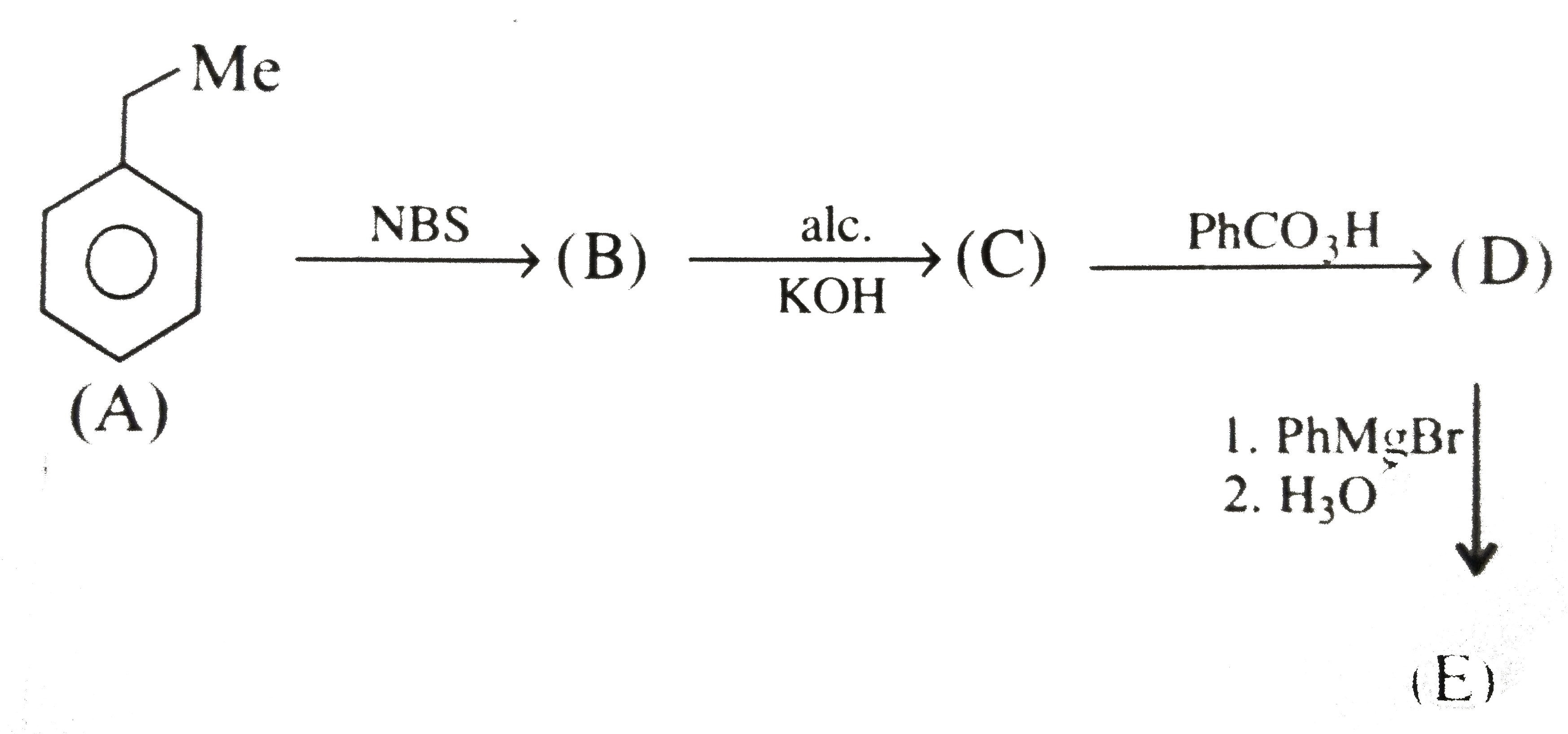
 .
.Text Solution
Verified by Experts
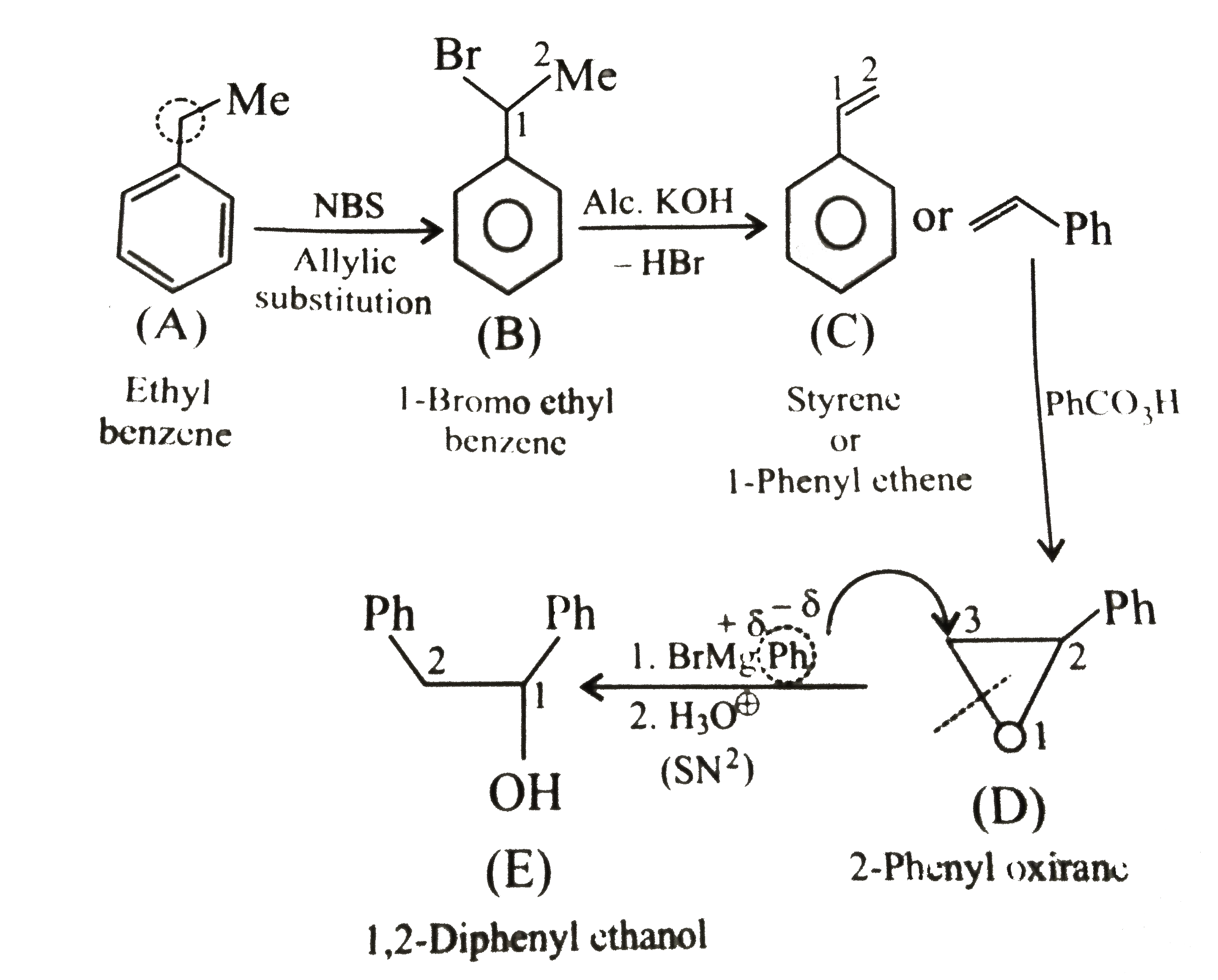 .
.


Topper's Solved these Questions
GRIGNARD REAGENTS AND ORGANOMETALLIC REAGENTS
CENGAGE CHEMISTRY ENGLISH|Exercise Exercises (Subjective )|17 VideosGRIGNARD REAGENTS AND ORGANOMETALLIC REAGENTS
CENGAGE CHEMISTRY ENGLISH|Exercise Exercises (Linked Comprehension)|33 VideosGRIGNARD REAGENTS AND ORGANOMETALLIC REAGENTS
CENGAGE CHEMISTRY ENGLISH|Exercise Exercises Archives (Linked Comprehension)|1 VideosGENERAL PRINCIPLES AND PROCESS OF ISOLATION OF ELEMENTS
CENGAGE CHEMISTRY ENGLISH|Exercise Archives (Subjective)|14 VideosNCERT BASED EXERCISE
CENGAGE CHEMISTRY ENGLISH|Exercise Nuclear Chemistry (NCERT Exercise)|29 Videos
Similar Questions
Explore conceptually related problems
CENGAGE CHEMISTRY ENGLISH-GRIGNARD REAGENTS AND ORGANOMETALLIC REAGENTS-Solved Examples
- (A) and ( C) are isomers, (B) can be obtainedn by the products of the ...
Text Solution
|
- Two different G.R. (A) and (B) give the product (X) on reaction with ...
Text Solution
|
- . A sample of 0.42 gm os (A) with excess of MeMgBr gives 224 ml of C...
Text Solution
|
- Identify the structures of (A) to (D). here A is pent-1,4-diene
Text Solution
|
- Identify (A) and (C) Ca overset ** C O3 + H2 SO4 rarr (A) (gas) [C^*...
Text Solution
|
- Identify (A) to ( C). .
Text Solution
|
- Identify (A) to ( E). .
Text Solution
|
- Identify (A) to ( E). .
Text Solution
|
- Identify (A) to (D). .
Text Solution
|
- How would the products change if. R = Et
Text Solution
|
- Convert .
Text Solution
|
- The IUPAC name of the given compound is
Text Solution
|
- What are different types of decomposition reaction?
Text Solution
|
- Statue of liberty is an example of corrosion. Explain
Text Solution
|
- Which of the following is a true nut?
Text Solution
|