Home
Class 12
CHEMISTRY
Preparation of ethers by acid dehydratio...

Preparation of ethers by acid dehydration of secondary or tertiary alcohols is not a suitable method. Give reason.

Text Solution

Verified by Experts
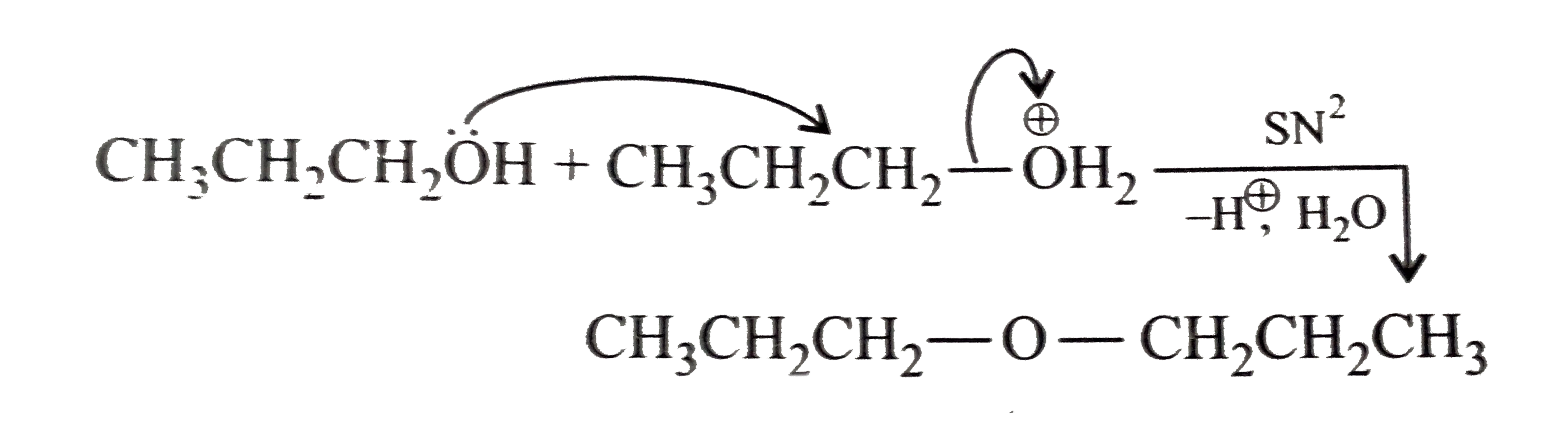
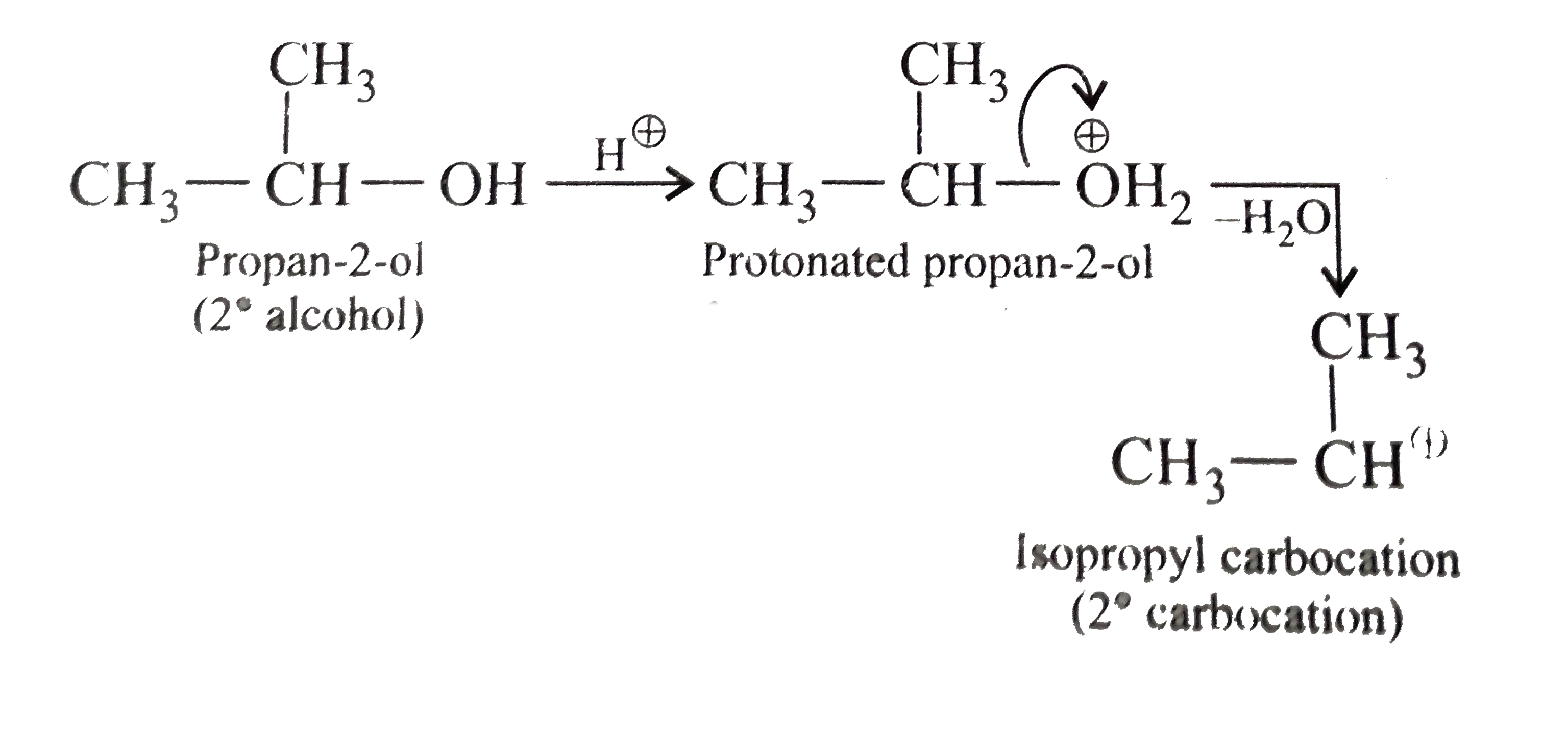
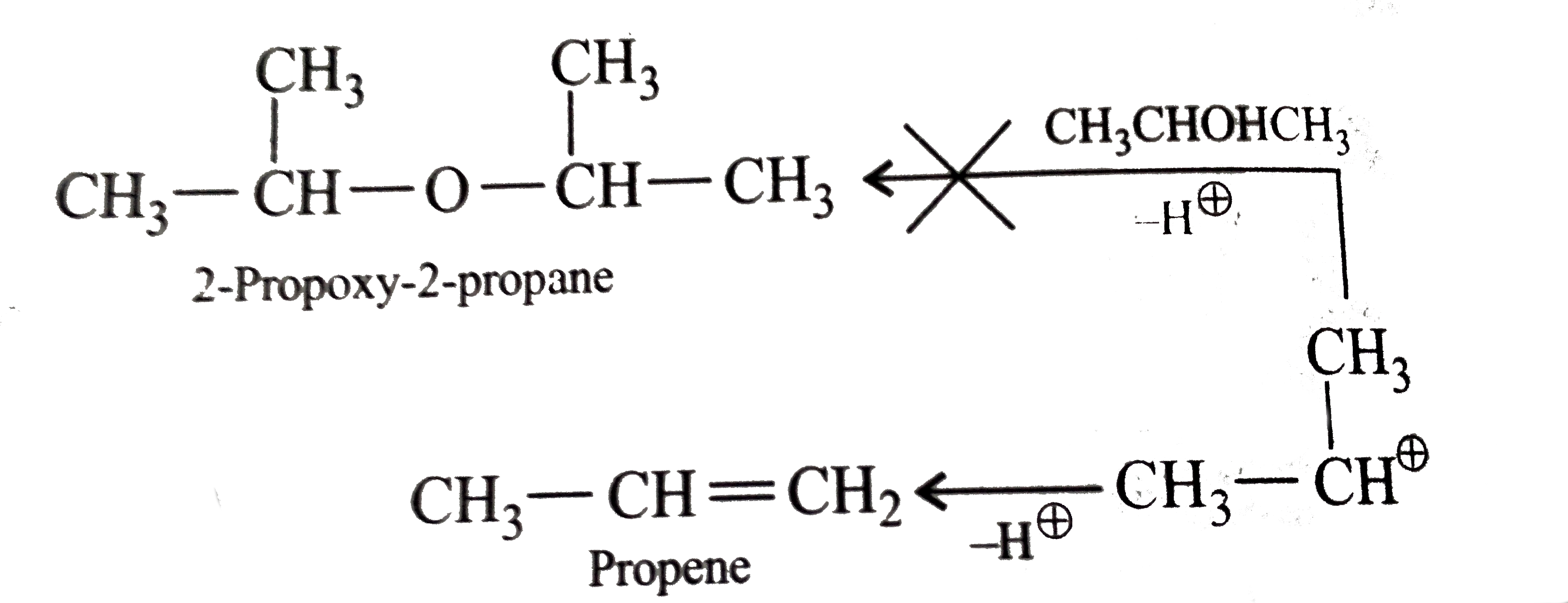
Acid-catalysed dehydratrion of `1^(@)` alcohols to ethers occurs by `SN^(2)` reaction involving nucleophilic attack by the alcohol molecule on the protonated alcohol molecule.

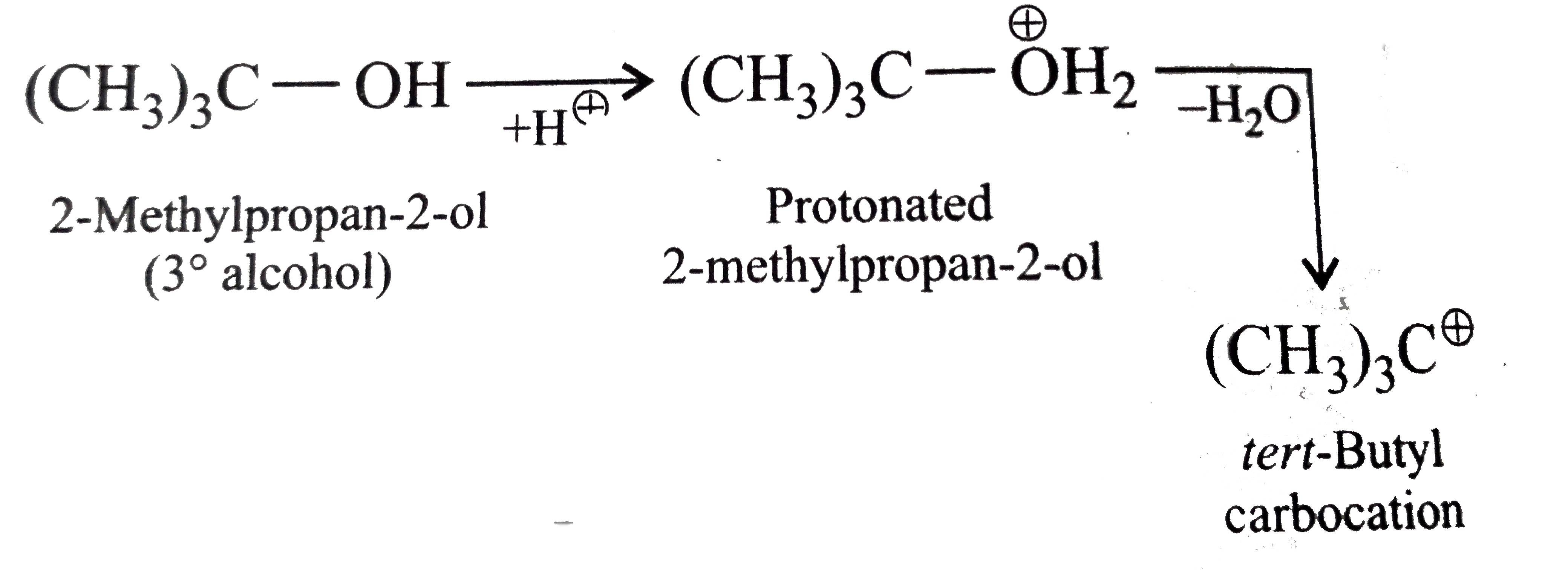
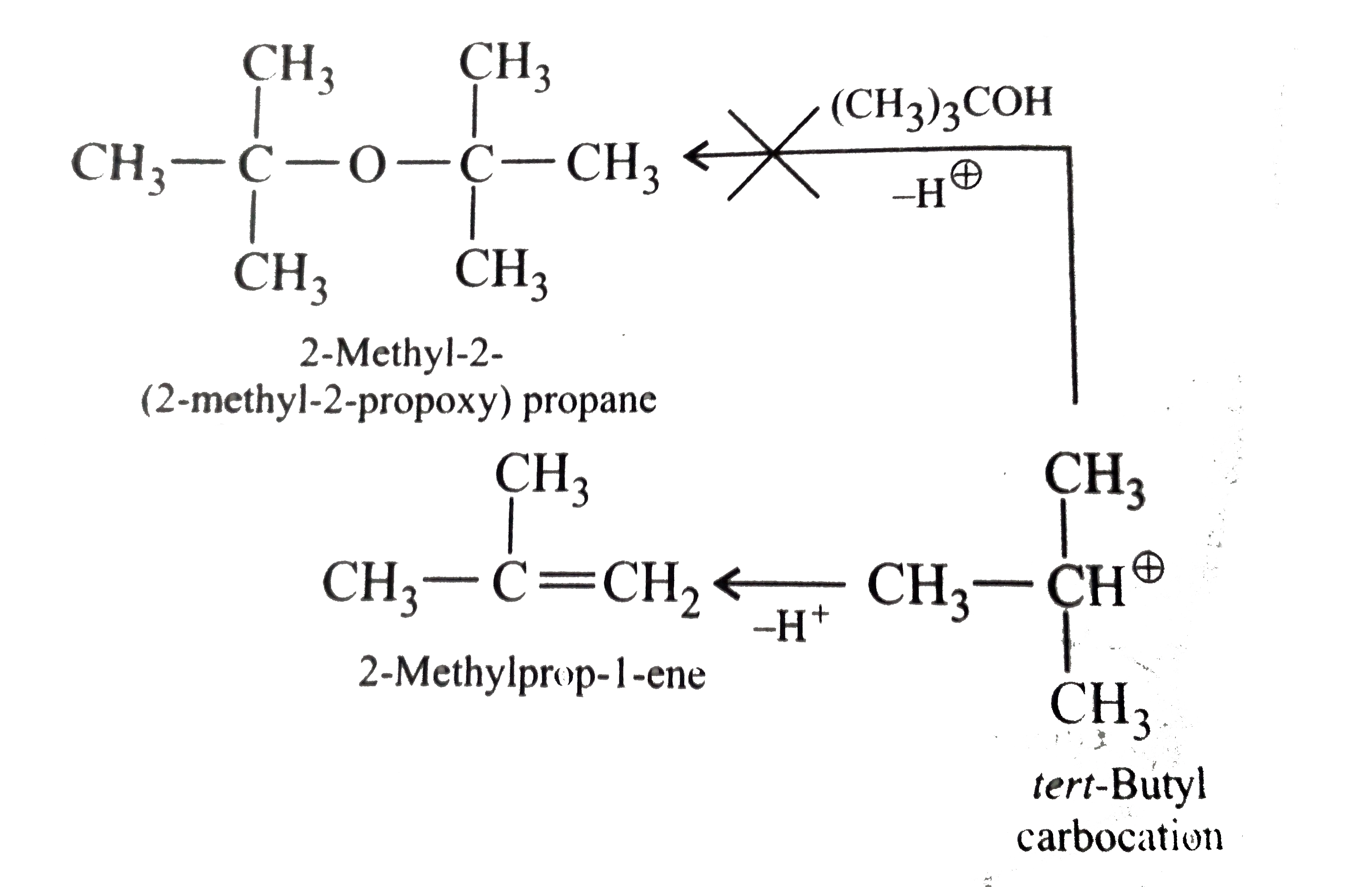
Under these conditions, `2^(@)` and `3^(@)` alcohols, however, give alkenes rathenes than ethers. The reason being that due, to steric hindrance, nucleophilic attack by the alcohol molecule on the protonatedc alcohol molecule does not occur. Insted protonated `2^(@)` and `3^(@)` alcohols lose a molecule of water form stable `2^(@)` and `3^(@)` carbocations. These carbonations prefer to lose a proton to form alkenes rather than undergoing nucleophilic attack by alcohol molecules to form ethers.


Similarly, `3^(@)` alcohols give alkenes rather than ethers.

Promotional Banner

Topper's Solved these Questions

  • ALCOHOL,PHENOL AND ETHERS

    CENGAGE CHEMISTRY ENGLISH|Exercise Exercises Linked Comprehension|60 Videos
  • ALCOHOL,PHENOL AND ETHERS

    CENGAGE CHEMISTRY ENGLISH|Exercise Exercises Multiple Correct|24 Videos
  • ALCOHOL,PHENOL AND ETHERS

    CENGAGE CHEMISTRY ENGLISH|Exercise Exercises Subjective|25 Videos
  • ALIPHATIC AND AROMATIC ALDEHYDES AND KETONES

    CENGAGE CHEMISTRY ENGLISH|Exercise Archives Subjective|26 Videos

Similar Questions

Explore conceptually related problems

Preparation of ethers by acid dehydration of secondary or tetiary alcohols is not a suitable method. Give reason.

What is the order of dehydration of primary, secondary and tertiary alcohols?

Primary , secondary and tertiary alcohols can be distinguished hy

Acidic dehydration of the following alcohols is in the order :

Alcohols undergo acid catalysed elimination reactions to produce alkenes. Because water is lost in the elimination , this reaction is called dehydration reaction. Secondary and tertiary alcohols always give E1 reaction in dehydration. Primary alcohols whose beta -carbon is branched also give E1 reaction. The reactivity of alcohol for elimination reaction is tertiary alcohol > secondary alcohol > Primary alcohol. Which of the following dehydration product (major ) is incorrect ?

Alcohols undergo acid catalysed elimination reactions to produce alkenes. Because water is lost in the elimination , this reaction is called dehydration reaction. Secondary and tertiary alcohols always give E1 reaction in dehydration. Primary alcohols whose beta -carbon is branched also give E1 reaction. The reactivity of alcohol for elimination reaction is tertiary alcohol gt secondary school gt Primary alcohol. Identify the product in the given reaction :

Order of boiling point among primary , secondary and tertiary alcohols is :

Out of the primary, secondary and tertiary alcohols, which one is resistant to oxidation ?

The acidic dehydration method is not souitble for converting a tertiary alcohol into ether. Justify.

Conversion of Acetic acid to acetone and tertiary butyl alcohol

CENGAGE CHEMISTRY ENGLISH-ALCOHOL,PHENOL AND ETHERS-Exercises Concept Application
  1. Give two reactions that show the acidic nature of phenol. Compare acid...

    Text Solution

    |

  2. Explain why is ortho nitrophenol more acidic than ortho methoxyphenol ...

    Text Solution

    |

  3. Explain how does the –OH group attached to a carbon of benzene ring ac...

    Text Solution

    |

  4. Give equations of the following reactions: (i) Oxidation of propan-1...

    Text Solution

    |

  5. Explain the following with an example: i. Kolbe's reaction ii. R...

    Text Solution

    |

  6. Write the mechanism of hydration of ethene to yield ethanol.

    Text Solution

    |

  7. How are the following conversions carried out? (i) Propene rarr Pro...

    Text Solution

    |

  8. Name the reagents used in the following reactions: (i) Oxidation of ...

    Text Solution

    |

  9. Give reason for the higher boiling point of ethanol in comparison to m...

    Text Solution

    |

  10. Give the IUPAC names of the following ethers: C(2)H(5)OCH(2)--overse...

    Text Solution

    |

  11. Write the names of reagents and equations for the preparation of the f...

    Text Solution

    |

  12. Illustrate with examples the limitations of Williamson synthesis for t...

    Text Solution

    |

  13. How is 1-propoxypropane synthesised from propan-1-ol? Write mechanism ...

    Text Solution

    |

  14. Preparation of ethers by acid dehydration of secondary or tertiary alc...

    Text Solution

    |

  15. Write the equation of the reaction of hydrogen iodide with: (i) 1-pro...

    Text Solution

    |

  16. Explain the fact that in aryl alkyl ethers (i) the alkoxy group activa...

    Text Solution

    |

  17. Write the mechanism of the reaction of HI with methoxymethane.

    Text Solution

    |

  18. Write equations of the following reactions: (i) Friedel-Crafts react...

    Text Solution

    |

  19. Show how would you synthesise the following alcohols from appropriate ...

    Text Solution

    |

  20. when 3-methylbutan-2-ol is treated with HBr, the following reaction ta...

    Text Solution

    |