Home
Class 12
CHEMISTRY
Which of the following cannot be acetyla...

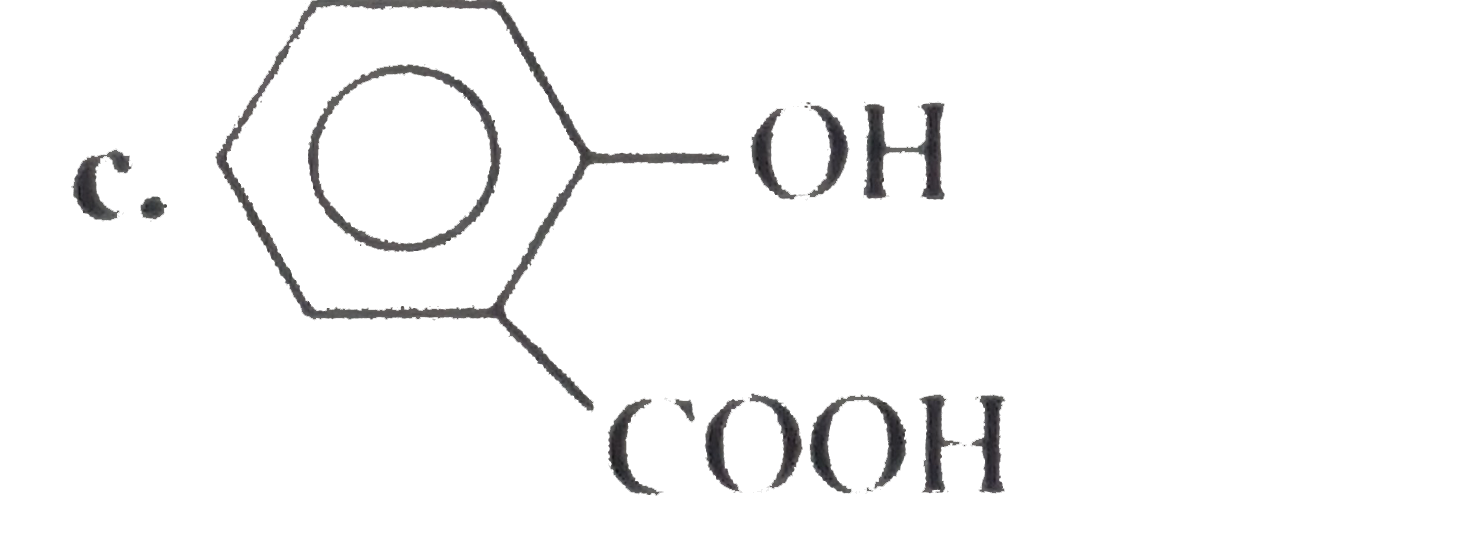
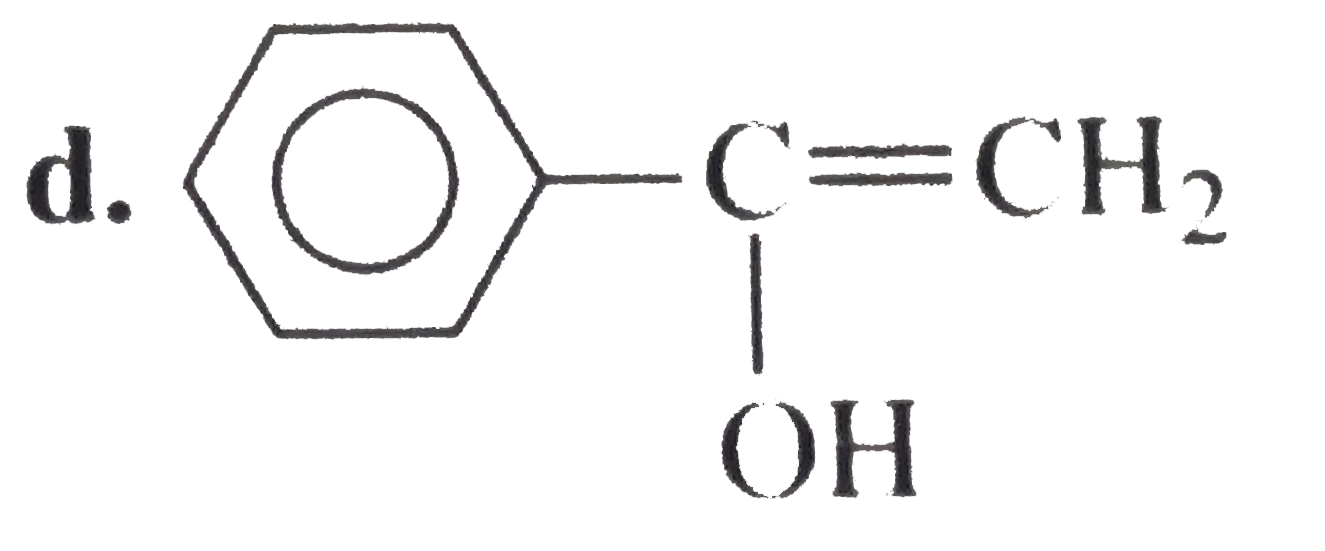
Which of the following cannot be acetylated with `CH_3 COCl//Py` ?

A

`MeCOOH`

B

`CH_3 NH_2`

C

D

Text Solution

AI Generated Solution

The correct Answer is:

To determine which of the given compounds cannot be acetylated with acetyl chloride (CH3COCl) in the presence of pyridine, we will analyze each option based on their functional groups and reactivity. ### Step-by-Step Solution: 1. **Understanding Acetylation**: Acetylation is a chemical reaction where an acetyl group (CH3CO-) is introduced into a compound. This reaction typically occurs with compounds that have nucleophilic sites, such as alcohols and amines. 2. **Analyzing Each Option**: - **Option A: Acetic Acid (CH3COOH)** Acetic acid has a carboxylic acid functional group. In the presence of acetyl chloride, it does not react because the carboxylic acid group is not nucleophilic enough to undergo acetylation. Therefore, acetic acid cannot be acetylated. - **Option B: Primary Amine (RNH2)** Primary amines contain an amino group (NH2), which is nucleophilic. When treated with acetyl chloride, the amino group will react and form an acetamide. Thus, this compound can be acetylated. - **Option C: Ortho-Hydroxybenzoic Acid (Salicylic Acid)** This compound has both a carboxylic acid and a hydroxyl group. The hydroxyl group is nucleophilic and can react with acetyl chloride to form an ester. Therefore, this compound can also be acetylated. - **Option D: Alcohol with a Phenyl Group** This compound has an alcohol functional group (-OH), which is also nucleophilic. It can react with acetyl chloride to form an ester. Hence, this compound can be acetylated as well. 3. **Conclusion**: After analyzing all options, we find that only **Option A (Acetic Acid)** cannot be acetylated with CH3COCl in the presence of pyridine. The other options (B, C, and D) can undergo acetylation. ### Final Answer: **Option A: Acetic Acid (CH3COOH)** cannot be acetylated with CH3COCl in the presence of pyridine.

To determine which of the given compounds cannot be acetylated with acetyl chloride (CH3COCl) in the presence of pyridine, we will analyze each option based on their functional groups and reactivity. ### Step-by-Step Solution: 1. **Understanding Acetylation**: Acetylation is a chemical reaction where an acetyl group (CH3CO-) is introduced into a compound. This reaction typically occurs with compounds that have nucleophilic sites, such as alcohols and amines. 2. **Analyzing Each Option**: ...
Promotional Banner

Topper's Solved these Questions

  • CARBOXYLIC ACIDS AND THEIR DERIVATIVES

    CENGAGE CHEMISTRY ENGLISH|Exercise Exercises (Assertion-Reasoning)|10 Videos
  • CARBOXYLIC ACIDS AND THEIR DERIVATIVES

    CENGAGE CHEMISTRY ENGLISH|Exercise Exercises Archives (Single Correct)|10 Videos
  • CARBOXYLIC ACIDS AND THEIR DERIVATIVES

    CENGAGE CHEMISTRY ENGLISH|Exercise Exercises (Multiple Correct)|34 Videos
  • BIOMOLECULES

    CENGAGE CHEMISTRY ENGLISH|Exercise Exercises Archives (Analytical And Descriptive)|8 Videos
  • CHEMICAL KINETICS

    CENGAGE CHEMISTRY ENGLISH|Exercise Archives Subjective|23 Videos

Similar Questions

Explore conceptually related problems

Which of the following can produce CH_4 on reaction with CH_3Mgl ?

Which of the following is not the metamer of CH_3CH_2-underset(CH_3)underset(|)N-CH_2CH_2CH_2CH_3

Which out of the following does not react with acetyl chloride? (i) CH_3 NH_2 (ii) (CH_3)_2NH (iii) (CH_3)_3N

Which of the following is an electrophile ? NH_3 AlCl_3 OH^(-) CH_3-O-CH_3

Write short notes on the following: Acetylation

Which of the following has an asymmetric carbon atom ? (a) CH_3 - CH_2 -CH_2Br (b) CH_3 - underset(Br) underset(|) overset(H) overset(|)C- underset(CH_3) underset(|) CH - CH_3 (c) CH_3 - cH_2 -underset(CH_3)underset(|) overset(Br) overset(|)C-CH_3 (d) CH_3 - underset(Br) underset(|) overset(|) overset(CH_3) overset(|) C- CH_2 -CH_2-CH_3

In which of the following reaction CH_(4) will be obtained? i. CH_(3)-MgBr+CH_(3)-C-=CH ii. iii. CH_(3)-MgBr+CH_(3)OH iv

Which of the following compounds is most susceptible to a nucleophilic attack at the carbonyl group? (a) CH_(3)COOCH_(3 ) (b) CH_(3)CONH_(2 ) (c) CH_(3)COOCOCH_(3 ) (d) CH_(3)COCl

Which of the following reagents cannot be used for differentiation between CH_(3)CHO"and"CH_(3)-underset(O)underset(||)(C)-Ph ?

Which of the following pesticides is an acetyl cholinesterase inhibitor

CENGAGE CHEMISTRY ENGLISH-CARBOXYLIC ACIDS AND THEIR DERIVATIVES-Exercises (Singlecorrect)
  1. The decreasing order of ester formation with benzoic acid in presence ...

    Text Solution

    |

  2. The decreasing order of ester formation with acetic acid in presence o...

    Text Solution

    |

  3. Which of the following cannot be acetylated with CH3 COCl//Py ?

    Text Solution

    |

  4. Which of the following is the strongest acid ?

    Text Solution

    |

  5. What is the effect of reducing the volume on the system described belo...

    Text Solution

    |

  6. Which reagent can distinguish between pentanoic acid and pentanamide ?

    Text Solution

    |

  7. The compound (D) is :

    Text Solution

    |

  8. the standard heat of formation of Fe2O3 (s) is 824.2kJ mol-1 Calculate...

    Text Solution

    |

  9. Which H atom in the following ester is most acidic ? overset(1)(CH(3...

    Text Solution

    |

  10. Product (B) in the reaction is : .

    Text Solution

    |

  11. The reactant (A) is the reaction is : .

    Text Solution

    |

  12. Product ( C) is :

    Text Solution

    |

  13. Product ( C) is :

    Text Solution

    |

  14. Give two examples of reactions which are driven by enthalpy change.

    Text Solution

    |

  15. The decreasing order of ease of hydrolysis of the following esters is ...

    Text Solution

    |

  16. The boiling points of ethyl acetate and CH3 OH, respectively, are 77^@...

    Text Solution

    |

  17. Carboxylic acid, although unreactive to alcohols, reacts in the presen...

    Text Solution

    |

  18. The major product ( C) in the reaction is : .

    Text Solution

    |

  19. Which of the following is the best method for the synthesis of ester (...

    Text Solution

    |

  20. Which of the following is the best method for the synthesis of alpha-h...

    Text Solution

    |
